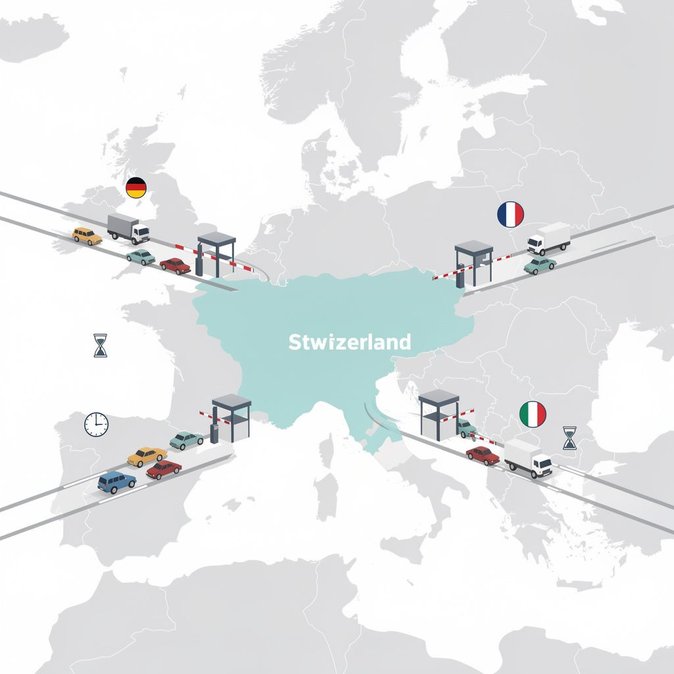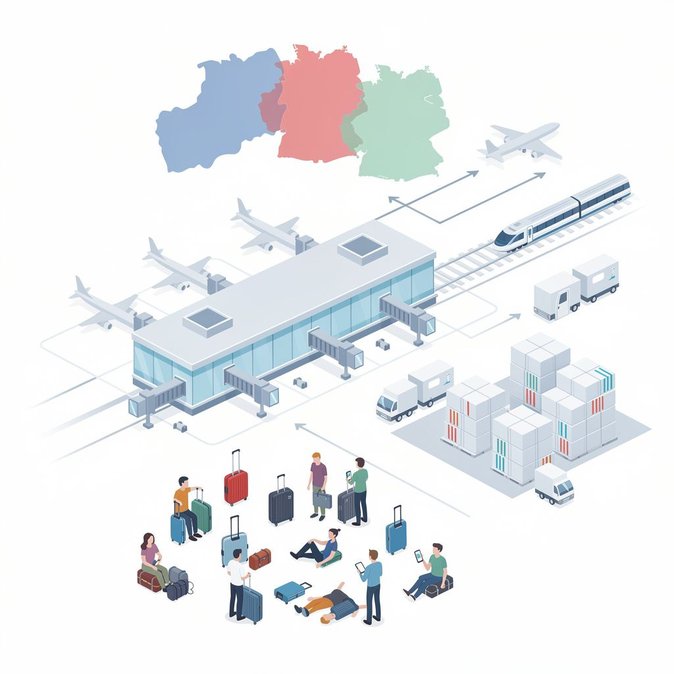
EuroAirport Basel-Mulhouse-Freiburg—jointly serving Switzerland, France and Germany—descended into chaos on 21 June 2026 after a cascade of staffing and slot-allocation issues triggered 62 flight delays and eight cancellations. The cross-border hub, uniquely situated on French soil but with a Swiss customs sector, is a critical artery for pharmaceutical exports from Basel and for intra-European corporate shuttles. EasyJet, Lufthansa, Air France and British Airways all reported crew-roster shortfalls following Saturday’s airspace restrictions linked to the G7 security operation in neighbouring Geneva. With aircraft out of rotation, departure banks collapsed, forcing airlines to scrub morning sectors to London, Paris and Amsterdam and leaving transfer passengers stranded.
Amid such sudden schedule changes, travelers rerouted through Switzerland, France, or Germany may also face unexpected visa or transit-document requirements. VisaHQ’s online portal (https://www.visahq.com/switzerland/) can expedite the paperwork, provide real-time status updates, and ensure compliancy with multi-jurisdiction rules—helping passengers focus on rebooking flights rather than deciphering consular procedures.
Business-traveller impact was immediate: regional analysts estimate more than 4,000 missed connections, while logistics operators rerouted high-value cargo onto overnight rail services. Under EU261, affected passengers are entitled to meals, hotel rooms and compensation up to €600, but anecdotal reports suggest airlines struggled to source accommodation in the saturated Basel trade-fair market. The disruption highlights the vulnerability of Europe’s mixed-jurisdiction airports. Because Basel–Mulhouse operates under both French and Swiss regulations, coordinating contingency staffing proved complex. Aviation unions called for a joint crisis-command structure and better real-time data-sharing between DGAC France, Skyguide and Eurocontrol. Global-mobility managers should treat EuroAirport as red-flagged through at least mid-week, advise travellers to consider Zurich (90 km) or high-speed rail alternatives, and remind employees of their EU261 rights when rebooking via legacy hubs.
Amid such sudden schedule changes, travelers rerouted through Switzerland, France, or Germany may also face unexpected visa or transit-document requirements. VisaHQ’s online portal (https://www.visahq.com/switzerland/) can expedite the paperwork, provide real-time status updates, and ensure compliancy with multi-jurisdiction rules—helping passengers focus on rebooking flights rather than deciphering consular procedures.
Business-traveller impact was immediate: regional analysts estimate more than 4,000 missed connections, while logistics operators rerouted high-value cargo onto overnight rail services. Under EU261, affected passengers are entitled to meals, hotel rooms and compensation up to €600, but anecdotal reports suggest airlines struggled to source accommodation in the saturated Basel trade-fair market. The disruption highlights the vulnerability of Europe’s mixed-jurisdiction airports. Because Basel–Mulhouse operates under both French and Swiss regulations, coordinating contingency staffing proved complex. Aviation unions called for a joint crisis-command structure and better real-time data-sharing between DGAC France, Skyguide and Eurocontrol. Global-mobility managers should treat EuroAirport as red-flagged through at least mid-week, advise travellers to consider Zurich (90 km) or high-speed rail alternatives, and remind employees of their EU261 rights when rebooking via legacy hubs.