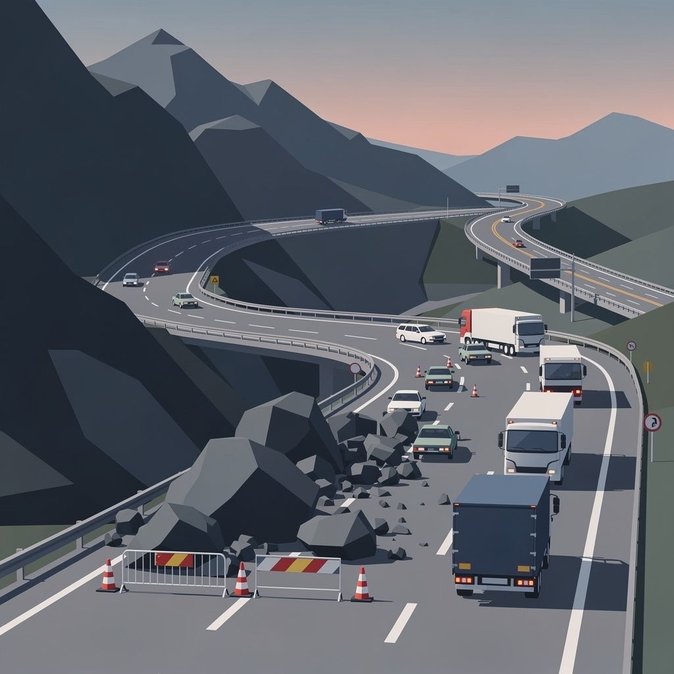
A midnight rockslide in the Gegendtaler hills forced police to impose a full closure of the B98 Millstätter Straße in both directions shortly after 00:30 on Monday, 22 June 2026. The arterial road links Lake Millstatt and Villach and is heavily used by commuters from IT-cluster firms in Carinthia as well as tourists transiting between Salzburg and Slovenia. Witnesses reported boulders the size of small cars crashing onto the carriageway near Afritz am See. No injuries were recorded, but an SUV and delivery van were damaged. With a geologist required to certify slope stability, traffic was diverted over narrow mountain routes via Glanz and Feistritz, adding up to 45 minutes to the normal one-hour drive.
Travelers suddenly forced to reroute through Italy, Slovenia or Germany may also need to double-check their travel documents. VisaHQ’s Austria portal (https://www.visahq.com/austria/) can expedite Schengen visa applications, secure transit permits, and provide up-to-date entry requirements for cross-border detours, ensuring that fans, freight drivers and business passengers spend less time on paperwork and more time on the road.
The incident coincided with the morning peak and with thousands of football fans travelling south for Austria’s World Cup group match in nearby Udine, compounding congestion on the A10 Tauern motorway. Carinthia’s crisis cell activated its standard ‘Baustopp’ (construction stop) protocol, freeing road-maintenance crews and heavy equipment to clear debris. By 18:45 the Landespolizei announced the road had re-opened, but only one lane is currently passable and vehicles over 7.5 tonnes remain banned until permanent rock-fall nets are installed. Multinational companies operating just-in-time supply chains out of Villach’s semiconductor cluster should review alternative freight routings via the A 11 Karawanken tunnel, while relocation advisers recommend updating housing search schedules this week to avoid prospective tenants being caught in delays. The event highlights the importance of including domestic road-infrastructure disruptions – not just border closures – in global mobility risk registers for Austria.
Travelers suddenly forced to reroute through Italy, Slovenia or Germany may also need to double-check their travel documents. VisaHQ’s Austria portal (https://www.visahq.com/austria/) can expedite Schengen visa applications, secure transit permits, and provide up-to-date entry requirements for cross-border detours, ensuring that fans, freight drivers and business passengers spend less time on paperwork and more time on the road.
The incident coincided with the morning peak and with thousands of football fans travelling south for Austria’s World Cup group match in nearby Udine, compounding congestion on the A10 Tauern motorway. Carinthia’s crisis cell activated its standard ‘Baustopp’ (construction stop) protocol, freeing road-maintenance crews and heavy equipment to clear debris. By 18:45 the Landespolizei announced the road had re-opened, but only one lane is currently passable and vehicles over 7.5 tonnes remain banned until permanent rock-fall nets are installed. Multinational companies operating just-in-time supply chains out of Villach’s semiconductor cluster should review alternative freight routings via the A 11 Karawanken tunnel, while relocation advisers recommend updating housing search schedules this week to avoid prospective tenants being caught in delays. The event highlights the importance of including domestic road-infrastructure disruptions – not just border closures – in global mobility risk registers for Austria.