China’s border megacity Shenzhen has launched an aggressive anti-smoking campaign that designates all indoor and most outdoor areas of its six land border crossings as smoke-free. At a ceremony on 21 June the city’s Tobacco Control Office announced the creation of “Smoke-Free Ports” at Luohu, Wenjindu, Huanggang, Shenzhen Bay, Futian and Liantang checkpoints—the first such blanket ban in any mainland gateway.
For travellers who may now be planning or adjusting trips through these crossings, VisaHQ can simplify one crucial part of the journey: securing the correct travel documents. The firm’s China portal (https://www.visahq.com/china/) provides fast online visa processing, status alerts and expert customer support, letting visitors focus on smoke-free compliance rather than paperwork.
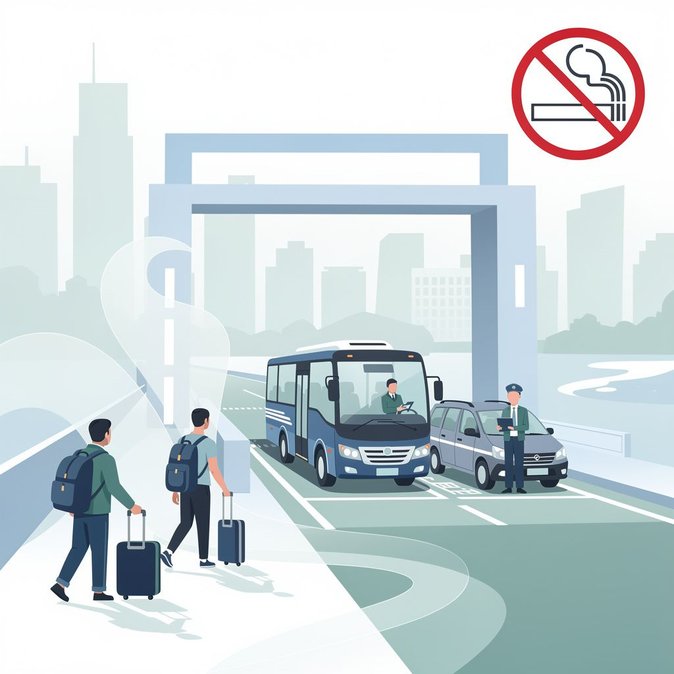
Enforcement began immediately at 01:00 on 22 June. With daily passenger throughput averaging 825,000 and cumulative crossings topping 100 million so far this year, Shenzhen handles more international foot traffic than any other Chinese city. The new rules target so-called “hot spots” such as toilet corridors, bus bays and footbridges where smokers congregate despite existing indoor bans. Roving inspection teams will issue on-the-spot fines of up to RMB 500 (US $69) and publish offenders’ names in a public database. For global mobility managers the policy is more than a public-health footnote. Smoke-free environments are increasingly stipulated in duty-of-care standards and expatriate assignment contracts. Travellers with respiratory conditions—who previously had to navigate clouds of second-hand smoke while queuing for immigration—should now find the transit experience less stressful. Corporations operating shuttle buses through the ports must also display no-smoking signage and can be fined up to RMB 30,000 for non-compliance, prompting many to update driver training and vehicle checks. The ban dovetails with Shenzhen’s broader goal of aligning its port amenities with international benchmarks ahead of APEC meetings scheduled for November. Officials hinted that digital enforcement—using AI-enabled cameras to detect lit cigarettes—will be piloted at Futian Port next quarter, creating a potential model for other Chinese gateways such as Shanghai Hongqiao and Beijing Daxing. Companies moving staff across the Hong Kong–Shenzhen boundary should brief employees on the stricter rules and advise nicotine-dependent travellers to use designated outdoor smoking kiosks located beyond the secure zone. Failure to comply could delay immigration clearance and incur corporate reputation risks, as media outlets regularly publish enforcement statistics.
For travellers who may now be planning or adjusting trips through these crossings, VisaHQ can simplify one crucial part of the journey: securing the correct travel documents. The firm’s China portal (https://www.visahq.com/china/) provides fast online visa processing, status alerts and expert customer support, letting visitors focus on smoke-free compliance rather than paperwork.
Enforcement began immediately at 01:00 on 22 June. With daily passenger throughput averaging 825,000 and cumulative crossings topping 100 million so far this year, Shenzhen handles more international foot traffic than any other Chinese city. The new rules target so-called “hot spots” such as toilet corridors, bus bays and footbridges where smokers congregate despite existing indoor bans. Roving inspection teams will issue on-the-spot fines of up to RMB 500 (US $69) and publish offenders’ names in a public database. For global mobility managers the policy is more than a public-health footnote. Smoke-free environments are increasingly stipulated in duty-of-care standards and expatriate assignment contracts. Travellers with respiratory conditions—who previously had to navigate clouds of second-hand smoke while queuing for immigration—should now find the transit experience less stressful. Corporations operating shuttle buses through the ports must also display no-smoking signage and can be fined up to RMB 30,000 for non-compliance, prompting many to update driver training and vehicle checks. The ban dovetails with Shenzhen’s broader goal of aligning its port amenities with international benchmarks ahead of APEC meetings scheduled for November. Officials hinted that digital enforcement—using AI-enabled cameras to detect lit cigarettes—will be piloted at Futian Port next quarter, creating a potential model for other Chinese gateways such as Shanghai Hongqiao and Beijing Daxing. Companies moving staff across the Hong Kong–Shenzhen boundary should brief employees on the stricter rules and advise nicotine-dependent travellers to use designated outdoor smoking kiosks located beyond the secure zone. Failure to comply could delay immigration clearance and incur corporate reputation risks, as media outlets regularly publish enforcement statistics.