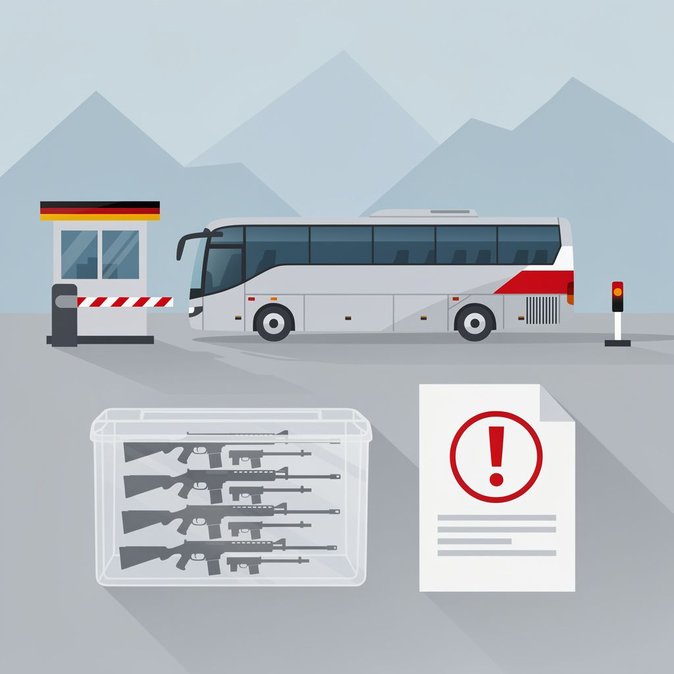
German federal police confiscated 34 unsecured long guns from a tour coach returning from a clergy jubilee in Salzburg to the Tyrolean Pillerseetal on 25 June. Officers at Bad Reichenhall—an entry point only 15 km from the Austrian border—halted the bus as part of routine Schengen-code internal border controls. All passengers belonged to traditional rifle guards (‘Schützenkompanien’) but lacked the mandatory cross-border firearms documentation. Each of the 34 individuals now faces administrative proceedings for firearms offences and had to post collective security of €6,800 before continuing the journey. The incident highlights how Austria’s historic militia groups, often invited to cultural events across the border, must comply with EU Regulation 258/2012 on the intra-EU movement of civilian weapons. For mobility managers arranging incentive trips or cultural delegations, the case underscores the need for early liaison with both Austrian Landespolizei and Germany’s Bundespolizei when transporting ceremonial weapons. Failure to obtain an EU firearm pass or temporary import licence can result not only in fines but also in vehicle seizure and event cancellations. The seizure also demonstrates Germany’s increasingly data-driven border risk profiling—following last month’s extension of temporary controls with Austria until December 2026. Business travellers should expect more frequent coach and minibus inspections, especially near major events such as Salzburg Festival or Munich’s Euro 2028 matches. While passenger traffic was only briefly interrupted, the reputational impact for tour organisers is significant. Experts recommend embedding compliance clauses in contracts with cultural associations and appointing a dedicated ‘travel marshal’ when moving regulated items across the Alpine frontier.
Source: ntv (dpa regional)