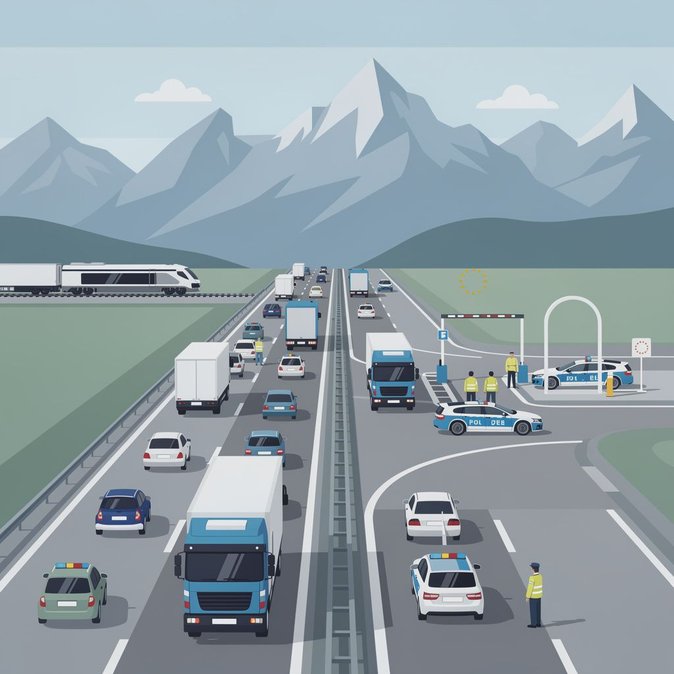
Holiday-weekend traffic met newly intensified police checks on 25 June, causing stop-and-go conditions for more than 20 km on the A12 Inntalautobahn between the German border at Kufstein/Kiefersfelden and Innsbruck. The long-distance corridor is part of the E45/E60 freight and tourist axis linking Germany, Austria, Italy and Switzerland. Travellers reported delays of up to 90 minutes as German and Austrian officers carried out Schengen-code ‘temporary internal border’ inspections aimed at deterring human smuggling and enforcing weapon and customs laws. Although the checks were random rather than continuous, the sheer traffic volume— boosted by the start of school holidays in several German Länder—quickly created a bottleneck. The A12 already handles more than 120,000 vehicles per day in peak season, and even minor incidents or construction sites can paralyse the single carriageway sections around Kufstein and Zirl. Freight forwarders complained that enforced waiting times jeopardise just-in-time supply chains between Bavaria and Tyrol. Several logistics firms rerouted high-value loads via the Brenner rail corridor or delayed departures until evening to avoid late delivery penalties. Tourism boards, meanwhile, warned accommodation providers to expect late arrivals and advised guests to carry passports and booking confirmations to ease secondary checks. For corporate mobility managers the episode is a reminder that Schengen’s temporary-control regime—currently extended by Austria and Germany until December 2026—can materially affect road travel planning. Experts recommend building at least one extra hour into itineraries through Tyrol on peak Fridays and Saturdays, pre-purchasing digital vignettes, and briefing drivers on required ID and customs documentation. Rail connections (ÖBB Railjet/EC) remain unaffected and can bypass delays for business travellers between Munich, Innsbruck and Vorarlberg. Long-term relief may only come from the yet-to-be-approved Kufstein bypass tunnel and EU-level negotiations to phase out repetitive internal border controls. Until then, the A12 will remain a flashpoint whenever security policy collides with the continent’s busiest Alpine trade corridor.
Source: Reisereporter