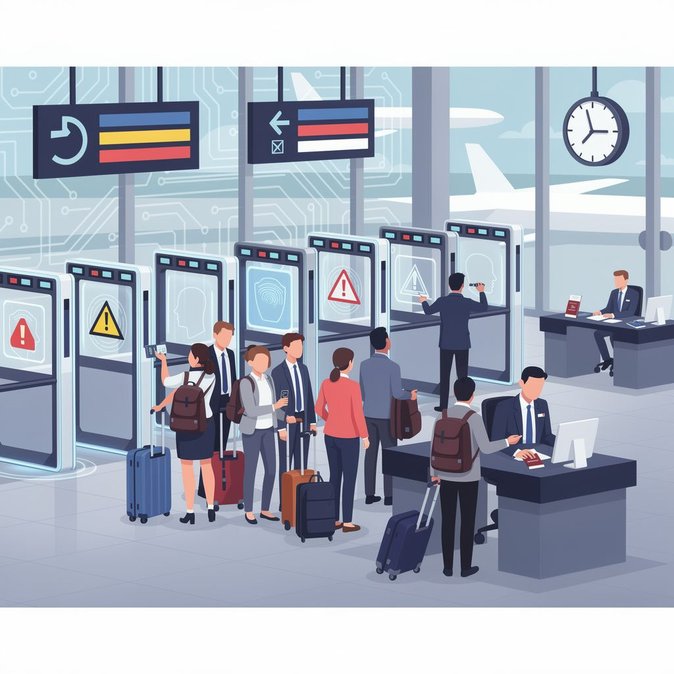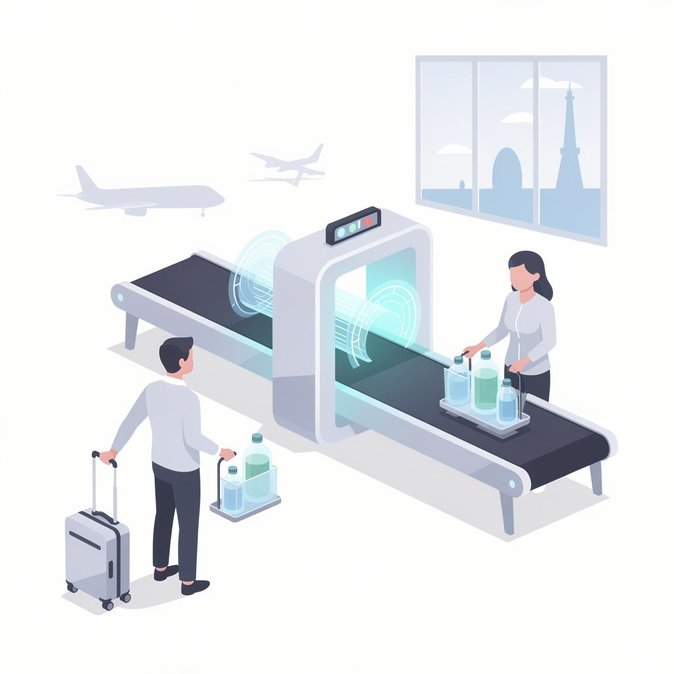
Starting 3 July 2026, passengers departing Vienna International Airport (VIE) will no longer have to squeeze toiletries into tiny bottles. The airport confirmed on 26 June that all security lanes in Terminals 1, 1A and 3 are now equipped with next-generation computed-tomography (CT) scanners, allowing containers of liquids, gels and aerosols of up to two litres to remain inside hand luggage. Travellers will also be able to leave laptops and tablets in their bags, cutting average checkpoint times by an estimated 30 percent. The €36-million investment puts Vienna among the earliest major EU hubs to abandon the 100-millilitre restriction introduced across Europe in 2006 after a foiled liquid-explosive plot. Airport Chief Operating Officer Julian Jäger said the change “brings both stronger security and a smoother passenger experience” and will be particularly valuable during the summer peak, when VIE expects record volumes of transfer traffic from Central and Eastern Europe. For business travellers, the new scanners remove a long-standing pain point—especially for executives carrying samples, cosmetics or medical liquids. Corporate travel managers should update pre-trip guidance: while Vienna no longer enforces the 100-ml rule, most other airports on a passenger’s itinerary might. The airport is advising passengers on round-trips to keep liquids under 100 ml for their return sector unless they are certain the departure airport also uses CT technology. Security experts note that CT machines create high-resolution 3-D images that are automatically analysed by algorithms for explosives, enabling staff to rotate and slice images without opening bags. The Austrian Interior Ministry says the new equipment integrates with the EU’s Entry/Exit System (EES), supporting faster secondary screening of third-country nationals. Travellers connecting through Vienna should nonetheless allow extra time during the first weeks of operation as staff and passengers adjust to the new process.
Source: TourismToday.gr