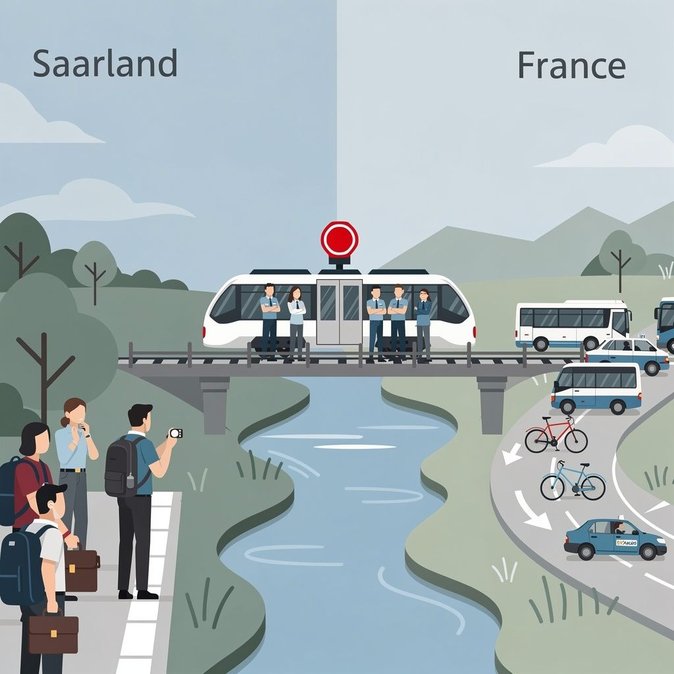
The Train Drivers’ Union (GDL) has escalated its pay dispute with Saarbahn GmbH by announcing a 24-hour warning strike from 17:00 on Friday, 26 June, to 17:00 on Saturday. The walkout is the fifth in the current round of negotiations and will suspend the entire S1 tram-train corridor linking Lebach, Saarbrücken and Saargemünd. Replacement buses are not planned. GDL accuses the municipal operator of “stonewalling” after management allegedly failed to appear at a scheduled bargaining session. The union is demanding alignment with the 35-hour work-week deal it secured at Deutsche Bahn earlier this year, plus an inflation-offsetting pay rise. Saarbahn maintains that its finances cannot absorb the cost without a subsidy increase from the Saarland government. The stoppage hits a critical commuter artery used by cross-border workers who connect at Saargemünd to the French TER network. Local chambers of commerce estimate that 9,000 employees could face delays reaching production sites in the Saar-Lor-Lux automotive cluster. Employers are advising staff to work from home where possible and reminding them to document travel disruption for expense claims. For global-mobility and travel managers the incident underscores Germany’s fragmented labour landscape: small city networks are not covered by the recent national rail settlement and remain vulnerable to sporadic strikes. Contingency planning should include alternative car-pooling arrangements and, where feasible, remote-work clauses in assignment contracts. Talks are set to resume next week, but GDL leader Claus Weselsky warns that further escalation is possible if Saarbahn does not table a “serious” offer. With school holidays less than a month away, any protracted dispute could snarl leisure traffic to France’s eastern beaches and the Moselle wine region.
Source: ntv (dpa wire)