Irish citizens applying for a passport from today, 26 June 2026, will receive a document that looks – and feels – markedly different from the familiar burgundy booklet that has been in circulation since 2015. Minister for Foreign Affairs Helen McEntee officially launched the new Irish passport overnight, describing it as “one of the world’s most advanced travel documents”. The makeover follows an 18-month consultation that drew more than 15,000 public submissions and close co-operation with the Passport Service’s security-design contractors.
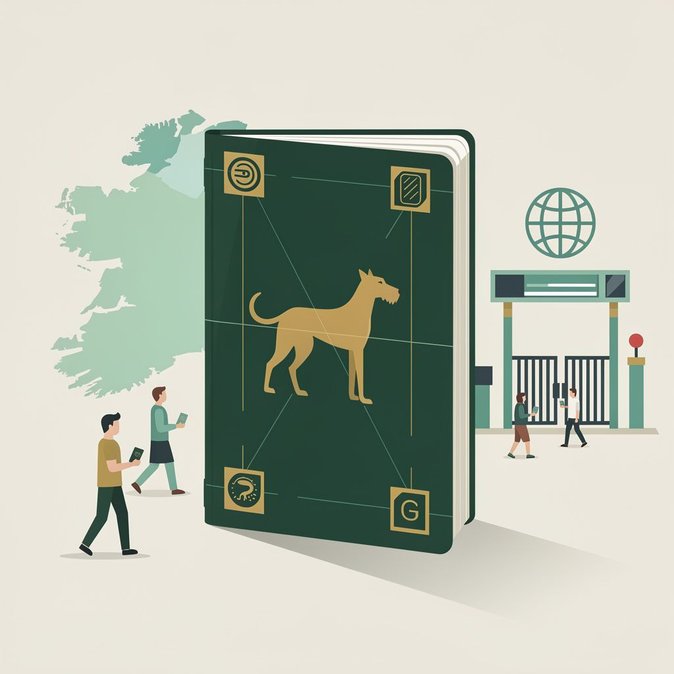
The most immediately noticeable change is artistic: an Irish wolfhound – long associated with guardianship in Irish folklore – dominates the cover watermark and several internal pages, accompanied by hand-drawn illustrations of Skellig Michael, the Burren and other UNESCO-listed landscapes.
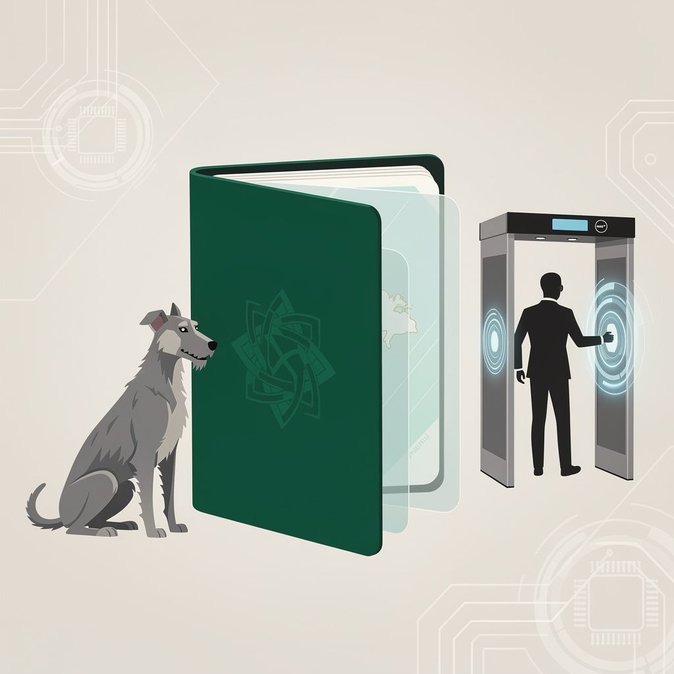
Beneath the aesthetics lie dozens of technical upgrades: polycarbonate data pages with laser-etched personal details, next-generation “Magic-Ink” optically-variable colour-shifting inks, an embedded encrypted chip that meets the latest ICAO 9303 standards, and a high-resolution “tactile surface” that can be verified by touch at eGates.
Security designers claim the combination makes counterfeiting “virtually impossible” and dramatically speeds automated border checks.
For global-mobility managers the refresh is more than cosmetic. Irish passports already rank highly – offering visa-free or visa-on-arrival access to 186 countries – but the addition of sophisticated anti-fraud measures should reduce secondary inspections and manual overrides at busy hubs, saving crucial minutes for business travellers.
The Department of Foreign Affairs (DFA) confirmed that eGate suppliers including SITA and Vision-Box have finished software updates so the new booklet is recognised at Heathrow, Schiphol, JFK and Dubai among others.
For those travellers looking to put the fresh security features to immediate use overseas, VisaHQ can streamline the rest of the journey. The company’s online portal – https://www.visahq.com/ireland/ – lets Irish passport holders confirm entry rules, generate visa applications and arrange courier drop-offs for embassies worldwide, all of which now accommodate the longer booklet number and new chip standards.
Holders of the previous 2015-series passport can continue to travel until the printed expiry date; there is no mandatory exchange programme.
Companies running large assignee populations have been advised to check internal mobility databases: HRIS systems that store “passport issue date” fields may need tweaks to accept the longer 10-digit booklet number and new two-letter security prefix.
Travel-management companies expect a short-term surge in renewal applications from frequent flyers keen to benefit from the faster chip.
The Passport Service says it has expanded capacity at its Balbriggan printing facility and does not anticipate processing backlogs – current online renewal times remain at a consistent five working days.
Looking ahead, officials hinted that the same design platform could underpin a card-format passport for intra-EEA travel and a digital-only credential synced with the EU Digital Identity Wallet, both possibilities the DFA will explore during 2027.
For now, however, the arrival of an unmistakably Irish travel document – proud of its heritage yet loaded with cutting-edge security – is being welcomed across the global mobility community as a tangible boost to the country’s international brand.
The most immediately noticeable change is artistic: an Irish wolfhound – long associated with guardianship in Irish folklore – dominates the cover watermark and several internal pages, accompanied by hand-drawn illustrations of Skellig Michael, the Burren and other UNESCO-listed landscapes.
Beneath the aesthetics lie dozens of technical upgrades: polycarbonate data pages with laser-etched personal details, next-generation “Magic-Ink” optically-variable colour-shifting inks, an embedded encrypted chip that meets the latest ICAO 9303 standards, and a high-resolution “tactile surface” that can be verified by touch at eGates.
Security designers claim the combination makes counterfeiting “virtually impossible” and dramatically speeds automated border checks.
For global-mobility managers the refresh is more than cosmetic. Irish passports already rank highly – offering visa-free or visa-on-arrival access to 186 countries – but the addition of sophisticated anti-fraud measures should reduce secondary inspections and manual overrides at busy hubs, saving crucial minutes for business travellers.
The Department of Foreign Affairs (DFA) confirmed that eGate suppliers including SITA and Vision-Box have finished software updates so the new booklet is recognised at Heathrow, Schiphol, JFK and Dubai among others.
For those travellers looking to put the fresh security features to immediate use overseas, VisaHQ can streamline the rest of the journey. The company’s online portal – https://www.visahq.com/ireland/ – lets Irish passport holders confirm entry rules, generate visa applications and arrange courier drop-offs for embassies worldwide, all of which now accommodate the longer booklet number and new chip standards.
Holders of the previous 2015-series passport can continue to travel until the printed expiry date; there is no mandatory exchange programme.
Companies running large assignee populations have been advised to check internal mobility databases: HRIS systems that store “passport issue date” fields may need tweaks to accept the longer 10-digit booklet number and new two-letter security prefix.
Travel-management companies expect a short-term surge in renewal applications from frequent flyers keen to benefit from the faster chip.
The Passport Service says it has expanded capacity at its Balbriggan printing facility and does not anticipate processing backlogs – current online renewal times remain at a consistent five working days.
Looking ahead, officials hinted that the same design platform could underpin a card-format passport for intra-EEA travel and a digital-only credential synced with the EU Digital Identity Wallet, both possibilities the DFA will explore during 2027.
For now, however, the arrival of an unmistakably Irish travel document – proud of its heritage yet loaded with cutting-edge security – is being welcomed across the global mobility community as a tangible boost to the country’s international brand.