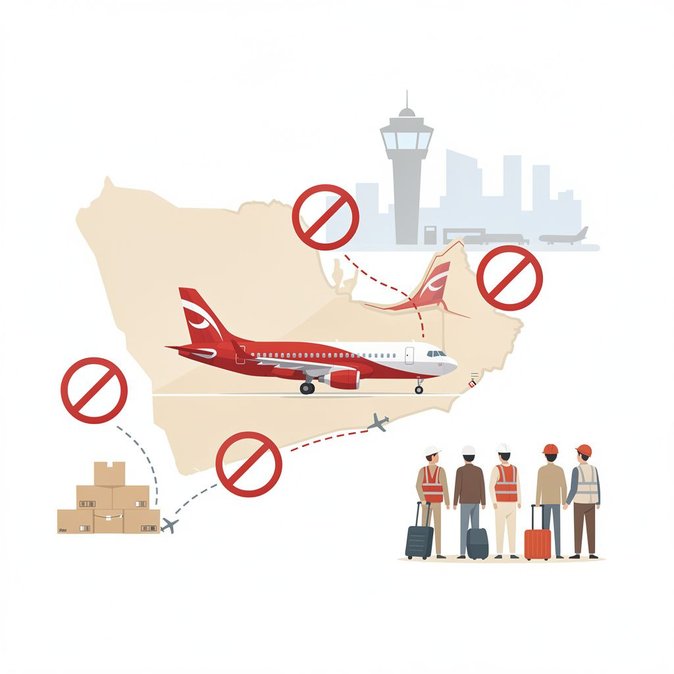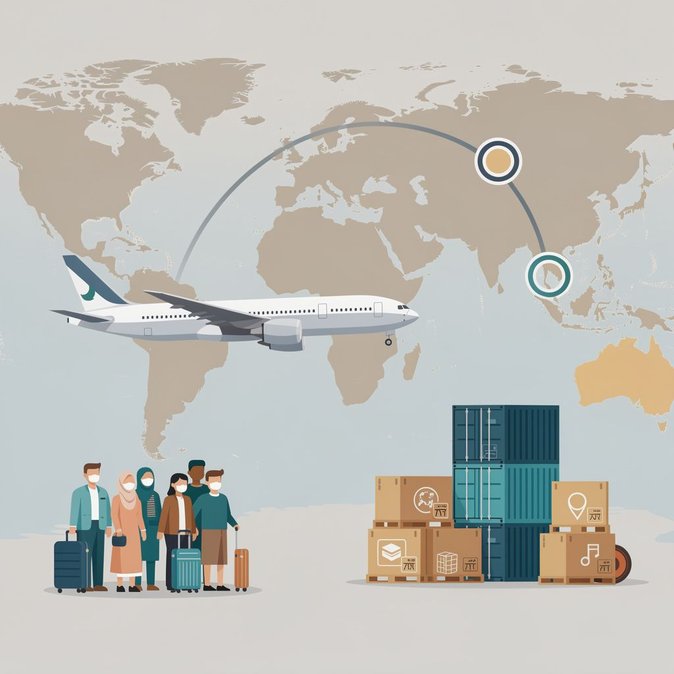
Etihad Airways has inaugurated nonstop passenger and cargo services between Abu Dhabi and Dhaka, its first new wide-body route since regional airspace reopened in May. The sold-out flight EY382 departed Zayed International Airport at 22:00 on June 26 and landed in the Bangladeshi capital early the next morning; the carrier confirmed the launch in a 27 June statement. The four-times-weekly Boeing 777 service adds more than 1,600 seats and significant belly-hold capacity each week, directly targeting Bangladesh’s garment exporters and the 700,000-strong Bangladeshi community living in the UAE.
For travelers on the new Abu Dhabi–Dhaka route, securing the right travel documents is simpler than ever with VisaHQ. The company’s UAE portal (https://www.visahq.com/united-arab-emirates/) lets passengers complete visa applications online, access up-to-date requirements and track approvals in real time—ideal for business executives, migrant workers and logistics staff who need paperwork to move as quickly as Etihad’s connections.
Etihad CEO Antonoaldo Neves said demand on the first flight “demonstrates the resilience of South-Asia–Gulf corridors” after months of war-related disruption. For corporate travel programmes the new service offers a premium alternative to the low-cost connections historically dominated by flydubai and Air Arabia, with lie-flat business-class seats and seamless onward links to North America and Europe via Abu Dhabi’s US pre-clearance facility. Logistics managers, meanwhile, gain a reliable outbound option for time-sensitive textiles as exporters race to clear backlogs created when flights were diverted around Iranian airspace. Etihad’s schedule deliberately banks Dhaka arrivals into late-night Abu Dhabi departures, enabling 90-minute transfers to 23 cities, including London, Chicago and Paris—important for migrant-worker leave traffic. The airline says the Dhaka launch is the first in a pipeline of South-Asian expansions that will include Kochi, Colombo and Kathmandu once bilateral aeropolitical issues are resolved.
For travelers on the new Abu Dhabi–Dhaka route, securing the right travel documents is simpler than ever with VisaHQ. The company’s UAE portal (https://www.visahq.com/united-arab-emirates/) lets passengers complete visa applications online, access up-to-date requirements and track approvals in real time—ideal for business executives, migrant workers and logistics staff who need paperwork to move as quickly as Etihad’s connections.
Etihad CEO Antonoaldo Neves said demand on the first flight “demonstrates the resilience of South-Asia–Gulf corridors” after months of war-related disruption. For corporate travel programmes the new service offers a premium alternative to the low-cost connections historically dominated by flydubai and Air Arabia, with lie-flat business-class seats and seamless onward links to North America and Europe via Abu Dhabi’s US pre-clearance facility. Logistics managers, meanwhile, gain a reliable outbound option for time-sensitive textiles as exporters race to clear backlogs created when flights were diverted around Iranian airspace. Etihad’s schedule deliberately banks Dhaka arrivals into late-night Abu Dhabi departures, enabling 90-minute transfers to 23 cities, including London, Chicago and Paris—important for migrant-worker leave traffic. The airline says the Dhaka launch is the first in a pipeline of South-Asian expansions that will include Kochi, Colombo and Kathmandu once bilateral aeropolitical issues are resolved.