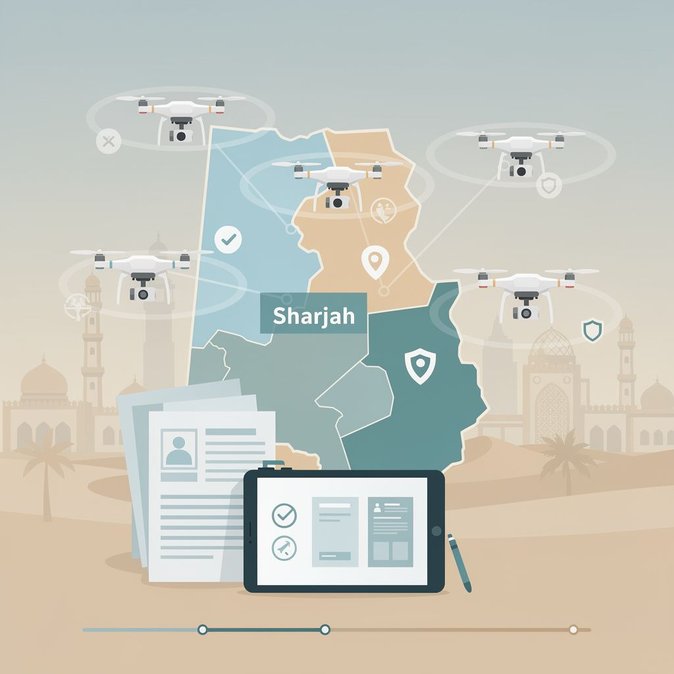
Sharjah has become the first emirate to publish a stand-alone law devoted entirely to unmanned-aircraft operations. Issued by the Ruler of Sharjah, the new statute introduces a licensing regime covering every stage of a drone’s life-cycle – from design and assembly to pilot training and commercial filming. All operators must first obtain a permit from the Sharjah Civil Aviation Department and register their aircraft with either the department or the UAE’s General Civil Aviation Authority. Unregistered or deregistered drones are expressly banned from take-off. The law carves Sharjah’s air-space into approved, restricted and prohibited zones. Flights are permitted only in approved corridors; entering a restricted area requires prior written authorisation, while prohibited zones are entirely off-limits. The department is empowered to set maximum altitudes and horizontal distances, mandate identification beacons and geo-fencing, and order immediate landings when civil or military traffic takes priority. Altitude and distance limits will be announced in secondary regulations over the next three months. A wide range of activities – including design, maintenance, modification, simulation training and the creation of drone landing pads – now require separate approvals. Article 21 allows officials to suspend or revoke licences before they expire if operators breach safety rules. An appeals mechanism gives individuals 30 days to challenge enforcement decisions; a review committee must respond within the same period, and its ruling is final. Sharjah’s move aligns the UAE more closely with ICAO best practice and mirrors the tighter drone rules introduced in the EU and the United States over the past five years. For businesses, the measure provides long-awaited clarity. Film-production houses, survey firms and logistics start-ups can now plan projects knowing the authorisation pathway and lead times. Multinationals deploying aerial inspection fleets – for example, oil-and-gas majors monitoring pipelines – will need to budget for the new permit costs and factor in the three-month compliance deadline. Companies with pan-UAE programmes must also track each emirate’s specific rules; Dubai maintains a separate permit portal under the MyDroneHub system, while Abu Dhabi still issues exemptions on a case-by-case basis. Legal advisers expect Sharjah’s framework to act as a template for federal implementing regulations that could harmonise drone operations nationwide, easing cross-border commercial flights inside the UAE in the medium term.
Source: Gulf News