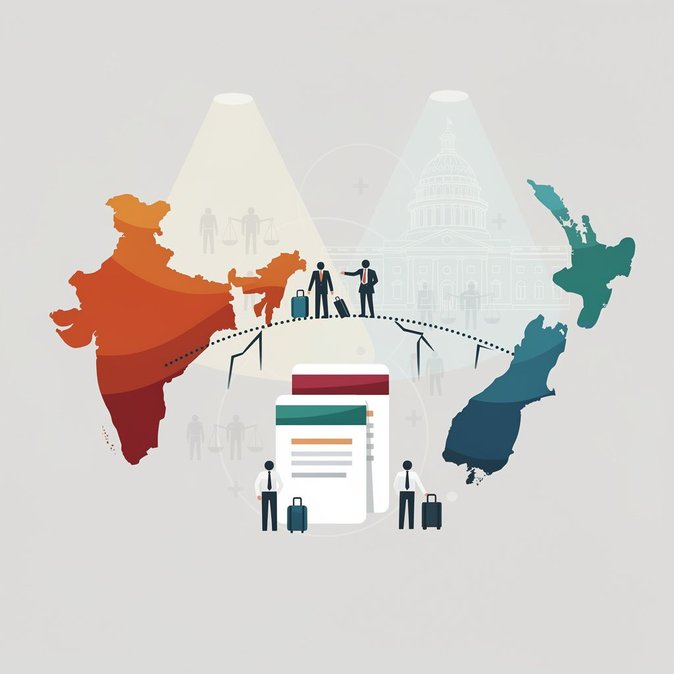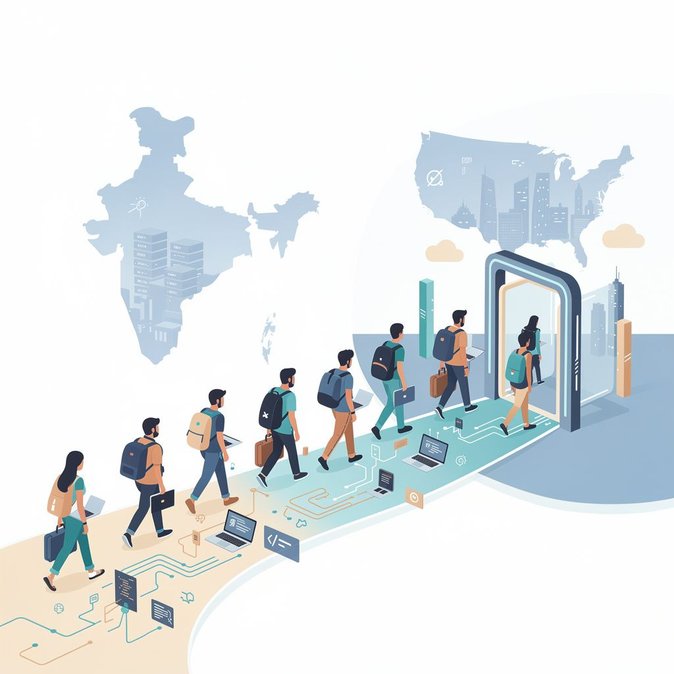
A data-driven explainer by The Indian Express marks the United States’ 250th Independence Day by spotlighting how Indian talent now underpins America’s innovation economy. Citing a 2025 Pew Research Center analysis, the article notes that 73 per cent of FY 2023 H-1B approvals went to Indian nationals, far ahead of China’s 12 per cent. Two-thirds of all H-1B holders work in computer-related fields, filling critical shortages in artificial intelligence, semiconductor design and cloud infrastructure. Several factors drive India’s dominance: the world’s largest pool of STEM graduates, decades-old ties between Indian IT services firms and US clients, and widespread English proficiency.
For Indian professionals who want to navigate this complex visa landscape smoothly, VisaHQ offers practical, end-to-end assistance. Its India portal (https://www.visahq.com/india/) provides personalised document checklists, streamlined filing tools and real-time status updates—services that can save both applicants and HR teams time and costly errors when racing against strict H-1B deadlines.
The piece also explains the programme’s mechanics—including the 65,000 annual cap and separate 20,000-visa master’s quota—and clarifies that while the visa can be renewed for up to six years, Indians face some of the longest employment-based green-card backlogs owing to per-country limits. For Indian tech workers and the multinationals that employ them, the analysis offers context ahead of expected US election-year debates on skilled immigration. Policy proposals range from raising wage floors to exempting AI researchers from annual quotas. Employers are advised to track forthcoming Department of Labor rule-makings that could tighten prevailing-wage calculations, potentially increasing costs for offshoring-heavy firms. The article concludes that continued access to Indian talent is viewed by Silicon Valley giants as essential to maintaining US technology leadership. Any unilateral curbs, it warns, could accelerate near-shoring of high-end R&D to hubs in Bengaluru, Hyderabad and Gurgaon, altering global mobility flows over the next decade.
For Indian professionals who want to navigate this complex visa landscape smoothly, VisaHQ offers practical, end-to-end assistance. Its India portal (https://www.visahq.com/india/) provides personalised document checklists, streamlined filing tools and real-time status updates—services that can save both applicants and HR teams time and costly errors when racing against strict H-1B deadlines.
The piece also explains the programme’s mechanics—including the 65,000 annual cap and separate 20,000-visa master’s quota—and clarifies that while the visa can be renewed for up to six years, Indians face some of the longest employment-based green-card backlogs owing to per-country limits. For Indian tech workers and the multinationals that employ them, the analysis offers context ahead of expected US election-year debates on skilled immigration. Policy proposals range from raising wage floors to exempting AI researchers from annual quotas. Employers are advised to track forthcoming Department of Labor rule-makings that could tighten prevailing-wage calculations, potentially increasing costs for offshoring-heavy firms. The article concludes that continued access to Indian talent is viewed by Silicon Valley giants as essential to maintaining US technology leadership. Any unilateral curbs, it warns, could accelerate near-shoring of high-end R&D to hubs in Bengaluru, Hyderabad and Gurgaon, altering global mobility flows over the next decade.