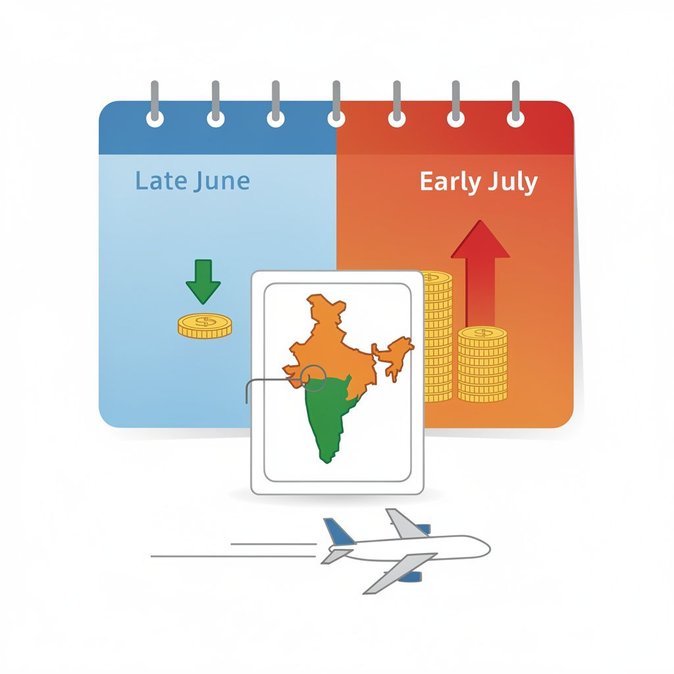
Budget travellers have one last weekend to grab India’s cut-price 30-day e-Tourist Visa after the Ministry of Home Affairs confirmed on 27 June 2026 that the promotional US $10 fee will not be rolled over beyond 30 June. The two-month discount, introduced on 1 April to boost off-season arrivals, slashed the standard US $25 fee by 60 per cent and sparked a 27 per cent spike in short-haul bookings from Southeast Asia and the Gulf, according to OTA data.
Travellers unsure about the shifting fees and eligibility rules can streamline the process through VisaHQ, which offers step-by-step application support for India’s e-Tourist and e-Business visas, real-time status tracking, and document checks that mirror the government’s new AI photo standards. For more information, visit https://www.visahq.com/india/
While hospitality groups want the offer made permanent, officials argue the subsidy has cost the exchequer ₹120 crore in lost revenue. Key operational tweaks launched alongside the promotion remain in force: travellers can now apply 120 days before arrival (up from 30), choose from 51 designated airports and seaports, and face stricter AI-based photo scrutiny. Overstay penalties—raised in January to US $300 plus US $10 per day—also remain unchanged. For global-mobility teams, the low-fee visa has been a useful stop-gap for short client visits, but it still forbids paid work and cannot be converted to business or employment status in-country. HR managers planning July visits should therefore budget for the full US $25 fee or switch to the one-year e-Business Visa (US $40) if meetings may slide into paid consulting. Analysts note that India’s e-Visa funnel now clears 91 per cent of applications within 72 hours, a performance the government hopes will offset the end of the discount.
Travellers unsure about the shifting fees and eligibility rules can streamline the process through VisaHQ, which offers step-by-step application support for India’s e-Tourist and e-Business visas, real-time status tracking, and document checks that mirror the government’s new AI photo standards. For more information, visit https://www.visahq.com/india/
While hospitality groups want the offer made permanent, officials argue the subsidy has cost the exchequer ₹120 crore in lost revenue. Key operational tweaks launched alongside the promotion remain in force: travellers can now apply 120 days before arrival (up from 30), choose from 51 designated airports and seaports, and face stricter AI-based photo scrutiny. Overstay penalties—raised in January to US $300 plus US $10 per day—also remain unchanged. For global-mobility teams, the low-fee visa has been a useful stop-gap for short client visits, but it still forbids paid work and cannot be converted to business or employment status in-country. HR managers planning July visits should therefore budget for the full US $25 fee or switch to the one-year e-Business Visa (US $40) if meetings may slide into paid consulting. Analysts note that India’s e-Visa funnel now clears 91 per cent of applications within 72 hours, a performance the government hopes will offset the end of the discount.