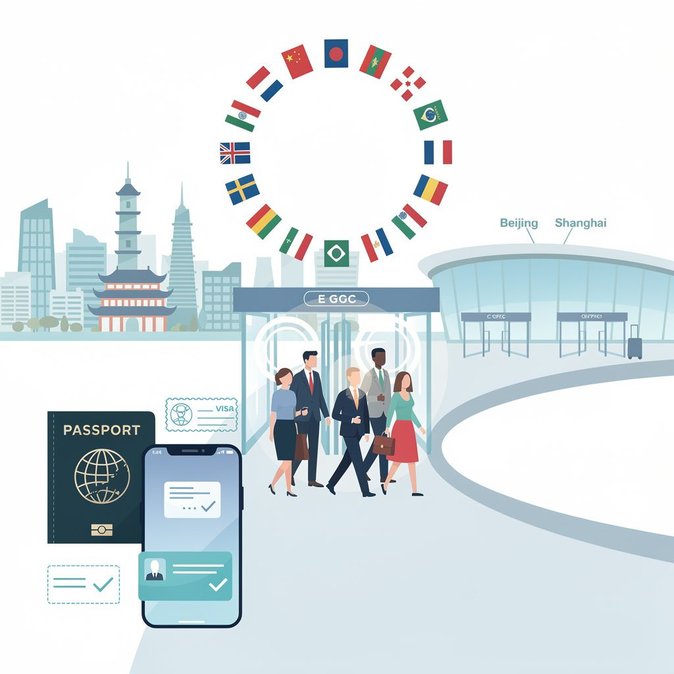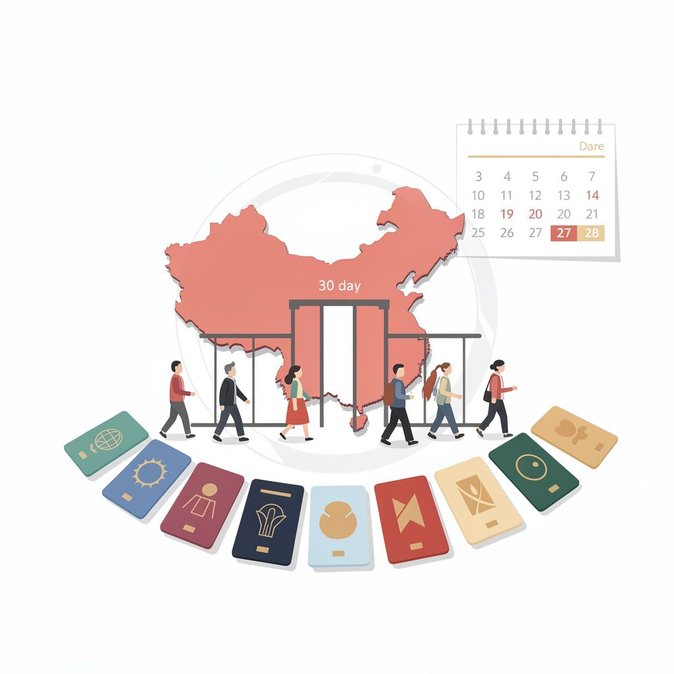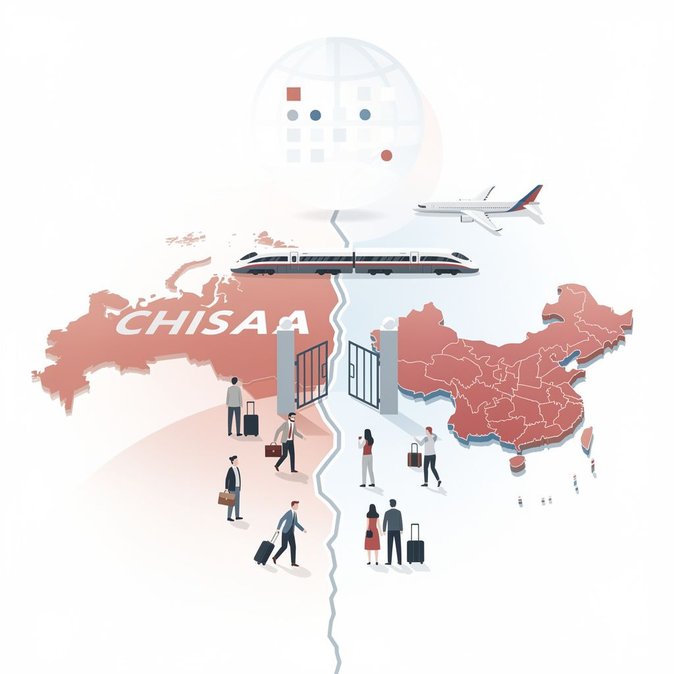
In a brief note published in Moscow at 02:25 on 28 June, Russian news service AK&M reported that China has formally re-confirmed a 30-day visa-free regime for ordinary Russian passport holders until at least 14 September 2026. The statement, attributed to China’s Foreign Ministry, removes lingering uncertainty for tour operators and Russian corporates after earlier comments suggested the pilot might be curtailed. The waiver—first introduced in September 2025—allows Russians to enter China for business meetings, tourism, family visits and transit without obtaining an L-, F- or G-class visa, provided each stay does not exceed 30 days. Multiple entries are permitted.
Should individual travelers or corporate mobility teams require assistance when their plans exceed the 30-day visa-free window, VisaHQ can streamline the paperwork. Through its China portal (https://www.visahq.com/china/), the service offers step-by-step application support, real-time tracking, and expert guidance on Z-, M- and other visa categories, helping clients stay compliant with Chinese entry rules.
According to the China Tourism Academy, inbound Russian visits rebounded to 1.2 million in the first five months of 2026, 64 percent of the 2019 level; analysts now expect the figure to surpass 2.5 million by year-end. For companies operating Sino-Russian supply chains—particularly in energy, engineering and e-commerce—the extension means staff rotations, joint-venture audits and after-sales support trips can continue on short notice. Mobility managers should, however, remind travellers that work activities beyond short-term consultations remain outside the waiver’s scope and still require a Z- or M-type visa plus work authorisation. Travel-risk advisors note that Russian citizens must carry proof of accommodation and a return or onward ticket; random documentation checks at land crossings in Heilongjiang and Inner Mongolia have increased since May amid higher volumes. Airlines have responded quickly: China Eastern added a third weekly Irkutsk–Shanghai service for July-August, and Sichuan Airlines plans to up-gauge its Chengdu–Moscow route to A330 capacity. Longer term, Beijing is using the Russia pilot as a template for other large emerging markets. Officials have hinted that Brazil and South Africa are next in line for 30-day unilateral waivers, possibly as early as the 2026 BRICS summit in Kazan.
Should individual travelers or corporate mobility teams require assistance when their plans exceed the 30-day visa-free window, VisaHQ can streamline the paperwork. Through its China portal (https://www.visahq.com/china/), the service offers step-by-step application support, real-time tracking, and expert guidance on Z-, M- and other visa categories, helping clients stay compliant with Chinese entry rules.
According to the China Tourism Academy, inbound Russian visits rebounded to 1.2 million in the first five months of 2026, 64 percent of the 2019 level; analysts now expect the figure to surpass 2.5 million by year-end. For companies operating Sino-Russian supply chains—particularly in energy, engineering and e-commerce—the extension means staff rotations, joint-venture audits and after-sales support trips can continue on short notice. Mobility managers should, however, remind travellers that work activities beyond short-term consultations remain outside the waiver’s scope and still require a Z- or M-type visa plus work authorisation. Travel-risk advisors note that Russian citizens must carry proof of accommodation and a return or onward ticket; random documentation checks at land crossings in Heilongjiang and Inner Mongolia have increased since May amid higher volumes. Airlines have responded quickly: China Eastern added a third weekly Irkutsk–Shanghai service for July-August, and Sichuan Airlines plans to up-gauge its Chengdu–Moscow route to A330 capacity. Longer term, Beijing is using the Russia pilot as a template for other large emerging markets. Officials have hinted that Brazil and South Africa are next in line for 30-day unilateral waivers, possibly as early as the 2026 BRICS summit in Kazan.