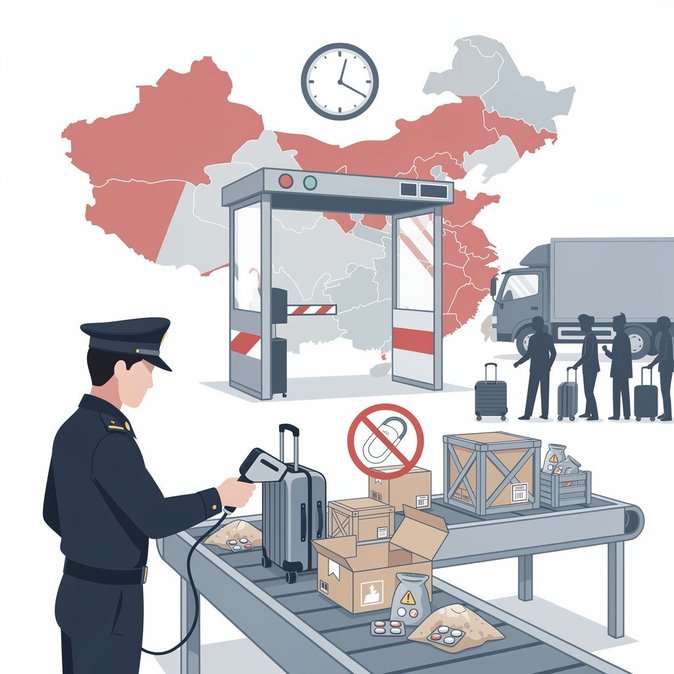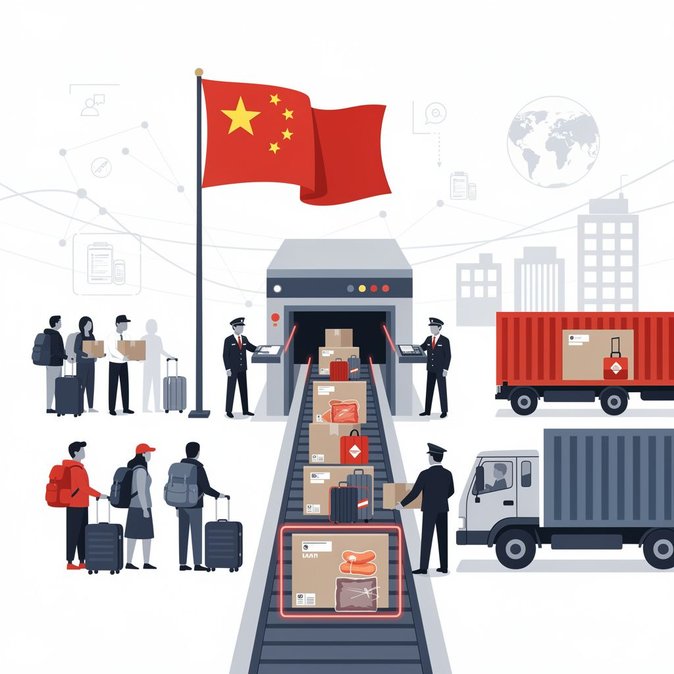
China’s National Immigration Administration (NIA) has released mid-year enforcement figures that underline how aggressively the country is policing its land, sea and air gateways against drug trafficking. Between 1 January and 25 June 2026, immigration officers handled 186 drug-related cases at international ports of entry, arresting 243 suspects and confiscating 4.07 tonnes of narcotics, including 45 large-volume cases involving more than 10 kilograms each. The haul already exceeds the total seized during the same period last year, signalling both improved detection capability and the unrelenting pressure that traffickers are placing on China’s borders. According to the NIA, investigators have shifted from ad-hoc inspections to an intelligence-led model that pools big-data analysis, undercover work and joint task forces with customs, railway police and anti-smuggling units. The focus is on dismantling entire supply chains rather than simply intercepting couriers. A senior official told state media that authorities have frozen trafficking-related bank accounts and traced “upstream” logistics nodes as far afield as the Golden Triangle and Central Asia. Cooperation agreements signed with Vietnam, Laos and Myanmar now allow for real-time sharing of passenger manifests and container data. Corporations that rely on predictable cargo flows—especially e-commerce platforms, express operators and bonded-logistics providers—should expect higher inspection rates at key land ports such as Hekou, Mohan and Ruili, as well as at coastal hubs including Shenzhen’s Yantian terminal. While the NIA emphasises that legitimate trade will be facilitated, companies moving consolidated consignments through high-risk corridors may face longer clearance windows unless they enrol in China’s “trusted trader” (AEO) scheme. For business travellers, the immediate impact is increased scrutiny of luggage on arrival and more random questioning in border zones adjacent to Myanmar and Laos. Compliance teams are being advised to brief employees on China’s zero-tolerance drug laws—possession of as little as 50 grams of heroin can attract the death penalty—and to review supply-chain partners for vulnerabilities that could invite inspection delays. Looking ahead, Beijing plans to integrate anti-drug algorithms into the nationwide “Smart Border” platform that already supports e-gates and advance passenger information systems. The technology upgrade, combined with closer regional policing ties, is expected to reduce the window of opportunity for traffickers but will keep risk-management squarely on the agenda for mobility managers moving staff or goods into mainland China.
Source: China Daily