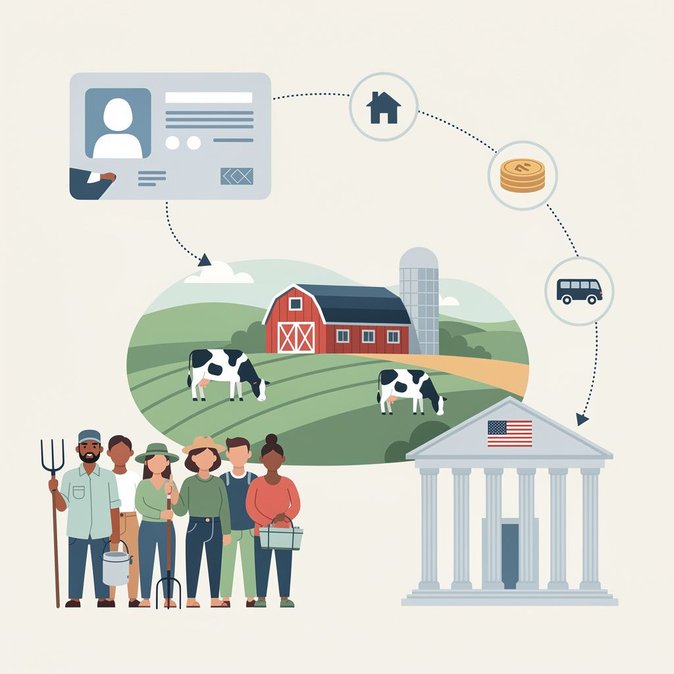
In a policy pivot closely watched by agri-business lobbyists, the Trump administration has clarified that year-round dairy operations can now hire foreign labour through the H-2A temporary-agricultural-worker programme. Dairy had long been excluded because H-2A was limited to seasonal crops; farms relied heavily on undocumented labour or faced chronic staff shortages. The change, published on 29 June 2026, lets dairies file H-2A petitions provided they can prove a domestic labour shortfall and meet wage, housing and transportation rules. Industry groups estimate an immediate demand for 20,000 workers nationwide. Although Latin America traditionally supplies most US farm labour, Indian workers are increasingly present in US agriculture programmes and specialised animal-husbandry roles.
For employers and prospective workers who need practical help understanding documentary requirements, scheduling embassy appointments or coordinating travel timelines, VisaHQ offers end-to-end assistance for a variety of U.S. visa categories—including H-2A—through its India portal (https://www.visahq.com/india/). The platform’s step-by-step guidance and live support can reduce costly errors and keep both recruiters and applicants on track with the new dairy-sector opportunities.
Recruiters in Punjab and Haryana have already begun advertising placements, highlighting legal status and eventual options to transition to other visas. For global-mobility teams, the expansion offers a compliance-friendly channel for agricultural and agri-tech secondments previously routed through J-1 trainee schemes or L-1 transfers. Yet anti-immigration advocates argue the move undermines efforts to “restore American jobs”, foreshadowing possible litigation or future reversals. Companies considering the route must account for stringent H-2A housing mandates, state labour rules and the obligation to repatriate workers at contract end. Early engagement with designated recruitment agents and transparent pay practices will be essential to avoid the wage-theft scandals that have hit other farm sectors.
For employers and prospective workers who need practical help understanding documentary requirements, scheduling embassy appointments or coordinating travel timelines, VisaHQ offers end-to-end assistance for a variety of U.S. visa categories—including H-2A—through its India portal (https://www.visahq.com/india/). The platform’s step-by-step guidance and live support can reduce costly errors and keep both recruiters and applicants on track with the new dairy-sector opportunities.
Recruiters in Punjab and Haryana have already begun advertising placements, highlighting legal status and eventual options to transition to other visas. For global-mobility teams, the expansion offers a compliance-friendly channel for agricultural and agri-tech secondments previously routed through J-1 trainee schemes or L-1 transfers. Yet anti-immigration advocates argue the move undermines efforts to “restore American jobs”, foreshadowing possible litigation or future reversals. Companies considering the route must account for stringent H-2A housing mandates, state labour rules and the obligation to repatriate workers at contract end. Early engagement with designated recruitment agents and transparent pay practices will be essential to avoid the wage-theft scandals that have hit other farm sectors.