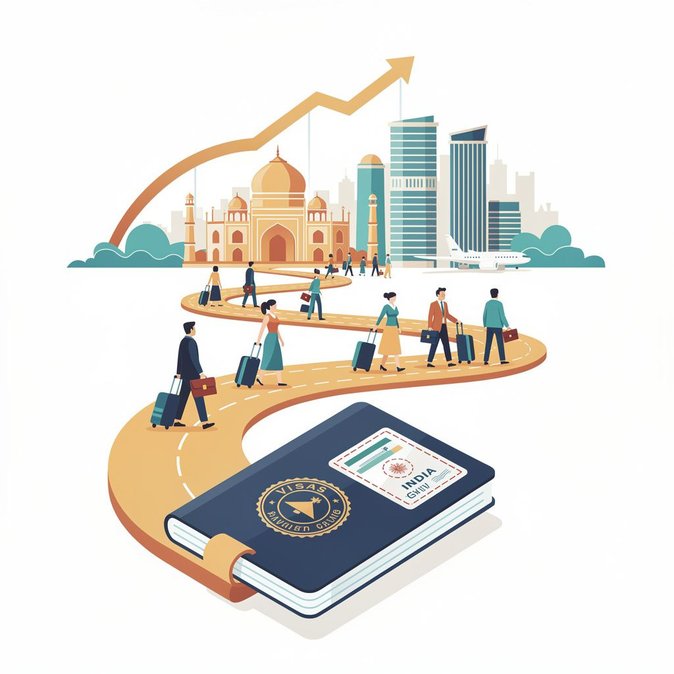
India’s premier policy think-tank Niti Aayog released a landmark report late on 30 June warning that ‘regulatory fragmentation and visa frictions’ are costing the country billions in lost tourism receipts. The 140-page study, “Unlocking Growth in Tourism and Hospitality”, argues that India can more than double foreign tourist arrivals to 20 million within five years if it aligns its e-Visa platform and border processes with best-in-class destinations such as Singapore and the UAE. Key recommendations include extending the current 30-day e-Tourist Visa to a one-year multiple-entry permit, introducing a real-time visa-fee refund for rejected applicants, and piloting an APEC-style trusted-traveller card for frequent business visitors. The report also calls for a single-window clearance for hotel construction and an interstate “deemed approval” system to cut red tape for tourism infrastructure projects. Launching the paper, Niti Aayog member Rajiv Gauba noted that visa accessibility is now a deciding factor for high-value travellers and digital nomads. Despite incremental progress—including a 170-nation e-Visa list—India still ranks 54th for visa openness in World Economic Forum indices. Removing irritants such as repeat biometrics and airport paper forms could add up to ₹2 trillion (US$24 billion) in annual GDP, the report estimates. Industry groups have reacted positively. The Federation of Hotel & Restaurant Associations of India said a long-stay e-Visa would encourage conference organisers to pick Indian venues, while travel-tech start-up VisaCart expects the suggested API integration to cut B2B booking times by 30 percent. The Ministry of Home Affairs is reviewing the proposals; officials hinted that some visa-fee tweaks may appear in the forthcoming Union Budget. For mobility managers, the big takeaway is that India intends to pivot from a ‘permit-heavy’ to a ‘permission-lite’ regime—potentially slashing lead times for incentive trips, MICE events and short-term assignments.
Source: Moneycontrol