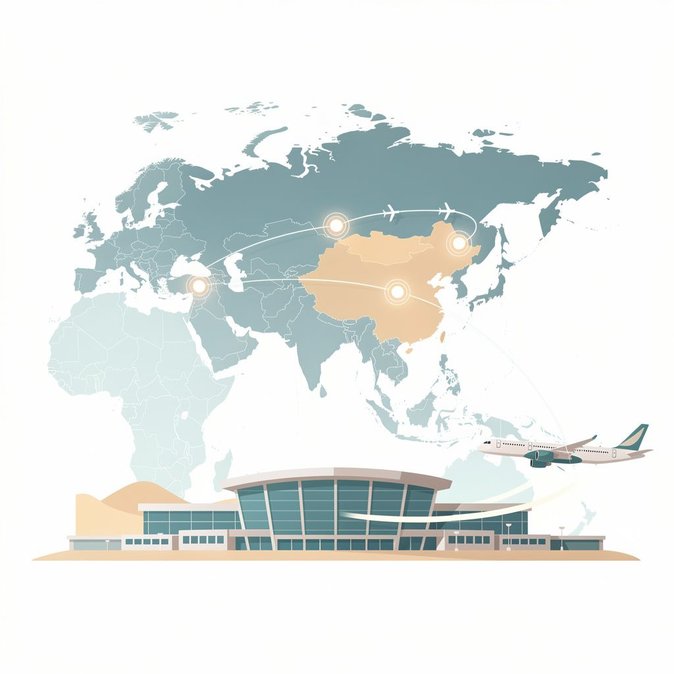
Harnessing its role as China’s “gateway to the west”, Urumqi Tian Shan International Airport is scaling up to handle a projected 700 daily aircraft movements by late July. Airport operator Xinjiang Airport Group said on 2 July that daily passenger throughput has already stabilised above 100 000 since 25 June.
Travelers planning to take advantage of these new flights can simplify visa formalities through VisaHQ, which provides up-to-date guidance and online processing for Chinese travel documents as well as visas for the Central Asian, Middle Eastern and European destinations now served from Urumqi. A quick visit to https://www.visahq.com/china/ connects corporate mobility managers and individual passengers with a streamlined application platform, saving time that can be better spent on itinerary planning.
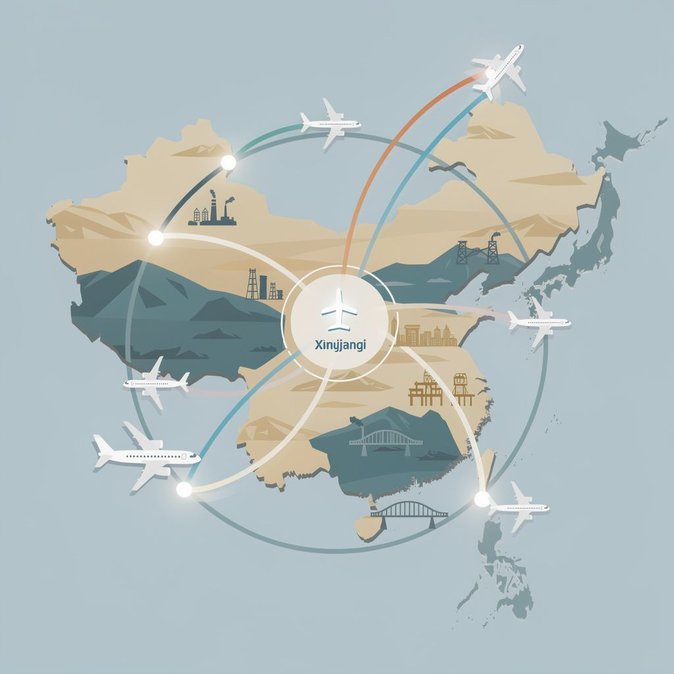
Internationally, the airport will launch a new Seoul route and increase frequencies to Yerevan, Almaty and Tashkent, taking its active international network to 25 destinations—most of them in Central Asia, the Middle East and Europe. Wide-body capacity is being concentrated on Frankfurt and Istanbul, reinforcing the airport’s strategic position on the modern Silk Road. Domestically, new point-to-point services from eastern seaboard cities such as Nantong and Ningbo will link directly into Xinjiang’s tourism belt, while trunk capacity on the Beijing, Shanghai, Guangzhou and Shenzhen routes is being up-gauged to twin-aisle aircraft. For global-mobility teams moving personnel to oil-and-gas, mining and infrastructure projects in Xinjiang or across Central Asia, the richer flight portfolio reduces the need for time-consuming transfers in Beijing or Chengdu. However, the airport warns that security checks remain rigorous, so travellers should allocate extra time until new screening lanes open in August. The expansion comes as Xinjiang positions Tian Shan airport as a tier-one international hub under the region’s “3 + 7 + N” aviation masterplan, aiming to attract 35 million passengers a year by 2030.
Travelers planning to take advantage of these new flights can simplify visa formalities through VisaHQ, which provides up-to-date guidance and online processing for Chinese travel documents as well as visas for the Central Asian, Middle Eastern and European destinations now served from Urumqi. A quick visit to https://www.visahq.com/china/ connects corporate mobility managers and individual passengers with a streamlined application platform, saving time that can be better spent on itinerary planning.
Internationally, the airport will launch a new Seoul route and increase frequencies to Yerevan, Almaty and Tashkent, taking its active international network to 25 destinations—most of them in Central Asia, the Middle East and Europe. Wide-body capacity is being concentrated on Frankfurt and Istanbul, reinforcing the airport’s strategic position on the modern Silk Road. Domestically, new point-to-point services from eastern seaboard cities such as Nantong and Ningbo will link directly into Xinjiang’s tourism belt, while trunk capacity on the Beijing, Shanghai, Guangzhou and Shenzhen routes is being up-gauged to twin-aisle aircraft. For global-mobility teams moving personnel to oil-and-gas, mining and infrastructure projects in Xinjiang or across Central Asia, the richer flight portfolio reduces the need for time-consuming transfers in Beijing or Chengdu. However, the airport warns that security checks remain rigorous, so travellers should allocate extra time until new screening lanes open in August. The expansion comes as Xinjiang positions Tian Shan airport as a tier-one international hub under the region’s “3 + 7 + N” aviation masterplan, aiming to attract 35 million passengers a year by 2030.