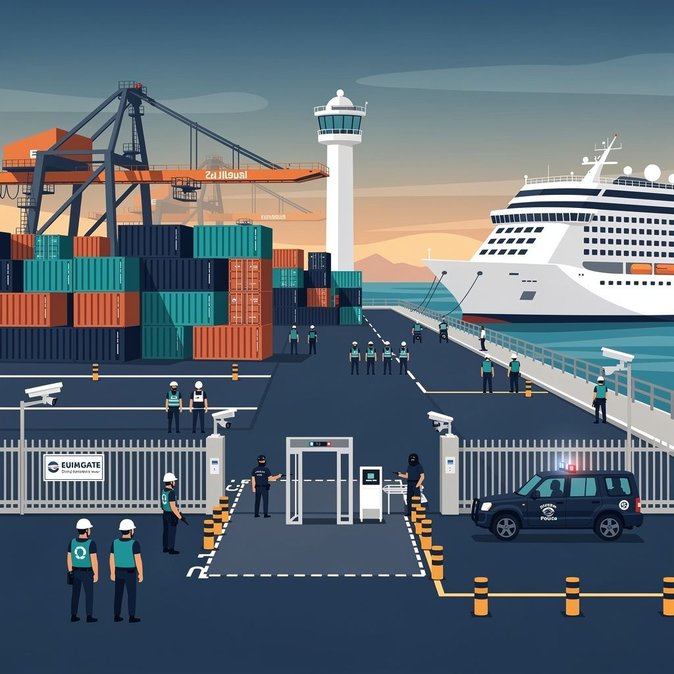
Cyprus took a visible step to harden its maritime borders on 1 July when public- and private-sector agencies staged “Port Shield 2026” at Limassol’s Eurogate Container Terminal. The four-hour field exercise – the first of its kind to use real operational resources at the island’s busiest cargo gateway – simulated an armed assault on a berthed container ship, complete with mock casualties, suspicious packages and an evacuation of port personnel. More than 200 officers from the Cyprus Police rapid-response unit, the Port & Marine Police, the ambulance service, the deputy Ministry of Shipping and the Cyprus Ports Authority joined Eurogate’s own security and operations staff in live-action scenarios designed to stress-test the International Ship & Port Facility Security (ISPS) plans that govern the terminal. Cyprus’ reliance on maritime trade makes port security a core pillar of its wider mobility strategy. Limassol alone handles roughly 70 % of the island’s container traffic and is a critical trans-shipment point for relief supplies moving to the Middle East. By rehearsing a multi-agency response to a high-impact incident, the authorities hope to shorten real-world reaction times, identify gaps in communications protocols and refine evacuation routes that intersect with the terminal’s customs and immigration zones. Observers from the European Maritime Safety Agency were on site, underscoring Brussels’ push to raise security standards at the EU’s easternmost maritime border. For shipping lines and logistics firms, the take-away is practical: expect tighter access controls in the coming weeks. Eurogate CTL’s chief operating officer Alexandros Demetriades confirmed that lessons learnt would translate into “immediate upgrades” to perimeter fencing, CCTV coverage and visitor-badge rules. Hauliers picking up or delivering boxes will see new staging lanes and ID checks at Gate 3, while crewing agencies have been told that shore leaves could be curtailed at short notice during periods of elevated threat. Business travellers should note that the drill also evaluated passenger-processing points used by cruise-ship calls. Port agents indicated that embarkation flows were deliberately slowed during the exercise to test crowd-management plans – a hint that cruise passengers in peak season may be asked to arrive earlier than the customary 90 minutes before sailing. Cyprus is positioning itself as a safe logistics and yachting hub at the edge of a volatile region. Regular, realistic exercises such as “Port Shield 2026” not only satisfy insurers and flag-state auditors but also give multinational companies comfort that their supply chains – and travelling staff – can keep moving even during a crisis.
Source: Cyprus Mail