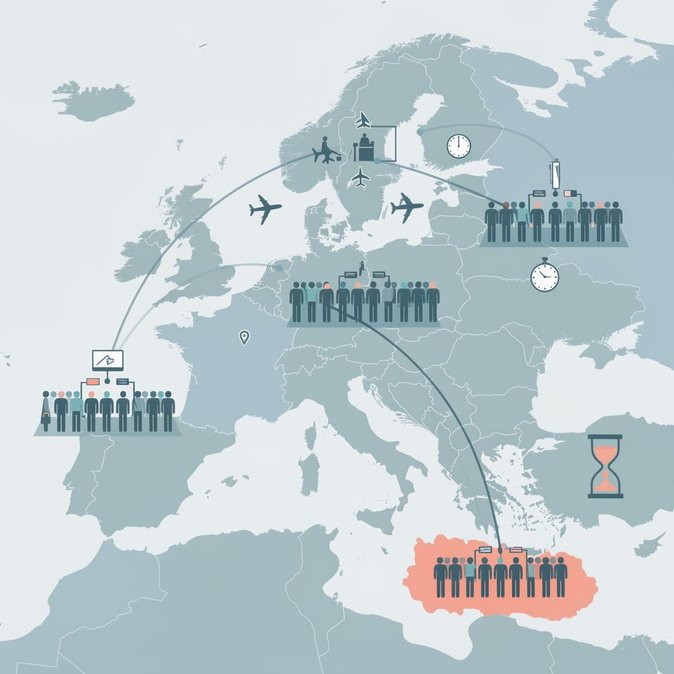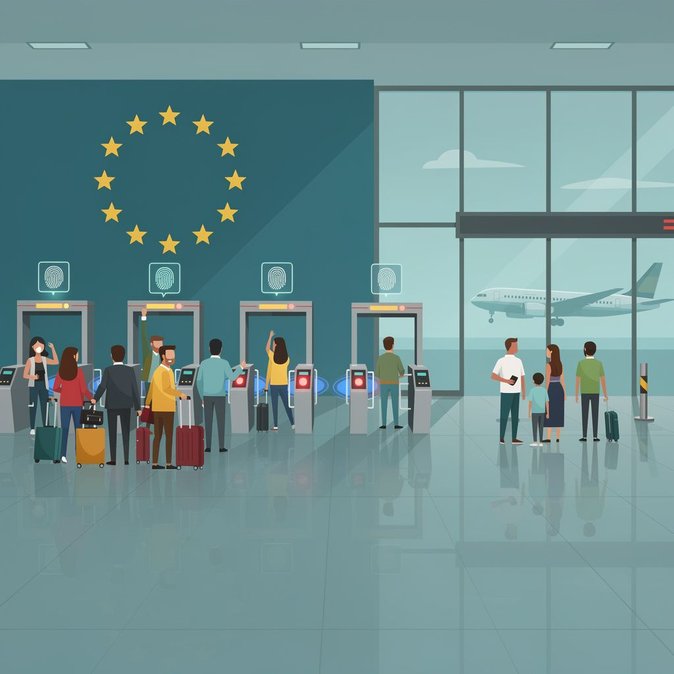
Airlines, airports and the European Commission were locked in urgent talks on Thursday after Ryanair warned that the EU’s new Entry/Exit System (EES) could cause “queue chaos” at passport control desks this summer. Introduced last October, EES requires every non-EU traveller to provide fingerprints and a facial-image the first time they enter the Schengen Area, then repeat a biometric match at each subsequent crossing. While officials say the average transaction time is 70 seconds, the low-cost carrier claims some Spanish, Italian and French airports are already buckling under the extra processing load, and lists seven hubs where lines are “out of control”.
For travellers uncertain about which documentation they’ll need when itineraries weave between Schengen and non-Schengen countries, online service provider VisaHQ offers a quick eligibility check and step-by-step visa support for Cyprus and dozens of other destinations. Their Cyprus resource page (https://www.visahq.com/cyprus/) is updated daily with entry-rule changes, and their agents can flag whether an EES registration will be required on your route, helping businesses and holiday-makers avoid costly surprises.
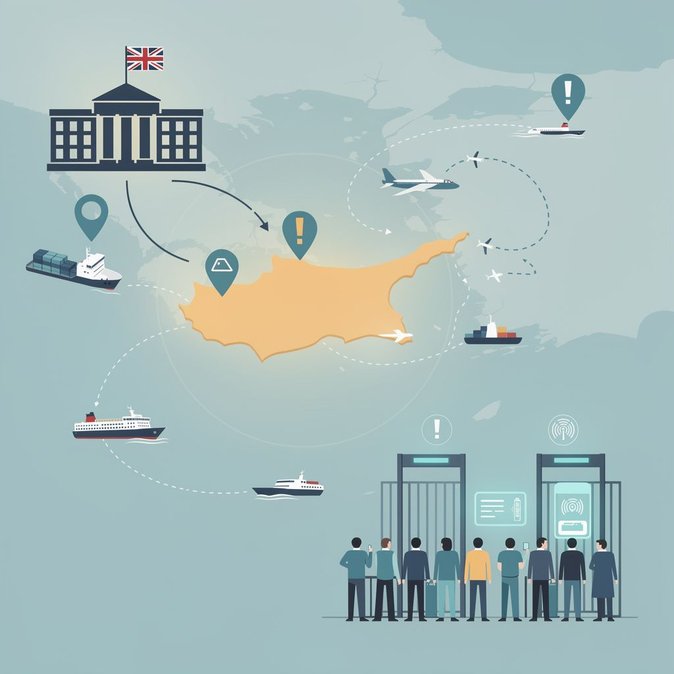
What does this mean for Cyprus-bound travellers? Very little—for now. Cyprus (along with Ireland) is the only EU member that has opted not to join the system during its pilot phase. Visitors flying directly to Larnaca or Paphos therefore avoid the new fingerprint kiosks entirely. The issue arises for travellers who connect through a Schengen airport before reaching the island: they will still face the new formalities at their first port of entry and could miss onward flights if queues spiral. Corporate mobility managers with project teams transiting through hubs such as Athens or Munich are being advised to schedule longer lay-overs or route passengers via Heathrow, Istanbul, Dubai or other non-Schengen gateways. In addition, the Commission has told airports they may suspend EES checks in July and August if bottlenecks become unmanageable, but from September full compliance is expected unless policymakers agree a wider delay. For Cypriot authorities, the episode highlights the island’s unique legal status outside Schengen and the continuing need to communicate divergent border procedures to airlines and travellers. Although Nicosia ultimately intends to join both EES and ETIAS, officials say technical integration will not start until at least 2027—giving businesses an extended window of simpler entry rules compared with most of continental Europe.
For travellers uncertain about which documentation they’ll need when itineraries weave between Schengen and non-Schengen countries, online service provider VisaHQ offers a quick eligibility check and step-by-step visa support for Cyprus and dozens of other destinations. Their Cyprus resource page (https://www.visahq.com/cyprus/) is updated daily with entry-rule changes, and their agents can flag whether an EES registration will be required on your route, helping businesses and holiday-makers avoid costly surprises.
What does this mean for Cyprus-bound travellers? Very little—for now. Cyprus (along with Ireland) is the only EU member that has opted not to join the system during its pilot phase. Visitors flying directly to Larnaca or Paphos therefore avoid the new fingerprint kiosks entirely. The issue arises for travellers who connect through a Schengen airport before reaching the island: they will still face the new formalities at their first port of entry and could miss onward flights if queues spiral. Corporate mobility managers with project teams transiting through hubs such as Athens or Munich are being advised to schedule longer lay-overs or route passengers via Heathrow, Istanbul, Dubai or other non-Schengen gateways. In addition, the Commission has told airports they may suspend EES checks in July and August if bottlenecks become unmanageable, but from September full compliance is expected unless policymakers agree a wider delay. For Cypriot authorities, the episode highlights the island’s unique legal status outside Schengen and the continuing need to communicate divergent border procedures to airlines and travellers. Although Nicosia ultimately intends to join both EES and ETIAS, officials say technical integration will not start until at least 2027—giving businesses an extended window of simpler entry rules compared with most of continental Europe.