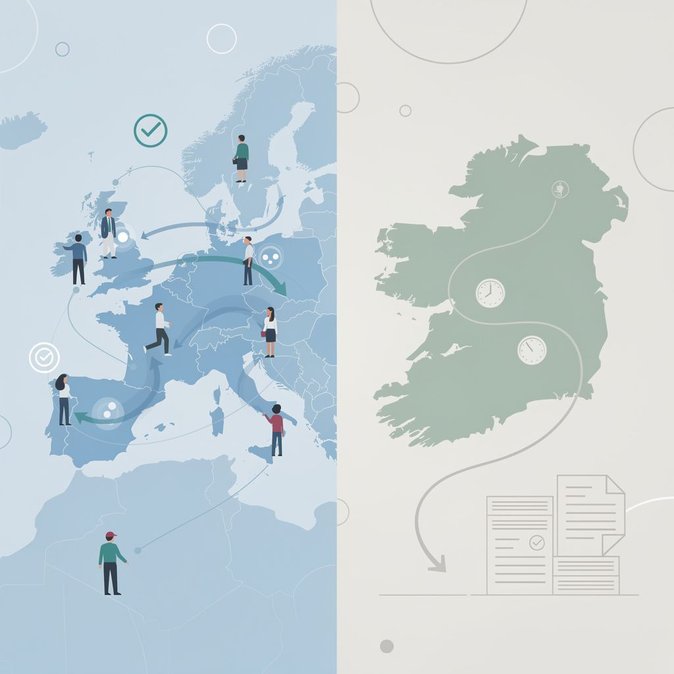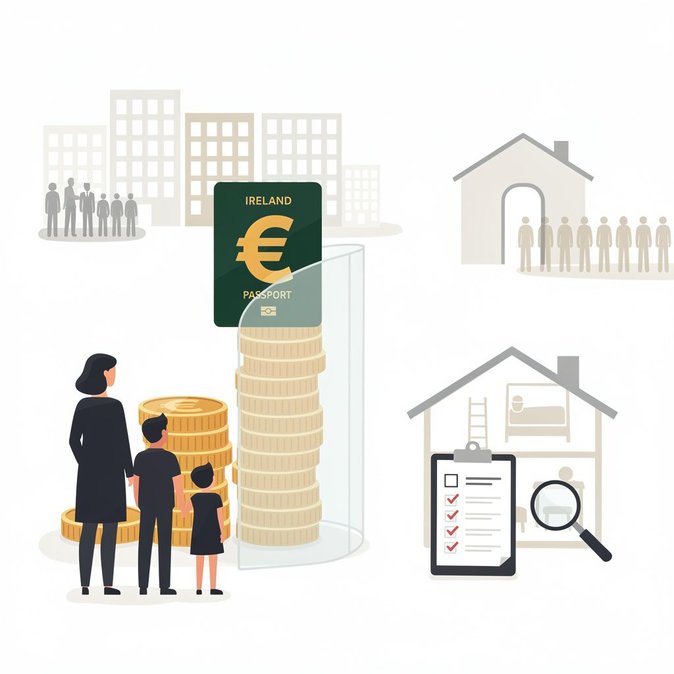
The Department of Justice has quietly overhauled Ireland’s Non-EEA Family Reunification Policy for the first time since 2016, and the changes—effective 12 June but only published in full yesterday—are far-reaching. Irish citizens who wish to bring a spouse or partner and any dependent children to the State must now prove a gross household income of €75,000 earned over the previous three years, almost double the earlier €40,000 threshold. The policy also indexes other financial benchmarks to inflation, meaning sponsors will have to show materially greater resources in the years ahead. General Employment Permit (GEP) holders and other Category C sponsors face an additional hurdle: an accommodation test. Applicants must submit evidence—such as a long-term lease or proof of home ownership—that suitable housing is secured for incoming family members. People living in Direct Provision centres, student residences or other forms of supported accommodation generally no longer qualify to sponsor relatives, closing a pathway used by lower-income migrants. Refugees and beneficiaries of subsidiary protection now fall under a parallel framework in the International Protection Act 2026. They must normally wait two years after receiving status before applying for reunification and show that bringing family will not create an “undue burden” on the State. Pre-existing family relationships must be pursued through the Act’s procedures rather than the general policy, ending a long-standing dual-track option. Legal practitioners say the higher income bar and accommodation requirement will hit middle-income families hardest, particularly foreign tech workers on GEPs who often rent in Dublin’s high-priced market. Employers that rely on GEPs may need to review salary bands—or, in some cases, upgrade roles to the Critical Skills Employment Permit route, which is exempt from the accommodation test—if they want to remain competitive in attracting global talent. For would-be sponsors, the message is clear: start budgeting earlier, gather robust proof of earnings, and secure housing well before filing. Immigration advisers expect processing to remain slow as officers adapt to the new rules, so early, well-documented applications are essential.
Source: Newland Chase