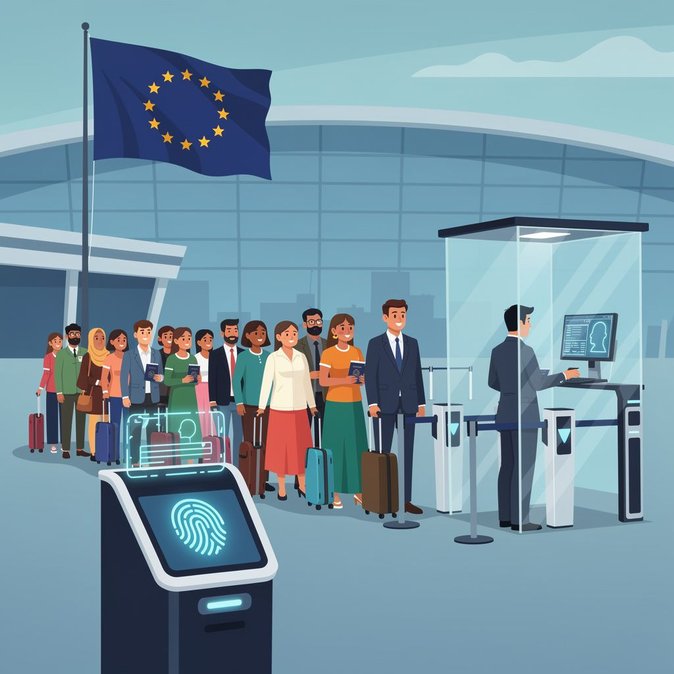
Europe’s long-delayed Entry/Exit System (EES) — a biometric database that will log every non-EU traveller’s fingerprints and facial image — is set to launch on July 10, and budget carrier Ryanair says airports risk “summer queue chaos” unless the rollout is delayed until September. For Indian passport holders, this will be the first mandatory biometric enrolment on arrival to the Schengen Area since visas moved online. Travellers must expect a one-time registration that could add 20–40 minutes at manual kiosks, particularly at busy hubs such as Paris-CDG, Frankfurt and Madrid.
If you’re unsure about how the new biometric rules might affect your Schengen trip, VisaHQ’s India portal (https://www.visahq.com/india/) can streamline the process. The platform not only walks you through the updated EES requirements for each EU country but also helps secure the correct visa type, schedule appointments, and track documentation so you spend less time worrying about red tape and more time planning your itinerary.
Frequent flyers thereafter will have their biometrics verified at each crossing, but the initial capture is expected to create bottlenecks. Corporate travel managers are advising Indian executives heading to trade fairs in Germany or client meetings in Italy after July 10 to arrive at least 90 minutes earlier than usual or route via smaller airports. Airlines also caution that passengers who fail to complete the biometric step will be denied boarding on the return leg under carrier-liability rules. EU officials insist the system will enhance security and automate overstay alerts. Yet ground-handler unions say staffing models have not been updated, warning of lines snaking into departure halls at peak times. The European Travel Commission projects throughput could fall by up to 17 percent in the first two weeks. Indian tour operators want New Delhi to negotiate a trusted-traveller corridor that would let biometric data be pre-enrolled at VFS centres, similar to the US Global Entry tie-up under discussion.
If you’re unsure about how the new biometric rules might affect your Schengen trip, VisaHQ’s India portal (https://www.visahq.com/india/) can streamline the process. The platform not only walks you through the updated EES requirements for each EU country but also helps secure the correct visa type, schedule appointments, and track documentation so you spend less time worrying about red tape and more time planning your itinerary.
Frequent flyers thereafter will have their biometrics verified at each crossing, but the initial capture is expected to create bottlenecks. Corporate travel managers are advising Indian executives heading to trade fairs in Germany or client meetings in Italy after July 10 to arrive at least 90 minutes earlier than usual or route via smaller airports. Airlines also caution that passengers who fail to complete the biometric step will be denied boarding on the return leg under carrier-liability rules. EU officials insist the system will enhance security and automate overstay alerts. Yet ground-handler unions say staffing models have not been updated, warning of lines snaking into departure halls at peak times. The European Travel Commission projects throughput could fall by up to 17 percent in the first two weeks. Indian tour operators want New Delhi to negotiate a trusted-traveller corridor that would let biometric data be pre-enrolled at VFS centres, similar to the US Global Entry tie-up under discussion.