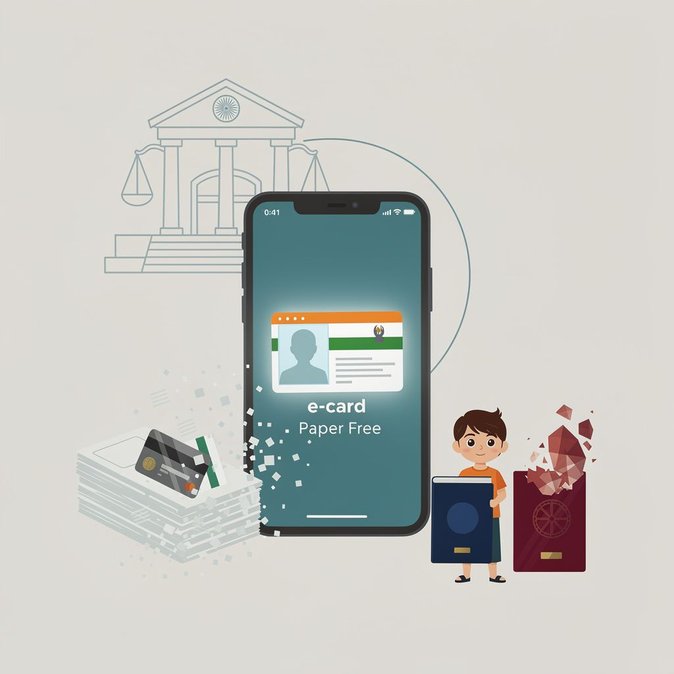
The Ministry of Home Affairs has formally brought the Citizenship (Amendment) Rules 2026 into force, triggering the biggest overhaul of the Overseas Citizen of India (OCI) regime since the programme began in 2005. Notified on 30 April but implemented nationwide from 1 July, the rules migrate every OCI service—including registration, renewal, renunciation and cancellation—to a new digital portal and introduce an electronic OCI card (e-OCI) that can be downloaded to a mobile wallet.
VisaHQ’s India specialists can help companies and individual travellers adjust to these changes. Through its digital interface (https://www.visahq.com/india/), VisaHQ offers end-to-end OCI and visa document review, status tracking and renewal reminders, ensuring compliance with the new 90-day passport-update rule and smoothing the transition to the e-OCI system.
A headline change for multinational HR teams is the "minor passport" provision: children may no longer hold an Indian passport and a foreign passport simultaneously. Parents must decide on one status before the child’s next international trip, or risk being refused boarding. Companies relocating staff with families should build this compliance check into assignment kick-off. The amendment also creates a formal appeals mechanism—decisions may now be reviewed by an authority one rank higher than the original adjudicator—bringing the OCI framework closer to natural-justice norms common in other immigration systems. For mobility managers this offers a clearer path to challenge cancellations that can jeopardise ongoing assignments. Digitisation promises faster processing: government estimates suggest average OCI approval times will fall from 45 days to 20 days once biometric kiosks at 37 Indian airports come online later this year. However, tighter deadlines accompany the efficiency gains; existing card-holders must update new passports within 90 days or face automated fines. Travel teams should audit their expatriate population to avoid penalty charges accruing silently in the portal.
VisaHQ’s India specialists can help companies and individual travellers adjust to these changes. Through its digital interface (https://www.visahq.com/india/), VisaHQ offers end-to-end OCI and visa document review, status tracking and renewal reminders, ensuring compliance with the new 90-day passport-update rule and smoothing the transition to the e-OCI system.
A headline change for multinational HR teams is the "minor passport" provision: children may no longer hold an Indian passport and a foreign passport simultaneously. Parents must decide on one status before the child’s next international trip, or risk being refused boarding. Companies relocating staff with families should build this compliance check into assignment kick-off. The amendment also creates a formal appeals mechanism—decisions may now be reviewed by an authority one rank higher than the original adjudicator—bringing the OCI framework closer to natural-justice norms common in other immigration systems. For mobility managers this offers a clearer path to challenge cancellations that can jeopardise ongoing assignments. Digitisation promises faster processing: government estimates suggest average OCI approval times will fall from 45 days to 20 days once biometric kiosks at 37 Indian airports come online later this year. However, tighter deadlines accompany the efficiency gains; existing card-holders must update new passports within 90 days or face automated fines. Travel teams should audit their expatriate population to avoid penalty charges accruing silently in the portal.