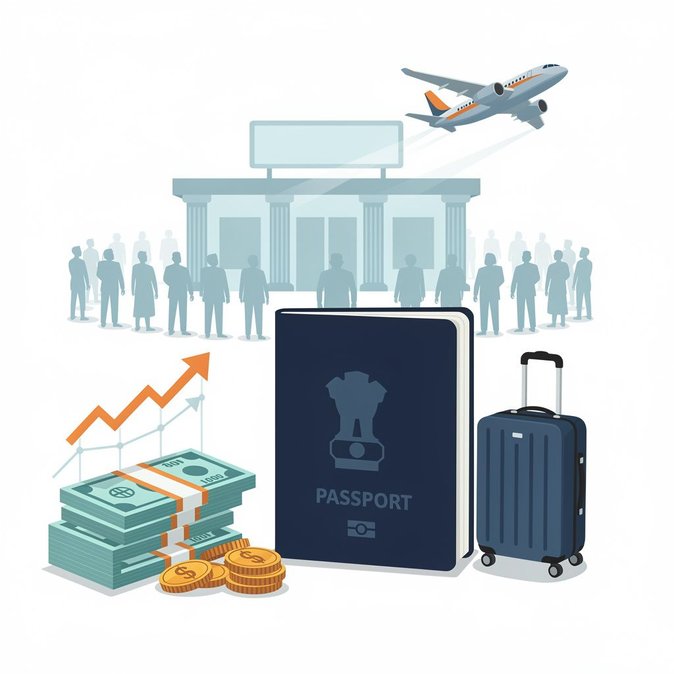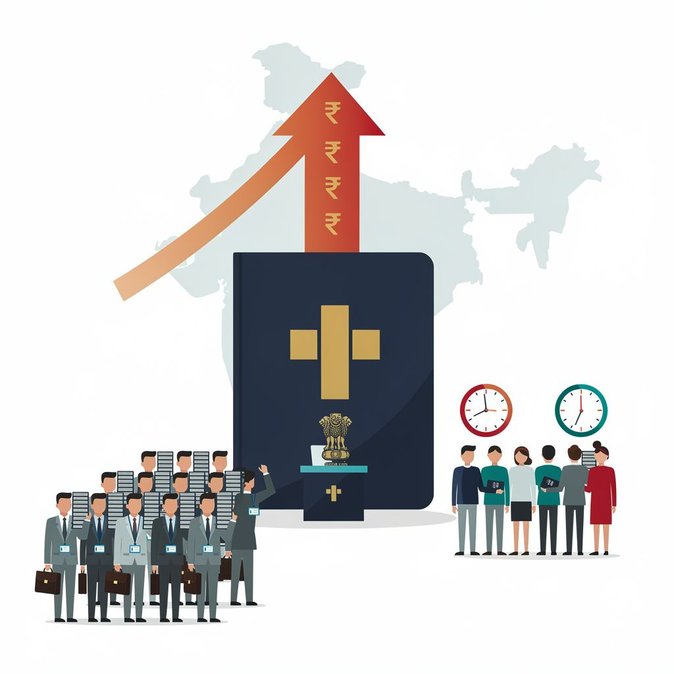
Multiple government notifications that were published on June 25 took legal effect on July 1, sharply increasing passport service fees for applicants inside India. A standard 36-page booklet now costs ₹2,500, up from ₹1,500, while a Tatkal 60-page passport has risen to ₹6,000. The Ministry of External Affairs says the hike, the first in eight years, reflects inflation, higher security-paper prices and upgraded biometric printers being installed at 36 Passport Seva Kendras. Police-clearance certificates now cost ₹750, and surrender certificates for renounced citizens ₹2,000. For multinational employers, the biggest impact is on mass refresh cycles for deputed staff: a company renewing 200 passports this quarter will pay roughly ₹2.1 million more than under the old tariff. Travel-management companies are advising clients to review policy caps so employees are not out-of-pocket. Tatkal volumes — traditionally 9 percent of all applications — could fall as travellers weigh cheaper reissue timelines. The MEA insists processing-time benchmarks (three working days for normal service) remain unchanged; however, agents fear local police verification may slow amid a post-COVID backlog.
Source: NDTV