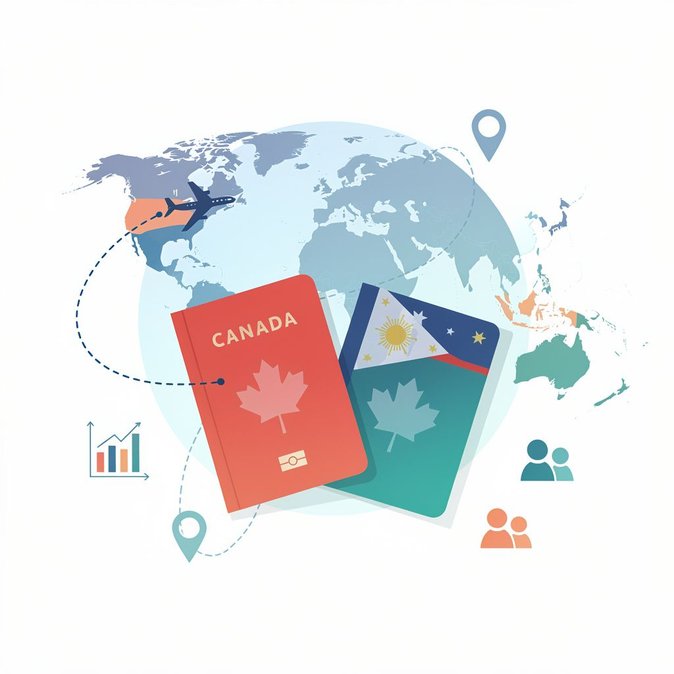
During President Ferdinand Marcos Jr.’s state visit, Canada’s Minister of Small Business and Tourism, Rechie Valdez, signed a memorandum of understanding with Philippine Foreign Secretary Ma. Theresa Lazaro on July 3 in Vancouver. The pact establishes a framework for sharing data, best practices and training to boost two-way tourism flows. Nearly one million Canadians of Filipino descent already create strong visiting-friends-and-relatives demand, while Canadian leisure arrivals to the Philippines topped 333,000 in 2025.
For anyone wondering how to navigate prospective visa changes that may stem from this accord, VisaHQ can help by providing real-time guidance and application support for Canadian travel documents, including visitor visas and eTAs, through its dedicated portal at https://www.visahq.com/canada/
Although non-binding, the MOU paves the way for coordinated marketing campaigns and could accelerate Transport Canada’s review of additional air-service rights under the 2014 Canada–Philippines Air Transport Agreement. Industry sources say Philippine Airlines is evaluating a Calgary–Manila route for 2027 subject to slot availability. For employers, the agreement matters because it signals Ottawa’s willingness to deepen labour-mobility ties with Manila—a priority as the federal government searches for health-care and skilled-trades talent. Tourism growth often precedes broader visa facilitation measures; analysts note that all five countries granted recent electronic-travel-authorisation (eTA) access experienced double-digit tourist growth in the two years before their visa lifts. Philippine firms likewise hope the deal will hasten negotiations of a bilateral free-trade agreement and open seasonal-worker channels similar to those Canada runs with Mexico and the Caribbean. In the near term, travel managers can expect joint familiarisation tours and new promotional fares that may reduce ticket costs for business trips. Companies with Filipino assignees in Canada should also flag the initiative to employees who want to bring family over for extended visits, as tourism cooperation often leads to simplified visitor-visa documentation.

For anyone wondering how to navigate prospective visa changes that may stem from this accord, VisaHQ can help by providing real-time guidance and application support for Canadian travel documents, including visitor visas and eTAs, through its dedicated portal at https://www.visahq.com/canada/
Although non-binding, the MOU paves the way for coordinated marketing campaigns and could accelerate Transport Canada’s review of additional air-service rights under the 2014 Canada–Philippines Air Transport Agreement. Industry sources say Philippine Airlines is evaluating a Calgary–Manila route for 2027 subject to slot availability. For employers, the agreement matters because it signals Ottawa’s willingness to deepen labour-mobility ties with Manila—a priority as the federal government searches for health-care and skilled-trades talent. Tourism growth often precedes broader visa facilitation measures; analysts note that all five countries granted recent electronic-travel-authorisation (eTA) access experienced double-digit tourist growth in the two years before their visa lifts. Philippine firms likewise hope the deal will hasten negotiations of a bilateral free-trade agreement and open seasonal-worker channels similar to those Canada runs with Mexico and the Caribbean. In the near term, travel managers can expect joint familiarisation tours and new promotional fares that may reduce ticket costs for business trips. Companies with Filipino assignees in Canada should also flag the initiative to employees who want to bring family over for extended visits, as tourism cooperation often leads to simplified visitor-visa documentation.