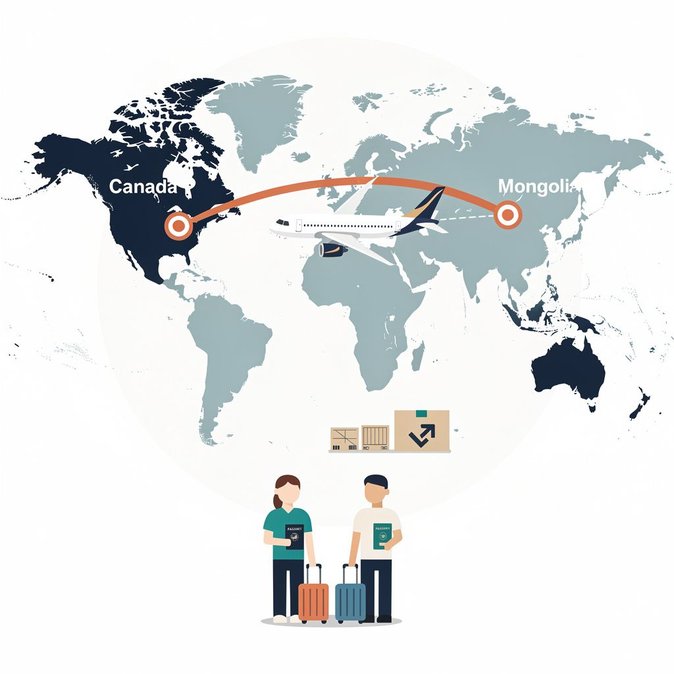
Transport Minister Steven MacKinnon announced an expanded bilateral Air Transport Agreement with Mongolia that, for the first time, authorises direct passenger flights between the two countries. Signed in Ottawa on July 3, 2026, the pact allows up to three weekly passenger-combination services and unlimited all-cargo flights, complete with open fifth-freedom rights for freighters. For Canadian miners, engineering firms and agricultural exporters already active in Mongolia’s fast-growing economy, the agreement eliminates a costly detour through Seoul or Beijing and should cut transit times by 6–10 hours each way. Travel-management companies estimate business-class fares between Toronto and Ulaanbaatar could fall by 20 percent once carriers launch non-stops. The deal also fits Ottawa’s wider strategy of using air-services liberalisation to diversify trade. Since 2018 Canada has inked or expanded agreements with more than 20 emerging markets, but Mongolia stood out as the last major Asian partner without direct capacity. The timing is advantageous: Mongolia recorded 14 percent GDP growth in 2025 on the back of copper and rare-earth exports, sectors where Canadian suppliers have niche expertise. Corporate mobility teams should watch airline schedules closely. Industry insiders suggest Air Canada Cargo and Mongolia’s MIAT may be first movers, aiming for Spring 2027 launches once aircraft slots become available. Companies sending project staff should also budget for the need to secure Mongolian business visas, as Mongolia’s e-visa system still requires an in-country sponsor. Finally, travel-risk managers should update routing options in crisis-management platforms: the new agreement grants Canadian carriers the right to overfly Russian airspace en route to Ulaanbaatar, potentially reopening a corridor that has been largely avoided since 2022. Firms with strict overflight policies will need to confirm each airline’s chosen path before approving bookings.
Source: Transport Canada