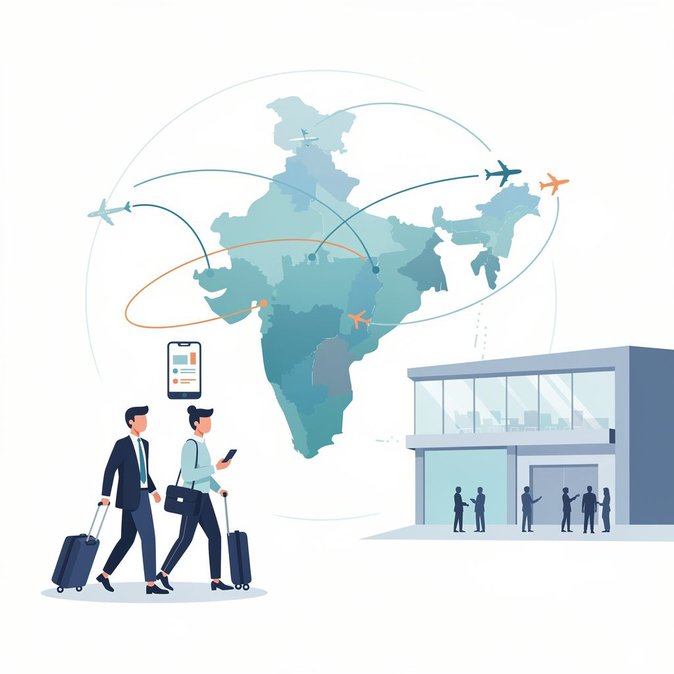
New data from travel-tech giant Booking.com shows that India’s corporate travel machine is running at full throttle even as Middle-East airspace closures and higher fares force companies to rethink itineraries. Speaking to Moneycontrol on 3 July 2026, South-Asia regional head Santosh Kumar said most Indian firms are rerouting – not cancelling – trips, with Singapore, Kuala Lumpur and Tokyo soaking up demand that traditionally flowed through Gulf hubs. Kumar cited Global Business Travel Association forecasts valuing India’s corporate-travel spend at nearly US $50 billion this calendar year and US $80 billion by 2030.
For mobility managers racing to secure entry permits on these newly popular routes, VisaHQ can streamline the process end-to-end. The company’s India portal provides up-to-the-minute visa requirements, digital application tools and courier services, helping corporates file error-free documents in minutes rather than days—crucial when trips are being rerouted at short notice.
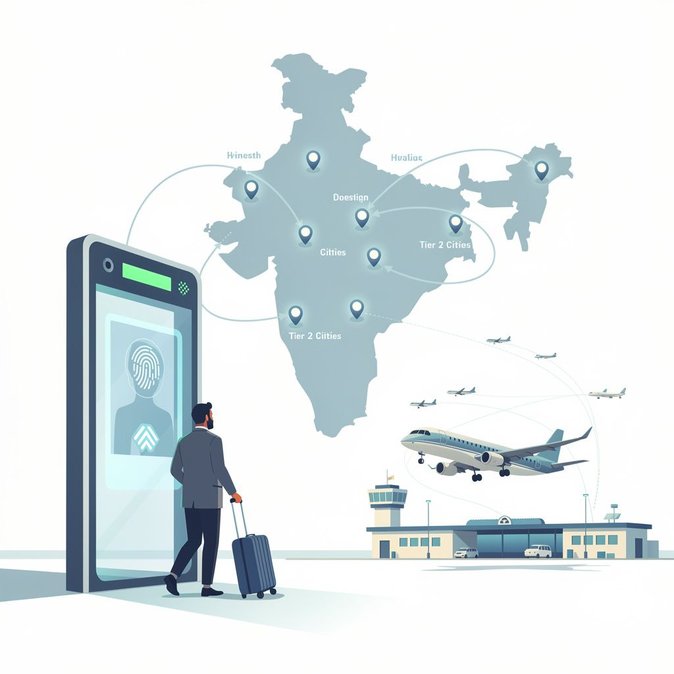
Meetings-and-events (MICE) traffic is also “coming home”, with multinationals shifting regional conferences to Mumbai, Hyderabad and Bengaluru. Domestic carriers have responded by adding same-day return frequencies on India’s “Golden Triangle” (Delhi-Mumbai-Bengaluru) and overnight red-eyes to tier-2 cities, keeping load factors above 82 percent. While airfares on Europe–India lanes remain 18-22 percent above 2025 averages because of longer routings that avoid conflict zones in West Asia, Indian enterprises are trimming costs by combining multiple meetings into single trips and encouraging executives to extend stays for leisure – the so-called “blended travel” trend. Booking.com says it will localise its “Booking.com for Business” platform for India this quarter, integrating GST-compliant invoicing and UPI payments to win small- and medium-enterprise (SME) accounts that still book manually. For mobility managers, the message is clear: keep travel policies flexible on routings, anticipate premium-economy demand for longer detours, and leverage domestic meeting venues when budgets tighten. Airlines meanwhile see an opportunity to expand corporate contracts and co-brand credit-card offers as India cements its position as Asia’s fastest-growing business-travel market. The resilience also holds lessons for neighbouring markets. As Indian firms prove willing to pay for essential travel – provided there is a clear ROI – regional tourism boards are courting Indian corporates with visa-fast-track lanes and room-night incentives. Expect more bilateral “workcation” packages and MICE subsidies aimed squarely at the Indian traveller in the months ahead.
For mobility managers racing to secure entry permits on these newly popular routes, VisaHQ can streamline the process end-to-end. The company’s India portal provides up-to-the-minute visa requirements, digital application tools and courier services, helping corporates file error-free documents in minutes rather than days—crucial when trips are being rerouted at short notice.
Meetings-and-events (MICE) traffic is also “coming home”, with multinationals shifting regional conferences to Mumbai, Hyderabad and Bengaluru. Domestic carriers have responded by adding same-day return frequencies on India’s “Golden Triangle” (Delhi-Mumbai-Bengaluru) and overnight red-eyes to tier-2 cities, keeping load factors above 82 percent. While airfares on Europe–India lanes remain 18-22 percent above 2025 averages because of longer routings that avoid conflict zones in West Asia, Indian enterprises are trimming costs by combining multiple meetings into single trips and encouraging executives to extend stays for leisure – the so-called “blended travel” trend. Booking.com says it will localise its “Booking.com for Business” platform for India this quarter, integrating GST-compliant invoicing and UPI payments to win small- and medium-enterprise (SME) accounts that still book manually. For mobility managers, the message is clear: keep travel policies flexible on routings, anticipate premium-economy demand for longer detours, and leverage domestic meeting venues when budgets tighten. Airlines meanwhile see an opportunity to expand corporate contracts and co-brand credit-card offers as India cements its position as Asia’s fastest-growing business-travel market. The resilience also holds lessons for neighbouring markets. As Indian firms prove willing to pay for essential travel – provided there is a clear ROI – regional tourism boards are courting Indian corporates with visa-fast-track lanes and room-night incentives. Expect more bilateral “workcation” packages and MICE subsidies aimed squarely at the Indian traveller in the months ahead.