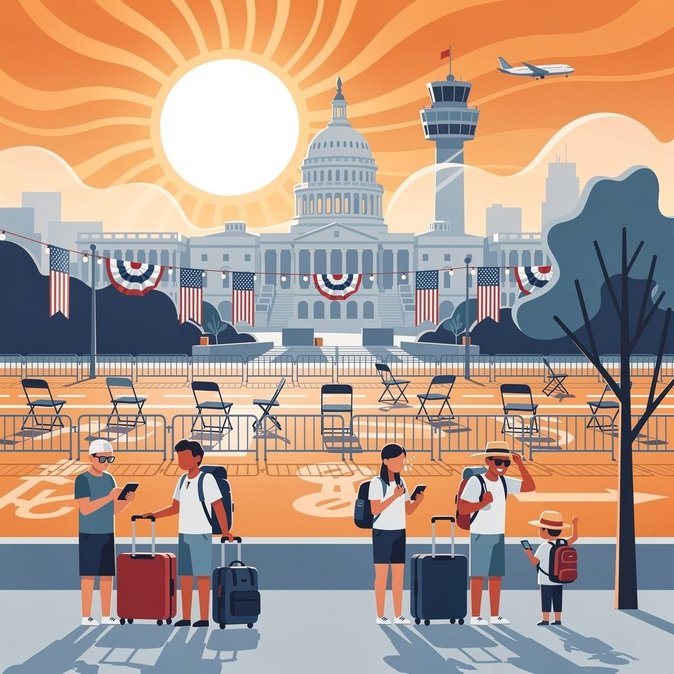
With forecast heat indexes of 110–115 °F, the Homeland Security and Emergency Management Agency (HSEMA) abruptly canceled the 4 July “America’s Independence Day Parade” less than 24 hours before step-off. The decision, announced 3 July, follows National Weather Service warnings covering the entire Mid-Atlantic corridor. The cancellation upends travel plans for thousands of domestic and international visitors who had secured parade-route hotels and timed flights around the 250th-anniversary festivities.
For travelers suddenly tweaking itineraries, VisaHQ can smooth the paperwork side of the scramble: the service’s U.S. portal lets visitors check entry requirements, apply for extensions, or pivot to alternative visa options in minutes—particularly useful if heat-related rebookings push a stay beyond the original authorized period.
Local authorities are urging spectators to seek indoor alternatives and stay hydrated as temperatures approach record highs. For mobility managers, the parade’s demise triggers a ripple effect: airlines expect same-day no-show rates to rise, and several carriers have issued one-time change-fee waivers for 3–5 July travel to Washington-area airports. The Metropolitan Police Department will redeploy officers originally slated for parade security to crowd-management roles at Smithsonian museums and National Mall shade tents. Companies hosting corporate hospitality events should audit contingency plans. Outdoor receptions now require cooling stations, and insurers may scrutinize force-majeure clauses in event contracts. Travelers transiting through DCA, IAD, or BWI should build extra time for TSA checkpoints as staffing is reallocated for heat-related medical calls. The episode underscores a growing climate-risk variable in large-scale U.S. events. As heat waves intensify, organizers may need to shift parades and marathons to cooler months or adopt early-morning time slots—changes that will reverberate through the travel-industry calendar.
For travelers suddenly tweaking itineraries, VisaHQ can smooth the paperwork side of the scramble: the service’s U.S. portal lets visitors check entry requirements, apply for extensions, or pivot to alternative visa options in minutes—particularly useful if heat-related rebookings push a stay beyond the original authorized period.
Local authorities are urging spectators to seek indoor alternatives and stay hydrated as temperatures approach record highs. For mobility managers, the parade’s demise triggers a ripple effect: airlines expect same-day no-show rates to rise, and several carriers have issued one-time change-fee waivers for 3–5 July travel to Washington-area airports. The Metropolitan Police Department will redeploy officers originally slated for parade security to crowd-management roles at Smithsonian museums and National Mall shade tents. Companies hosting corporate hospitality events should audit contingency plans. Outdoor receptions now require cooling stations, and insurers may scrutinize force-majeure clauses in event contracts. Travelers transiting through DCA, IAD, or BWI should build extra time for TSA checkpoints as staffing is reallocated for heat-related medical calls. The episode underscores a growing climate-risk variable in large-scale U.S. events. As heat waves intensify, organizers may need to shift parades and marathons to cooler months or adopt early-morning time slots—changes that will reverberate through the travel-industry calendar.