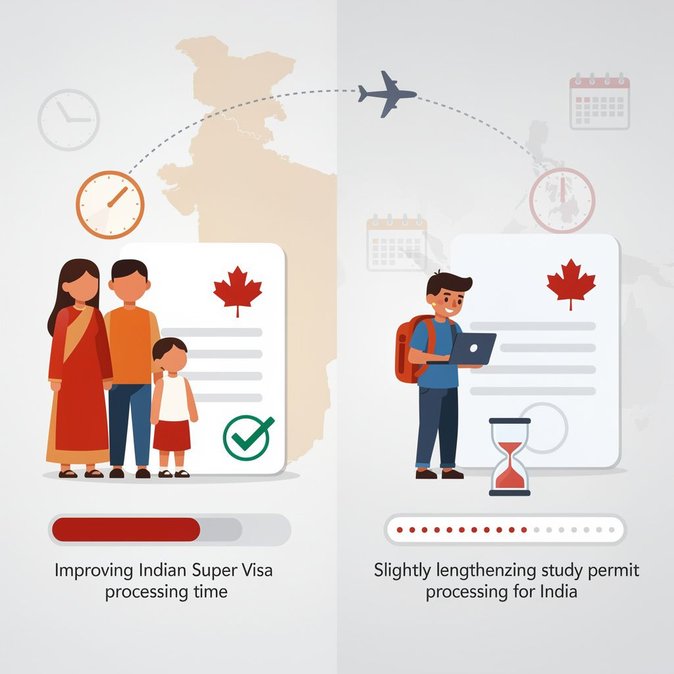
In its weekly processing-time update of 2 July (published by media on 4 July), Immigration, Refugees and Citizenship Canada reduced the estimated Super Visa wait for applicants from India to 50 days—down from 66 days two weeks earlier and well below the 112-day service standard. The Super Visa allows parents and grandparents of Canadian permanent residents or citizens to visit for up to five years per entry.
For prospective travellers seeking hands-on assistance with preparing a Super Visa—or any other Canadian immigration application—VisaHQ offers end-to-end document review, appointment scheduling and up-to-date guidance on requirements through its Canadian portal (https://www.visahq.com/canada/). Leveraging its global network, the service can help applicants avoid the common file omissions that trigger IRCC delays and keep processing times on the shorter side.
Work-permit and visitor-visa timelines for Indian nationals remained broadly steady at nine weeks and 21 days respectively, but study-permit processing rose by one week to five weeks. By contrast, U.S. applicants for the Super Visa saw their wait increase by nearly three weeks, highlighting IRCC’s country-specific workload balancing. For Canadian employers, the shorter Super Visa timeline could ease short-term childcare pressures on foreign staff, improving retention. However, the uptick in study-permit waits may complicate fall-2026 intake planning for institutions and corporate training programmes that rely on rapid student arrivals. Mobility teams should continue to monitor IRCC’s dynamic processing-time tool and advise applicants that published figures reflect how long it took to finalise 80 % of recent cases, not guarantees. Where feasible, submitting ‘within-Canada’ applications can still shave weeks off certain categories. Applicants are reminded to upload complete, clearly labelled documentation; IRCC data show that incomplete files are the single biggest driver of additional reviews and delays.
For prospective travellers seeking hands-on assistance with preparing a Super Visa—or any other Canadian immigration application—VisaHQ offers end-to-end document review, appointment scheduling and up-to-date guidance on requirements through its Canadian portal (https://www.visahq.com/canada/). Leveraging its global network, the service can help applicants avoid the common file omissions that trigger IRCC delays and keep processing times on the shorter side.
Work-permit and visitor-visa timelines for Indian nationals remained broadly steady at nine weeks and 21 days respectively, but study-permit processing rose by one week to five weeks. By contrast, U.S. applicants for the Super Visa saw their wait increase by nearly three weeks, highlighting IRCC’s country-specific workload balancing. For Canadian employers, the shorter Super Visa timeline could ease short-term childcare pressures on foreign staff, improving retention. However, the uptick in study-permit waits may complicate fall-2026 intake planning for institutions and corporate training programmes that rely on rapid student arrivals. Mobility teams should continue to monitor IRCC’s dynamic processing-time tool and advise applicants that published figures reflect how long it took to finalise 80 % of recent cases, not guarantees. Where feasible, submitting ‘within-Canada’ applications can still shave weeks off certain categories. Applicants are reminded to upload complete, clearly labelled documentation; IRCC data show that incomplete files are the single biggest driver of additional reviews and delays.