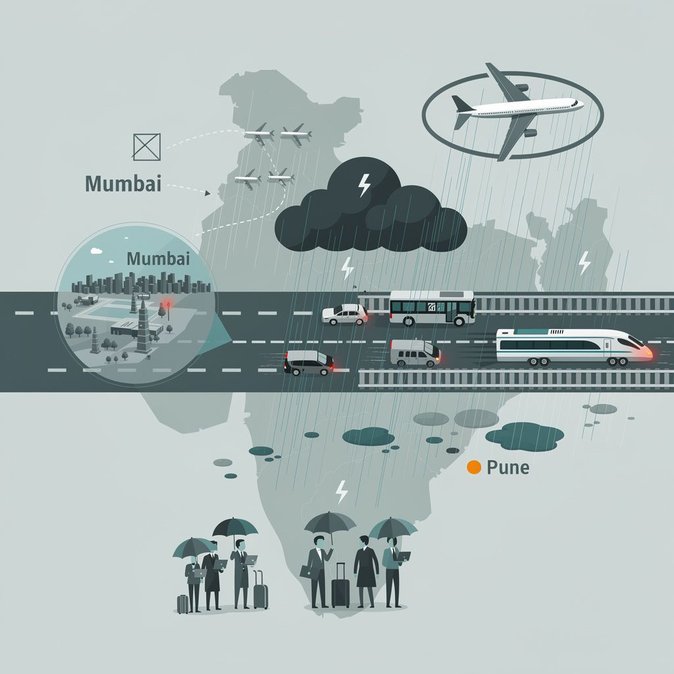
Relentless rain across Maharashtra and adjoining states brought large parts of India’s transport network to a stand-still on 7 July. The India Meteorological Department issued red and orange alerts for Mumbai, Thane, Pune and Raigad as rainfall exceeded 300 mm in pockets of Mumbai within 48 hours. Major airlines confirmed that more than 250 flights were delayed or cancelled at Chhatrapati Shivaji Maharaj International Airport, while five incoming services had to be diverted. Western and Central Railway suspended or rerouted at least 40 long-distance and suburban trains after landslides blocked the Karjat–Lonavala Bhor Ghat section, paralysing the strategic Mumbai-Pune corridor. Corporate mobility teams scrambled to rearrange itineraries as road traffic was also crippled: the newly opened Mumbai–Pune Expressway “Missing Link” was closed after a concrete pillar collapsed, forcing traffic onto flooded city streets. State authorities advised companies to let staff work from home and declared a half-day for non-essential government offices; the Bombay High Court promised no adverse orders for lawyers unable to attend. Travel-risk consultants warn that similar disruptions are likely throughout July because the synoptic pattern points to another intense monsoon burst over the Konkan coast. Businesses moving project teams through Mumbai or Pune are advised to maintain 48-hour travel buffers, pre-book hotel contingencies and monitor rail and highway advisories issued by the Disaster Management Unit. Airlines are waiving change fees but require rebooking within seven days; rail operators have begun automatic refunds for cancelled services. For expatriates and assignees, the biggest pain point is the backlog of visa-on-arrival passengers now expected later in the week. Ground-handling firms report average arrival-hall processing times rising from 35 to 90 minutes because of crew-rotation delays. Logistics providers recommend shifting cargo arriving via belly-hold to airports in Ahmedabad or Hyderabad until runway conditions stabilise in Mumbai. With the IMD forecasting gusts up to 80 km/h and a fresh low-pressure area developing in the Bay of Bengal, employers should extend travel advisories at least through 10 July. Emergency response suppliers note that tree-fall and urban flooding remain secondary hazards; companies with field engineers in affected districts must activate daily check-in protocols. Overall, the episode underscores how climate-driven weather extremes are becoming a top-five risk for mobility planners operating in India’s western business hubs.
Source: Moneycontrol / GoodReturns