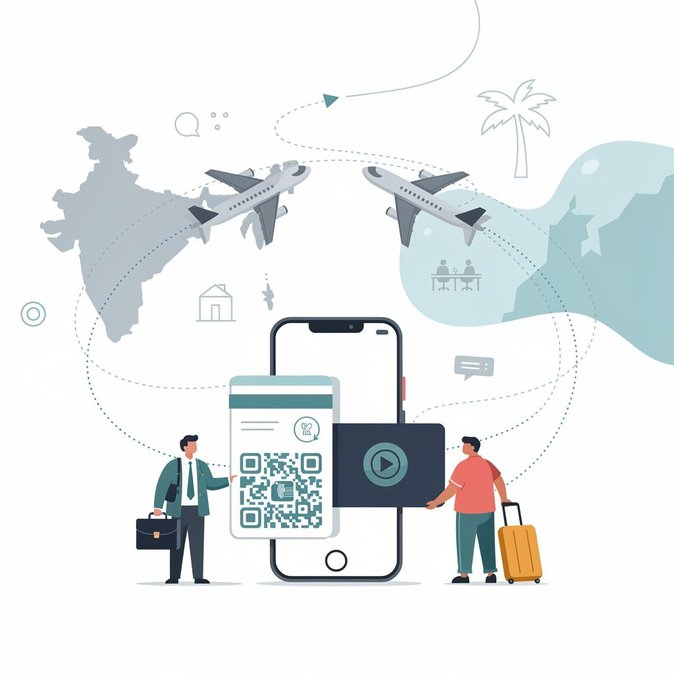
During Prime Minister Narendra Modi’s 6–8 July state visit to Jakarta, India and Indonesia signed a comprehensive joint statement that—among dozens of economic and security deliverables—commits both governments to make it easier for people and goods to move between the two G20 economies. Paragraph 44 of the 70-point communiqué singles out tourism and “ease of travel and visa facilitation” as immediate priorities, instructing officials to draw up concrete measures this year that reduce paperwork, shorten processing times and expand the bilateral flight network. Although the statement does not spell out exact visa categories, Indian negotiators say the discussion covered three quick wins: reciprocal fee waivers for short-stay business travellers, digital validation of crew and seafarer documents, and a pilot fast-track channel for frequent flyers between Mumbai, Delhi and Jakarta. The two sides will also conclude a long-pending air-services agreement that should allow Indian carriers to add up to 21 new weekly flights to Bali and Surabaya—routes that are popular with Indian meetings-and-incentives (MICE) groups but currently demand multiple layovers. For Indian companies with manufacturing bases in Indonesia’s industrial corridors, any streamlining of business-visa and work-permit processes will translate into lower compliance costs and faster project mobilisation. Equally, Indonesia’s burgeoning tech sector sees easier Indian entry as a way to lure specialised talent in fintech, semiconductors and space applications—areas explicitly mentioned in the joint statement. Tourism officials on both sides hope the push could double two-way visitor traffic, which remains under 800,000 a year despite strong cultural links. Practically, employers should start preparing internal mobility policies for a scenario in which short-term postings (up to 60 or 90 days) become visa-free or are handled entirely online. HR teams are also advised to watch for new electronic travel authorisations modelled on India’s e-Visa platform; Indonesia signalled that its own trial of a QR-code entry permit will be opened to Indian nationals as early as the next peak season. While the timeline depends on follow-up negotiations, the political cover provided by a head-of-government announcement means that tangible mobility wins are expected by the end of 2026.