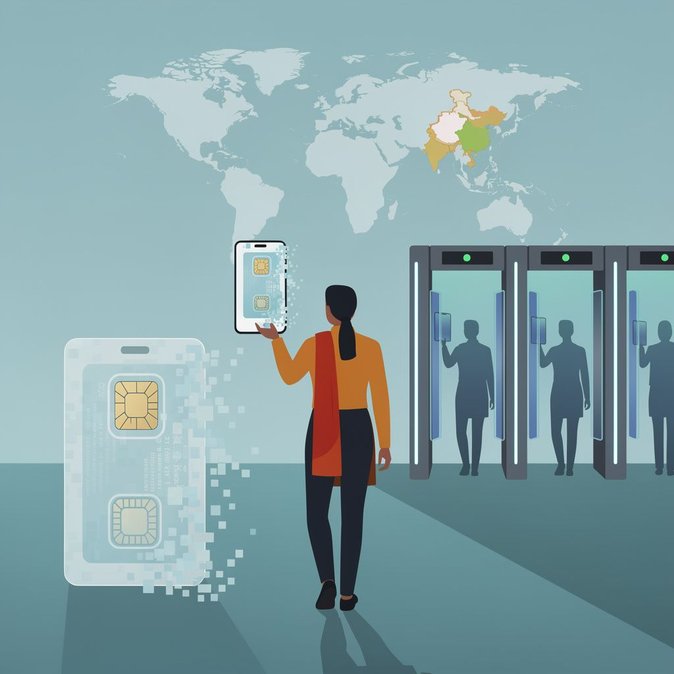
India has taken a decisive step toward paper-less immigration by switching the Overseas Citizen of India (OCI) document to a 100 % digital format. From 8 July 2026 all new applicants receive an electronic OCI (e-OCI) card that can be stored on a smartphone and presented, along with a foreign passport, at Immigration Check-Posts and airline counters. Existing physical booklets remain valid, but card-holders are no longer required to carry them. The Bureau of Immigration (BoI) says the change is part of a wider revamp of the OCI platform designed to eliminate in-person visits and repetitive renewals. Application, status tracking and data-update functions have moved entirely online, and personal interviews are now mandatory only for spouse-based OCI registrations. All other categories can be completed end-to-end in the portal or via Indian Missions abroad. The BoI has also confirmed that card renewal is no longer required when a holder obtains a new passport at age 20 or 50; instead, they can simply upload the new passport data. For business aviation and mobility managers the digitisation brings tangible benefits. Crew travelling on OCI status will cut check-in times, while airlines can embed e-OCI validation directly into their departure-control systems. Airports expect shorter queues because immigration officers no longer need to thumb through 30-page booklets. The BoI is encouraging carriers to display the e-OCI download prompt during web check-in so passengers arrive prepared. Implementation is backed by a public-facing awareness campaign on social media and through Indian embassies. Consulates in Houston, Dublin, Seattle and elsewhere have begun issuing updated advisories to clarify that screenshots are not acceptable—travellers must show the QR-coded PDF generated by the portal. Border officials have been issued new handheld scanners to read the digital credential. Looking ahead, officials told Economic Times that the e-OCI architecture will integrate with India’s Fast Track Immigration-Trusted Traveller Programme (FTI-TTP) and planned automated e-gates, enabling OCI holders to use biometric lanes by the end of FY 2027. That would put OCI privileges on par with the U.S. Global Entry programme and Singapore’s automated clearance lanes, reinforcing India’s push toward seamless cross-border mobility.
Source: The Economic Times