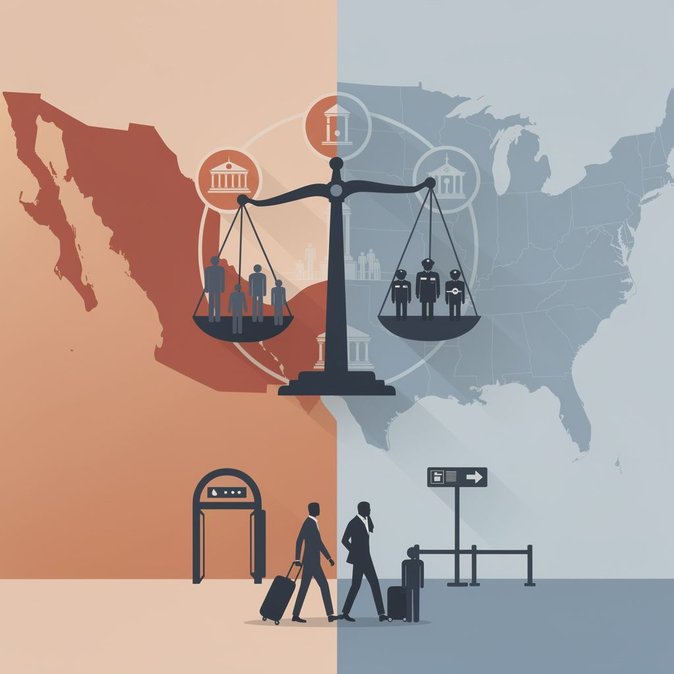
Mexico’s government has moved swiftly in the wake of Tuesday’s fatal shooting of Lorenzo Salgado Araujo, a 41-year-old construction foreman who was killed by a U.S. Immigration and Customs Enforcement (ICE) officer during a traffic stop on Interstate 10 in Houston. At an early-morning press conference in Mexico City on 9 July, Foreign Minister Roberto Velasco announced that the Ministry of Foreign Affairs will file petitions with U.S. state prosecutors and the U.S. Department of Justice asking them to consider criminal charges against the ICE agents involved—not only in Salgado Araujo’s death but also in 16 other Mexican fatalities linked to ICE custody or enforcement actions over the past two years. The demand marks the first time Mexico has formally urged U.S. prosecutors to open criminal cases against individual federal agents. President Claudia Sheinbaum framed the move as a last resort after what she called Washington’s “insufficient response” to repeated diplomatic protests. Mexico will simultaneously file civil suits in U.S. federal court against the private operators of detention centers where 14 Mexican citizens have died since 2024, arguing that negligence and flawed medical protocols violate both U.S. and international human-rights standards. From a global-mobility perspective, the confrontation illustrates how law-enforcement incidents can ricochet into consular relations and potentially slow cross-border travel. Mexican officials signaled they may instruct consulates to withhold cooperation on expedited travel permits for U.S. corporate executives if there is no progress on the criminal inquiries—an escalation that, if carried out, could complicate NAFTA-related business trips and maquiladora audits. Corporate mobility managers with operations in Texas and northern Mexico should monitor whether retaliatory measures target the B1/B2 visa-issuance process or SENTRI trusted-traveler lanes. Legal experts say the odds of U.S. prosecutors bringing homicide charges against federal officers remain slim; historically, only two such indictments have been filed since 2000, and both were dismissed. Nevertheless, public outcry on both sides of the border is sharpening scrutiny of ICE’s use-of-force policies just as the agency ramps up work-site enforcement under President Trump’s 2026 deportation directive. Companies that employ H-2A or H-2B workers should expect more on-site visits and be prepared to document compliance in real time. In the short term, mobility teams should brief assignees on the likelihood of heightened protests at Houston consulates and potential demonstrations near ports of entry in the Rio Grande Valley. Travelers with dual U.S.–Mexican citizenship are unlikely to face additional screening, but firms should remind staff to carry proof of lawful status and employment authorization when driving in the region until tensions subside.
Source: Associated Press