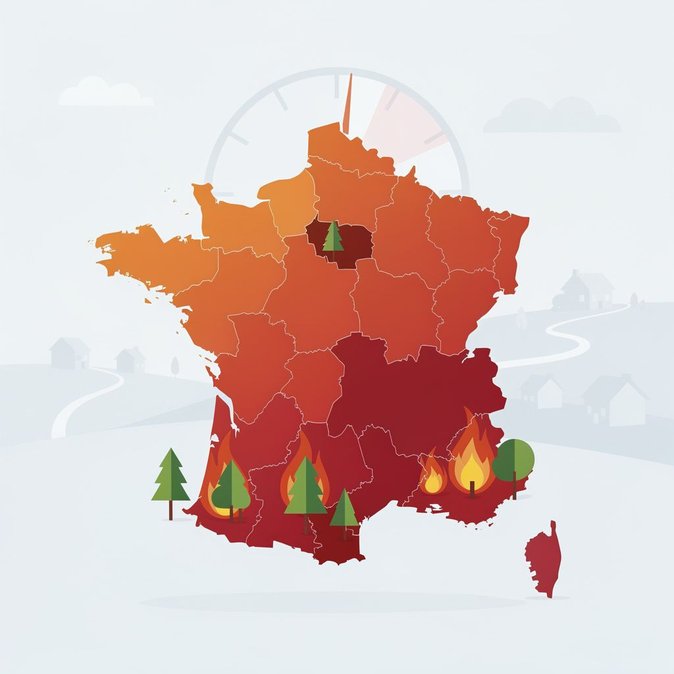
France entered its third heatwave of the year on 4 July and, according to Météo-France, temperatures will remain above 38 °C at least until 16 July. Twenty-four departments in the northwest, including the Paris region, move to red alert on 11 July, while 56 others remain on orange. The government activated the ORSEC Extreme-Heat Plan on 10 July and convened an inter-ministerial crisis cell chaired by Prime Minister Sébastien Lecornu.
Amid such operational headaches, international travelers should double-check that documentation issues don’t add to the heat-related stress. VisaHQ’s dedicated France portal can streamline visa applications, passport renewals and other consular paperwork in one place, giving business and leisure visitors a buffer against airport bottlenecks and sudden schedule changes.
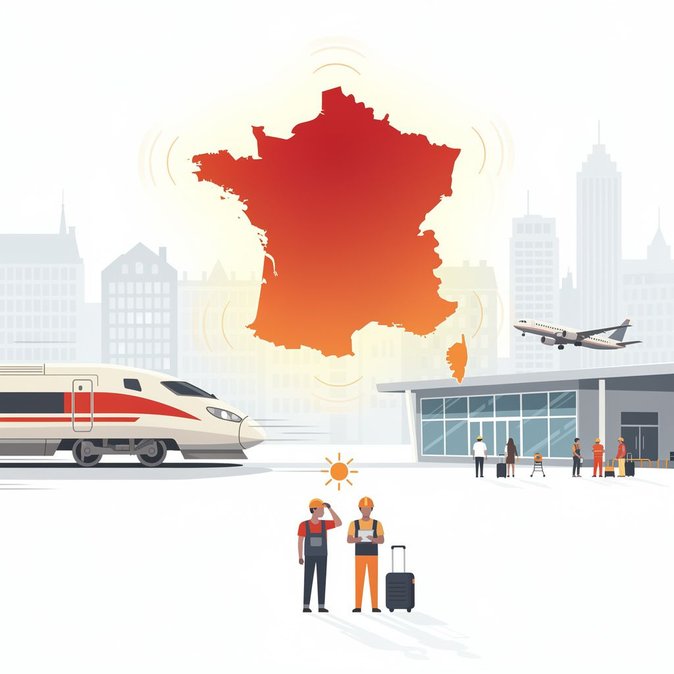
Prefects have been instructed to consider temporary bans on daytime heavy-goods-vehicle traffic and to restrict outdoor construction work between 14:00 and 18:00, mirroring measures already applied during the June heatwave. Air-conditioned “cool rooms” are being opened in major stations such as Paris-Montparnasse and Lyon-Part-Dieu, while SNCF warns that speed limits may be imposed on high-speed lines if rail temperatures exceed 55 °C, potentially delaying TGV services by up to 45 minutes. For business travellers, the biggest short-term impact is likely at airports: unions representing border police at Paris-Charles-de-Gaulle and Orly have secured permission for alternating rest shifts, which could lengthen e-gate queues during peak mid-day arrivals. Companies with expat staff working outdoors – notably in logistics parks around Lille and Bordeaux – must adapt schedules or provide cooled rest areas, failing which labour inspectors can mandate site closures. Insurers caution that repeated heat episodes may soon be reclassified as a “foreseeable” rather than “fortuitous” risk, potentially reducing automatic coverage for business-interruption claims. Meanwhile, event organisers are scrambling: Bastille-Day fireworks in departments under red alert will be banned unless prefects grant an exemption, and fan-zones for the football World Cup semi-final on 14 July must prove they have misting tents and medical staff on site.
Amid such operational headaches, international travelers should double-check that documentation issues don’t add to the heat-related stress. VisaHQ’s dedicated France portal can streamline visa applications, passport renewals and other consular paperwork in one place, giving business and leisure visitors a buffer against airport bottlenecks and sudden schedule changes.
Prefects have been instructed to consider temporary bans on daytime heavy-goods-vehicle traffic and to restrict outdoor construction work between 14:00 and 18:00, mirroring measures already applied during the June heatwave. Air-conditioned “cool rooms” are being opened in major stations such as Paris-Montparnasse and Lyon-Part-Dieu, while SNCF warns that speed limits may be imposed on high-speed lines if rail temperatures exceed 55 °C, potentially delaying TGV services by up to 45 minutes. For business travellers, the biggest short-term impact is likely at airports: unions representing border police at Paris-Charles-de-Gaulle and Orly have secured permission for alternating rest shifts, which could lengthen e-gate queues during peak mid-day arrivals. Companies with expat staff working outdoors – notably in logistics parks around Lille and Bordeaux – must adapt schedules or provide cooled rest areas, failing which labour inspectors can mandate site closures. Insurers caution that repeated heat episodes may soon be reclassified as a “foreseeable” rather than “fortuitous” risk, potentially reducing automatic coverage for business-interruption claims. Meanwhile, event organisers are scrambling: Bastille-Day fireworks in departments under red alert will be banned unless prefects grant an exemption, and fan-zones for the football World Cup semi-final on 14 July must prove they have misting tents and medical staff on site.