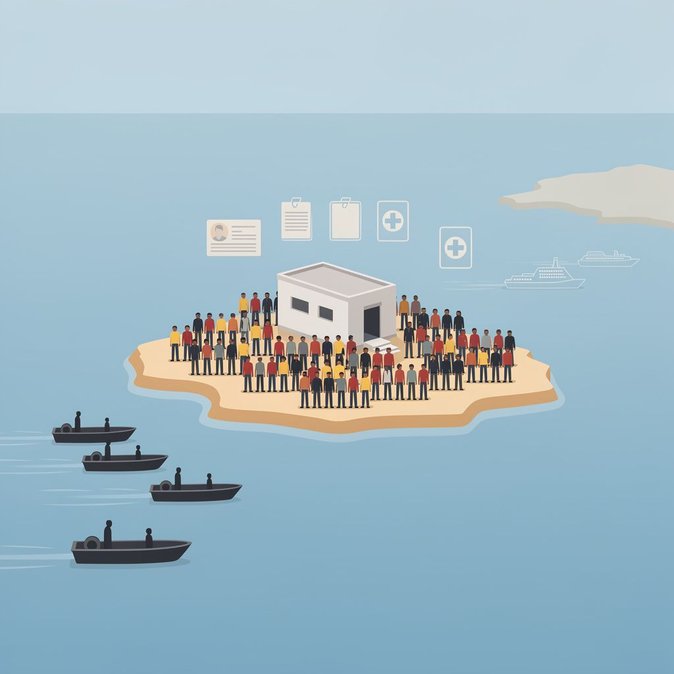
A dramatic spike in sea arrivals has again pushed Italy’s frontline reception system to the brink. Between the morning of 10 July and the evening of 11 July, six Coast Guard, Guardia di Finanza and Frontex vessels rescued or escorted 1,371 people on 25 boats headed for Lampedusa. The influx—coming mainly from Libya, Tunisia and, in one case, directly onto Cala Guitgia beach—has swollen the island’s Imbriacola hotspot population from 138 to 1,430 in a single day, quadrupling its official 350-place capacity. According to officials, the arrivals include Sudanese, Bengalis, Egyptians, Pakistanis, Syrians, Senegalese and Gambians, with several women and unaccompanied minors among the groups. Rescue teams reported repeated mechanical failures and overloaded wooden craft; one seven-metre boat ran aground on nearby Lampione islet. Health staff recorded dozens of scabies cases and at least one diabetic requiring immediate care, adding medical strain to an already stretched facility. The Prefecture of Agrigento, working with the Interior Ministry, organised emergency transfers of 230 people on the Porto Empedocle ferry and prepared charter flights to reception centres in Calabria and Piedmont. Nevertheless, police pre-identification procedures are running hours behind, and local NGOs warn that soaring temperatures (38 °C) are compounding humanitarian concerns. The surge comes just four weeks after Rome began applying the EU Pact on Migration and Asylum’s new border-procedure quota (16,032 cases a year). Government sources say Lampedusa’s experience will be used to argue in Brussels for more flexible redistribution and faster returns. For employers relying on seasonal labour quotas, repeated hotspot crises heighten pressure on the government to keep legal entry channels—such as the 2026-28 Flussi Decree—functioning smoothly. Business travel is largely unaffected for now, but ferry and hydrofoil schedules have been adjusted to prioritise migrant transfers. Corporate mobility managers with staff transiting through Sicily should build extra time into itineraries and monitor Agrigento Prefecture bulletins.
Source: La Sicilia