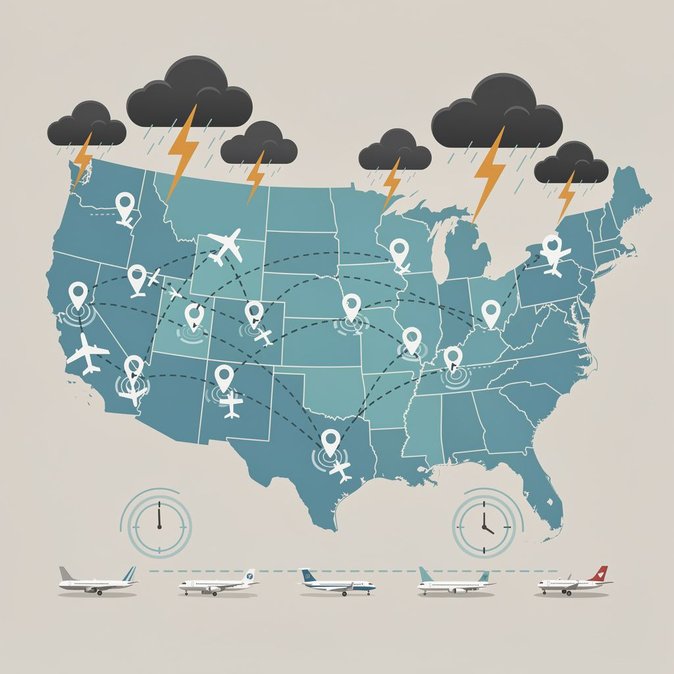
The Federal Aviation Administration’s Daily Air Traffic Report for Friday, 10 July 2026 paints a challenging picture for corporate flyers: thunderstorms were forecast to hit the busy Northeast Corridor (Boston, New York, Philadelphia), the Southeast hubs of Atlanta and Charlotte, Midwestern giants Chicago and Detroit, and major Florida gateways. Low clouds threatened the Bay Area, while gusty winds loomed over Las Vegas. The advisory signals potential ground stops, flow-control programs and departure delays that ripple through airline schedules and private-jet slot availability. Business-travel programs relying on tight same-day connections should brace for missed meetings and re-accommodation costs. Airlines typically waive change fees only after FAA initiatives formally appear on the National Airspace System Status page; mobility managers therefore need to monitor real-time updates rather than rely on static itineraries. Frequent-flyer heavyweights such as American, Delta and United have already loaded extra reserve crews at Chicago O’Hare, Atlanta Hartsfield-Jackson and Newark Liberty. Charter operators report a 28 percent surge in short-notice bookings for mid-size jets repositioning to uncongested secondary airports like White Plains (HPN) and Chicago Midway (MDW). Travel-risk consultants recommend that executives build 4-6-hour schedule cushions and avoid last outbound flights from delay-prone hubs. Remote-first meeting options should be readied in case weather disruptions become protracted through the weekend.
Source: Federal Aviation Administration