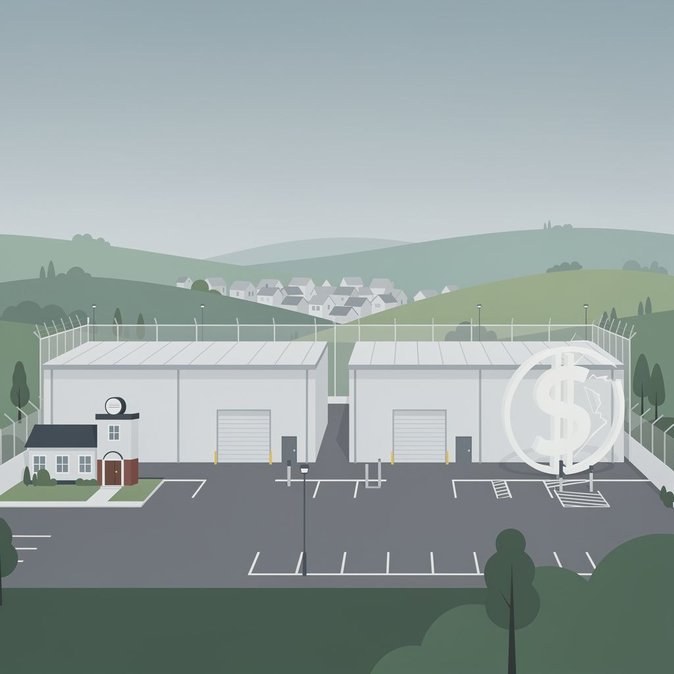
Immigration and Customs Enforcement has quietly abandoned plans to convert two former Big Lots distribution warehouses in Schuylkill and Berks Counties, Pennsylvania, into detention and processing facilities that together could have held up to 9,000 migrants. Local officials confirmed the pivot after months of community opposition and infrastructure concerns. The retreat means the 1.3-million-square-foot buildings—now federally owned and therefore exempt from property taxes—are producing an annual shortfall of roughly US$1.6 million for six school districts and municipalities. County commissioners are lobbying Congress for payments in lieu of taxes (PILTs), but DHS lacks authority to grant them without legislative action.
Whether you are a corporate mobility manager relocating employees to Pennsylvania or an individual traveler navigating evolving U.S. immigration rules, VisaHQ can streamline the visa and travel-document process. Through its dedicated portal, the platform offers step-by-step guidance, document review, and real-time application tracking, helping organizations stay compliant and freeing HR teams to focus on broader strategic planning.
Representative Dan Meuser (R-PA) said he is “advocating directly with DHS” for relief, while Senator John Fetterman (D-PA) confirmed ICE’s change of course in mid-June. Community groups and environmental advocates had challenged the projects, citing inadequate water and sewage capacity and potential pollution. ICE is still appealing state orders that bar officials from facilitating utility hookups, and legal proceedings before Pennsylvania’s Environmental Hearing Board will continue until the agency formally cancels the projects. For global-mobility professionals, the decision signals ICE’s ongoing shift toward shorter-term, lower-capacity detention contracts—as well as the political difficulty of opening large rural facilities. Companies relocating staff to central Pennsylvania may benefit if the warehouses are eventually sold for private logistics use, restoring tax revenue and local services. Until then, employers should monitor zoning changes and PILT negotiations that could affect regional infrastructure and housing availability for transferees.
Whether you are a corporate mobility manager relocating employees to Pennsylvania or an individual traveler navigating evolving U.S. immigration rules, VisaHQ can streamline the visa and travel-document process. Through its dedicated portal, the platform offers step-by-step guidance, document review, and real-time application tracking, helping organizations stay compliant and freeing HR teams to focus on broader strategic planning.
Representative Dan Meuser (R-PA) said he is “advocating directly with DHS” for relief, while Senator John Fetterman (D-PA) confirmed ICE’s change of course in mid-June. Community groups and environmental advocates had challenged the projects, citing inadequate water and sewage capacity and potential pollution. ICE is still appealing state orders that bar officials from facilitating utility hookups, and legal proceedings before Pennsylvania’s Environmental Hearing Board will continue until the agency formally cancels the projects. For global-mobility professionals, the decision signals ICE’s ongoing shift toward shorter-term, lower-capacity detention contracts—as well as the political difficulty of opening large rural facilities. Companies relocating staff to central Pennsylvania may benefit if the warehouses are eventually sold for private logistics use, restoring tax revenue and local services. Until then, employers should monitor zoning changes and PILT negotiations that could affect regional infrastructure and housing availability for transferees.