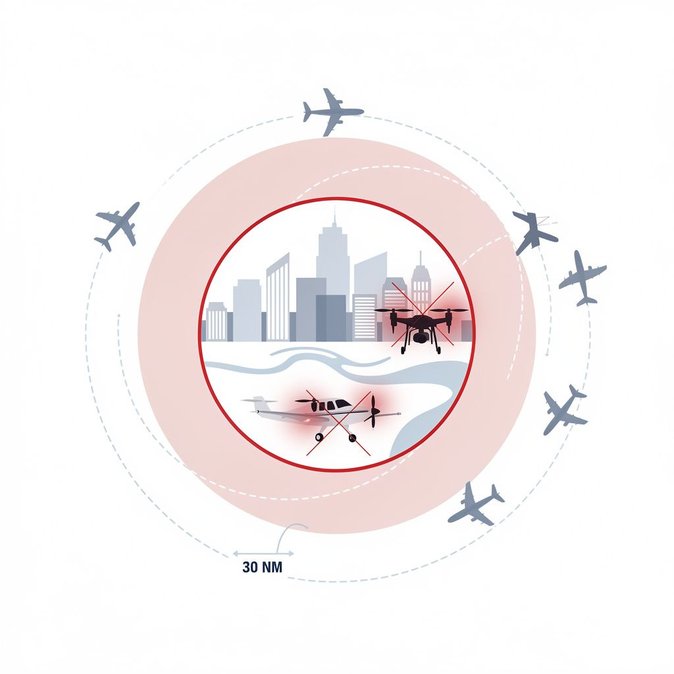
The FAA has issued a Temporary Flight Restriction (TFR) covering airspace around Kansas City, Missouri from Saturday, 11 July through Sunday, 12 July 2026, citing unspecified “security” requirements. Graphic NOTAM data show the restriction (identifier 6/3222) spans a 30-nautical-mile radius from the downtown reference point, with an inner 10-nautical-mile no-fly zone. While the agency has not publicly linked the TFR to a particular event, local media report a large-scale political rally and associated VIP movements. The restrictions will affect general aviation operators, aerial photographers and drone users; scheduled commercial flights are permitted but may face reroutes and arrival sequencing delays, particularly at Kansas City International (MCI). Corporate flight departments planning weekend hops to or through the Midwest must file IFR flight plans well in advance and be prepared for airborne holding or re-clearance. Part-107 drone operators should disable autonomous missions within the affected grid to avoid enforcement actions that can include civil penalties topping US$20,000. Mobility planners moving executives to nearby manufacturing sites in Topeka or Wichita should evaluate ground-transport alternatives or fly into secondary airports such as Manhattan Regional (MHK) outside the TFR’s outer ring. Travelers should monitor the FAA’s TFR map and sign up for real-time NOTAM alerts via flight-planning vendors.