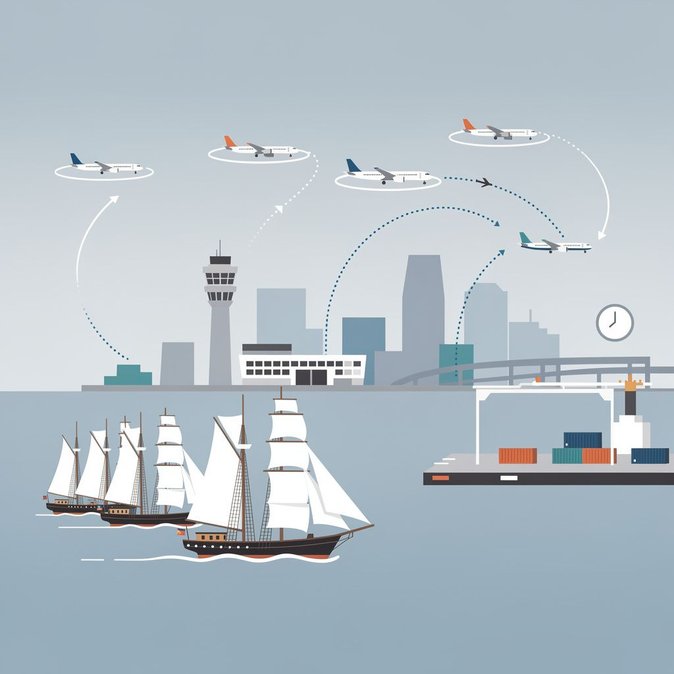
Boston’s five-day Sail Boston 2026 festival got off to a picturesque—but highly disruptive—start on Saturday, July 11, when more than 60 historic tall ships threaded Boston Harbor for the traditional Parade of Sail. Because many vessels’ masts intruded into the approach path of Runways 4R/4L, the Federal Aviation Administration (FAA) ordered an alternate landing configuration that cut Logan’s hourly arrival capacity almost in half. By late afternoon FlightAware was showing roughly 340 delayed and 18 cancelled operations, while Massport asked inbound aircraft to tanker extra fuel to ease stress on an off-airport fueling pipeline outage. For corporate travel managers, the incident is a reminder that non-weather “special events” can trigger the same cascading delays as snowstorms. Crews timed out, narrow-body equipment stranded out-of-position, and a backlog of missed connections rippled across carriers’ Northeast networks. Although Logan remained “fully operational,” Massport warned that the reduced-rate arrival configuration would remain in place until the last tall ship cleared the approaches, a window that ultimately stretched to the early-evening trans-Atlantic bank. Beyond passenger inconvenience, cargo handlers reported dozens of late belly-freight transfers, forcing costly re-ice of perishables and ad-hoc trucking to New York to meet onward flights. Companies that had built Sail Boston into contingency playbooks—chiefly Boston-based biopharma exporters—were able to pivot shipments to Worcester Regional or Manchester-Boston, but smaller shippers absorbed extra storage and drayage fees. Looking ahead, Logan operates at near-capacity much of the summer. Massport indicated it will issue formal “special-event NOTAMs” 48 hours in advance for future Harbor parades and July 4th fireworks barges so that airlines can proactively retime schedules and advise premium passengers. Travel teams should flag July 16—the day the tall ships depart—as the next high-risk date for residual delays.
Source: CBS Boston