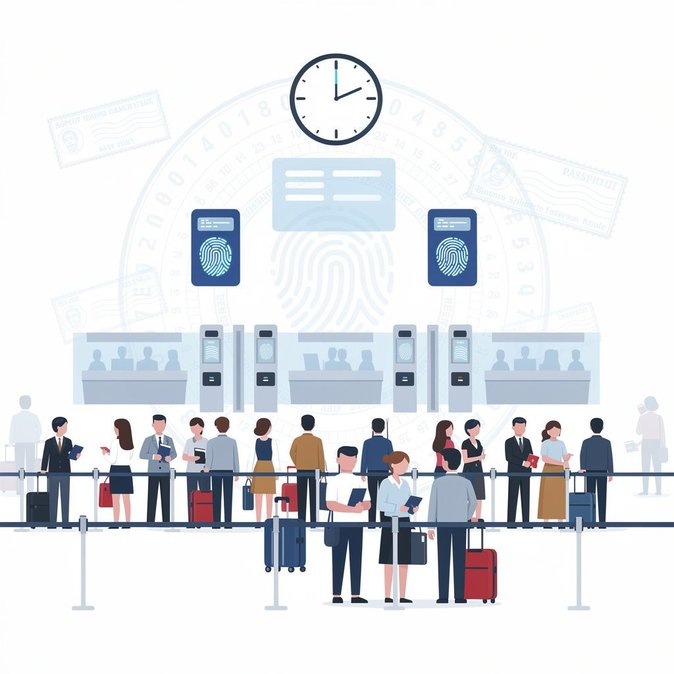
NPR’s weekend broadcast highlighted growing chaos at Schengen-area airports as the European Union rolls out its Entry/Exit System (EES)—a mandatory facial-recognition and fingerprint process for all non-EU arrivals and departures. While the technology is meant to tighten overstayer controls, airports from Copenhagen to Rome reported queues exceeding three hours after multiple kiosks crashed on July 11.
Amid this uncertainty, travelers and corporate mobility teams can turn to VisaHQ for up-to-date guidance on Schengen entry requirements, biometric rollouts, and alternative routing options. The platform’s U.S. portal centralizes rule changes, offers step-by-step documentation support, and provides live specialists who can flag airports with the worst delays—helping passengers re-plan itineraries before they even reach the terminal.
For U.S. citizens, the immediate impact is missed connections and Duty-of-Care headaches for employers. A Gartner Travel poll released Sunday shows 64 percent of Fortune 500 mobility managers have already rerouted travellers away from intra-Europe legal-entity meetings next week. Some are pushing staff onto Eurostar or short-haul rail to avoid a second passport check. Airlines and the International Air Transport Association (IATA) have pleaded with Brussels to suspend EES until after peak season, but the European Commission insists the teething problems are “finite” and that carriers must adapt. U.S. carriers with pre-clearance agreements—namely Delta at Dublin and American at Shannon—say those facilities remain exempt, offering a valuable workaround for time-sensitive executives. Travel advisors recommend arriving at least four hours before departure, using app-based fast-track reservations where offered, and carrying proof of tight onward connections to request queue-jump assistance. Visa-exempt Americans remain limited to 90 days in any 180-day period under Schengen rules; EES will now automatically enforce overstays, increasing exposure to fines or future bans.
Amid this uncertainty, travelers and corporate mobility teams can turn to VisaHQ for up-to-date guidance on Schengen entry requirements, biometric rollouts, and alternative routing options. The platform’s U.S. portal centralizes rule changes, offers step-by-step documentation support, and provides live specialists who can flag airports with the worst delays—helping passengers re-plan itineraries before they even reach the terminal.
For U.S. citizens, the immediate impact is missed connections and Duty-of-Care headaches for employers. A Gartner Travel poll released Sunday shows 64 percent of Fortune 500 mobility managers have already rerouted travellers away from intra-Europe legal-entity meetings next week. Some are pushing staff onto Eurostar or short-haul rail to avoid a second passport check. Airlines and the International Air Transport Association (IATA) have pleaded with Brussels to suspend EES until after peak season, but the European Commission insists the teething problems are “finite” and that carriers must adapt. U.S. carriers with pre-clearance agreements—namely Delta at Dublin and American at Shannon—say those facilities remain exempt, offering a valuable workaround for time-sensitive executives. Travel advisors recommend arriving at least four hours before departure, using app-based fast-track reservations where offered, and carrying proof of tight onward connections to request queue-jump assistance. Visa-exempt Americans remain limited to 90 days in any 180-day period under Schengen rules; EES will now automatically enforce overstays, increasing exposure to fines or future bans.