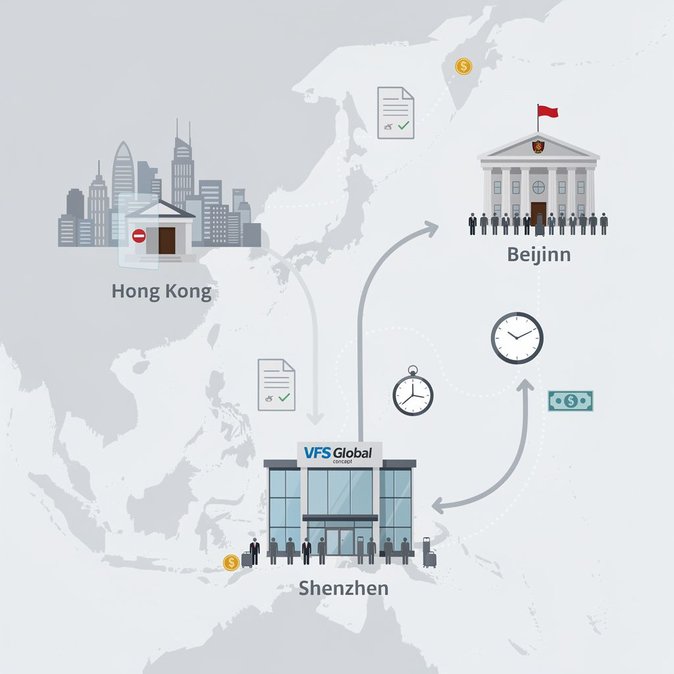
Today, 13 July 2026, is the final day on which the Consulate General of the Czech Republic in Hong Kong will accept new Schengen and long-term visa applications. Under a decision announced earlier this month by the Czech Ministry of Foreign Affairs, the mission will cease all standard consular and visa activities ahead of its permanent closure on 30 September. From 1 August 2026, short-stay (Type C) applications must be lodged at the outsourced Czech Visa Centre operated by VFS Global in Shenzhen, while long-term visa and residence-permit files will be processed exclusively by the Czech Embassy in Beijing. The change is part of a broader rationalisation of the Czech consular network in Greater China. Officials cited overlapping jurisdictions, rising operational costs and the need to consolidate biometric capture equipment for the EU’s Entry-Exit System (EES) as key drivers. Applicants who successfully obtained appointment slots via the Consulate’s online queueing system retain the right to file in Hong Kong today; everyone else must re-book in Shenzhen or Beijing. Emergency services for Czech citizens, such as passport issuance or notarial acts, will continue in Hong Kong until 31 August. For businesses, the move raises immediate logistical questions. Shenzhen is roughly 90 minutes from central Hong Kong via high-speed rail plus border formalities, adding cost and time for staff of multinational corporations accustomed to the city-centre Consulate. Czech investment agency CzechInvest says it is working with VFS Global to set up group appointments for technology and manufacturing firms recruiting engineers under the Qualified Worker Programme. Travel consultants warn that processing times may lengthen during the hand-over. “August is high season for student and trainee mobility to Czechia, and capacity in Beijing is already tight,” notes Amy Liu of SilkRoad Visas. She recommends that HR teams factor in an extra two weeks and prepare courier budgets for document transfers. Czech authorities insist that quotas for Hong Kong and Macao applicants remain unchanged and stress that biometric data collected in Shenzhen will be valid for future renewals. The closure follows similar consolidations by several EU member states, reflecting shifting demand patterns after the pandemic and the EU’s transition to digital border management. Companies with regional headquarters in Hong Kong should update relocation policies immediately to reflect the new filing points and transport allowances.
How VisaHQ can help
VisaHQ simplifies the visa application process for individuals and businesses. Check current travel requirements, prepare the required documents and manage your application online through the VisaHQ Czech Republic portal.More From Czech Republic
View all
EU warns Caribbean CIP states over visa-free access, signalling future changes for Czech border checks

Government signs off tourism-strategy progress report; eyes new incentives for regional business events