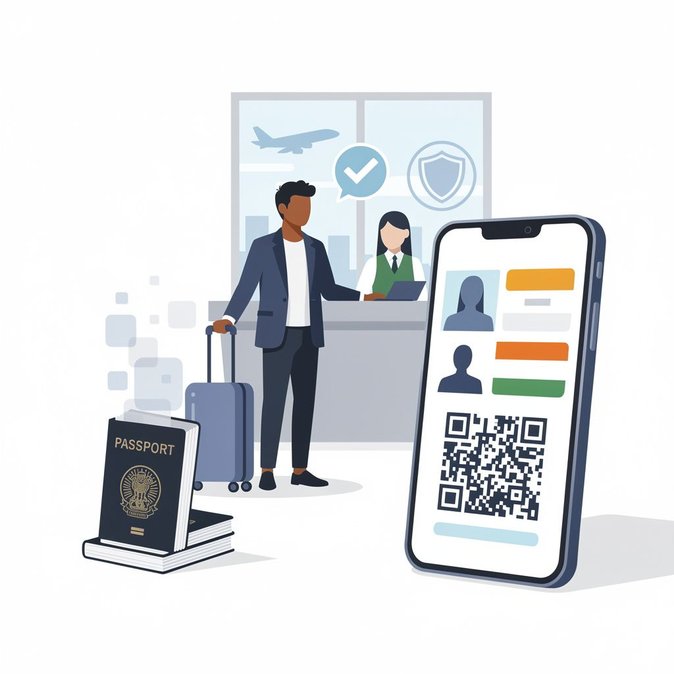
Overseas Citizens of India (OCI) no longer have to worry about misplacing their maroon booklet at the immigration counter. On 13 July 2026 the Ministry of Home Affairs switched the entire OCI ecosystem on to a new electronic platform, allowing both new applicants and the country’s 4.2 million existing card-holders to generate a secure PDF version of their card directly from the OCI Services Portal.
Should travellers or corporations need hands-on assistance with the transition, VisaHQ’s India specialists can streamline the e-OCI download, update passport particulars and even handle ancillary visa needs. Their online portal offers live support, document checks and courier options, making compliance painless for individuals and HR teams alike.
The e-OCI is recognised at all 114 Immigration Check-Posts as well as by airline departure control systems, meaning travellers can simply show the file on a smartphone or tablet. The digital card sits inside the government’s broader Immigration, Visa and Foreigners Registration & Tracking (IVFRT) architecture and carries an encrypted QR code that links to the holder’s unique OCI record. Officers can therefore validate status in real time without relying on a decades-old booklet that was easy to damage and expensive to re-issue. Security features include a dynamic watermark and tamper-evident hash, bringing the OCI in line with ICAO standards for electronic travel documents. Practically, the change removes one of the biggest pain-points for frequent business travellers of Indian origin: booklet renewals. Under the old system a new physical card had to be ordered every time the passport number changed after the age of 20. Now holders simply update their passport particulars online and download a fresh e-OCI within minutes. Families can also manage multiple cards from a single login, a welcome efficiency for relocation managers handling group moves. Carriers have been briefed to accept the e-OCI as sufficient proof of Indian immigration entitlement, but mobility chiefs should advise travellers to save the file offline and carry at least one power bank until airport infrastructure—especially at smaller gateways—fully adapts. Critics have also called for a grace period in which the legacy booklet remains valid in case of technical glitches; the government has informally indicated this will be honoured for six months. For multinational companies the benefits are immediate: fewer lost-document emergencies, lower replacement fees, and simplified onboarding of foreign-born Indian nationals into Indian payrolls or short-term assignment programmes. HR and mobility teams should add the e-OCI download step to pre-departure check-lists and update travel policies to reflect the new digital document.
Should travellers or corporations need hands-on assistance with the transition, VisaHQ’s India specialists can streamline the e-OCI download, update passport particulars and even handle ancillary visa needs. Their online portal offers live support, document checks and courier options, making compliance painless for individuals and HR teams alike.
The e-OCI is recognised at all 114 Immigration Check-Posts as well as by airline departure control systems, meaning travellers can simply show the file on a smartphone or tablet. The digital card sits inside the government’s broader Immigration, Visa and Foreigners Registration & Tracking (IVFRT) architecture and carries an encrypted QR code that links to the holder’s unique OCI record. Officers can therefore validate status in real time without relying on a decades-old booklet that was easy to damage and expensive to re-issue. Security features include a dynamic watermark and tamper-evident hash, bringing the OCI in line with ICAO standards for electronic travel documents. Practically, the change removes one of the biggest pain-points for frequent business travellers of Indian origin: booklet renewals. Under the old system a new physical card had to be ordered every time the passport number changed after the age of 20. Now holders simply update their passport particulars online and download a fresh e-OCI within minutes. Families can also manage multiple cards from a single login, a welcome efficiency for relocation managers handling group moves. Carriers have been briefed to accept the e-OCI as sufficient proof of Indian immigration entitlement, but mobility chiefs should advise travellers to save the file offline and carry at least one power bank until airport infrastructure—especially at smaller gateways—fully adapts. Critics have also called for a grace period in which the legacy booklet remains valid in case of technical glitches; the government has informally indicated this will be honoured for six months. For multinational companies the benefits are immediate: fewer lost-document emergencies, lower replacement fees, and simplified onboarding of foreign-born Indian nationals into Indian payrolls or short-term assignment programmes. HR and mobility teams should add the e-OCI download step to pre-departure check-lists and update travel policies to reflect the new digital document.