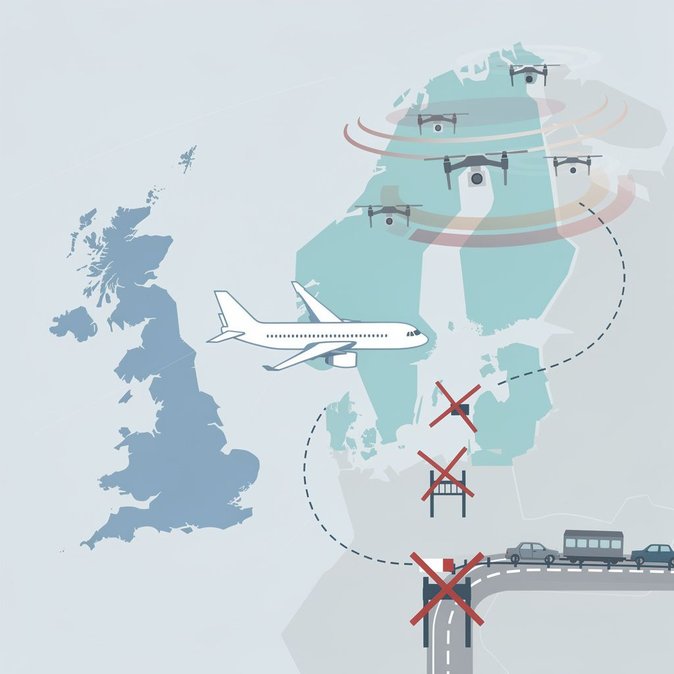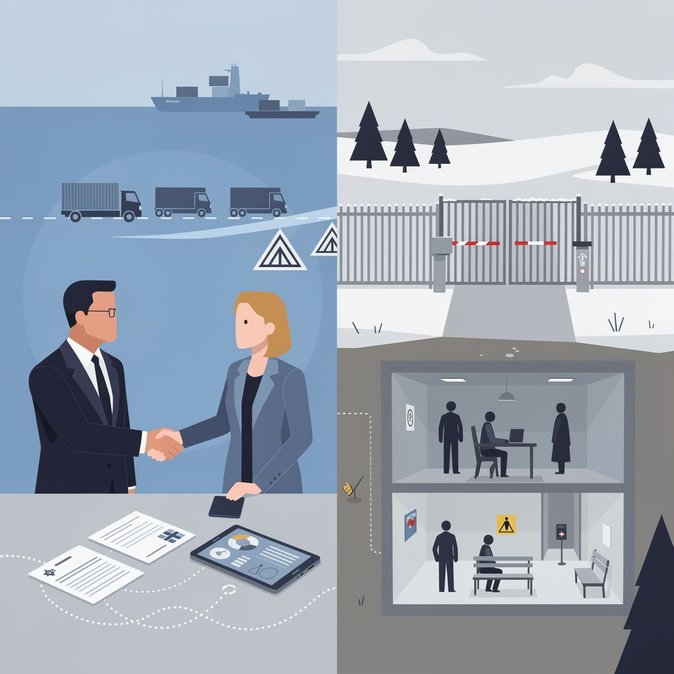
Germany’s new Foreign Minister Johann Wadephul arrived in Helsinki on 15 July for a two-day programme that underscores how Finland’s NATO accession has redrawn mobility and security dynamics on the EU’s northern frontier. During meetings with his Finnish counterpart Elina Valtonen, Wadephul praised “Finland’s resilience and civil-emergency culture” and described the country as the Alliance’s new “front-line laboratory” for countering hybrid threats from Russia. The delegation is travelling from the capital to the Vaalimaa crossing—closed to passenger traffic since 2023—to inspect the 300-kilometre border fence and to discuss joint situational awareness projects. Officials will also tour Helsinki’s subterranean civil-defence shelters, which can accommodate the city’s entire population, and meet experts from the European Centre of Excellence for Countering Hybrid Threats. From a global-mobility perspective, the visit signals deeper bilateral cooperation on border management technology, information-sharing and crisis-response protocols that directly affect visa processing, customs inspections and the movement of personnel between Finland and the rest of the Schengen area. Finnish diplomats say one concrete outcome could be a pilot programme allowing trusted German companies to submit advance passenger and freight data through Finland’s new Border Security Act platform, accelerating clearance times once the eastern frontier reopens. Corporate mobility managers should note that Helsinki and Berlin are exploring reciprocal civil-protection training for expatriate staff, including shelter-in-place drills and GPS-jamming contingencies for road transport in Lapland and the Baltic Sea region. While no new restrictions were announced, officials reiterated that the land border with Russia will remain closed “until further notice”, maintaining the current requirement that asylum applications be lodged exclusively at designated air- and seaports. For multinational firms, the key takeaway is that Finland’s position on the EU’s external border continues to drive regulatory innovation—potentially resulting in faster, more secure business-travel channels with trusted partners, but also in tighter screening for movements deemed vulnerable to hybrid interference.