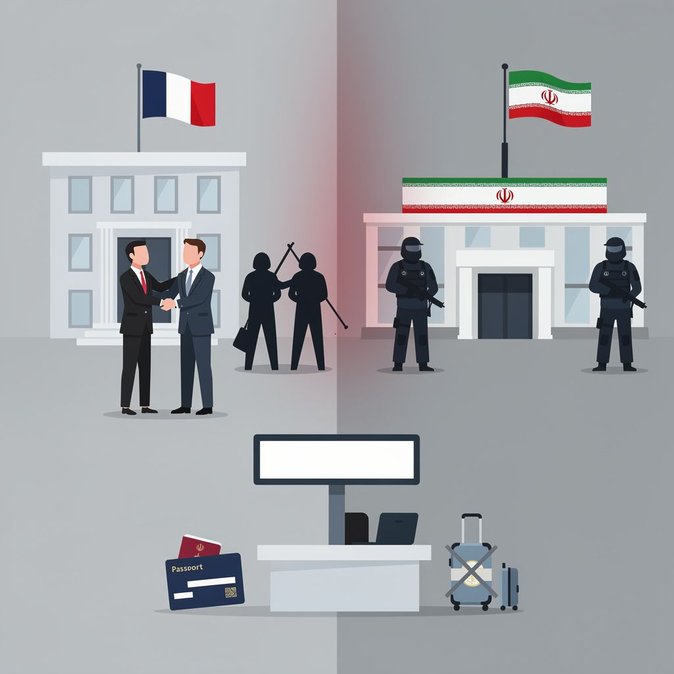
Foreign Minister Jean-Noël Barrot revealed on 20 July 2026 that two French embassy officials in Tehran were detained and interrogated for several hours by Iranian security agents the previous night, with one diplomat physically abused. Both have since returned safely to the embassy, but Paris called the incident “an extremely serious act of intimidation” and summoned Iran’s chargé d’affaires. While primarily a consular-protection issue, the episode has mobility implications. France’s embassy and visa section in Tehran process thousands of short-stay business visas annually for Iranian tech and energy executives attending meetings in Paris and Lyon. Any diplomatic retaliation—such as reduced staff or temporary visa-service suspension—could slow applications and complicate corporate itineraries. French multinationals operating in Iran (mainly in automotive parts, health care and airport services) also rely on rapid diplomatic support for fly-in specialists. A security downgrade would trigger stricter duty-of-care protocols and higher insurance premiums. Previous embassy incidents—in 2019 and 2022—resulted in week-long appointment backlogs and diverted some travellers to the French consulate in Dubai. Barrot has warned Tehran that the violation of the Vienna Convention “cannot go without consequences”. Analysts expect France to coordinate with EU partners on potential measures, which could include travel-warning escalations or reciprocal staff restrictions. Mobility managers with Iran-bound personnel should monitor advisories and ensure contingency visas via neighbouring Schengen posts are pre-arranged, while French assignees in Iran are urged to register on the Ariane crisis-alert platform.
Source: Arab News / AFP