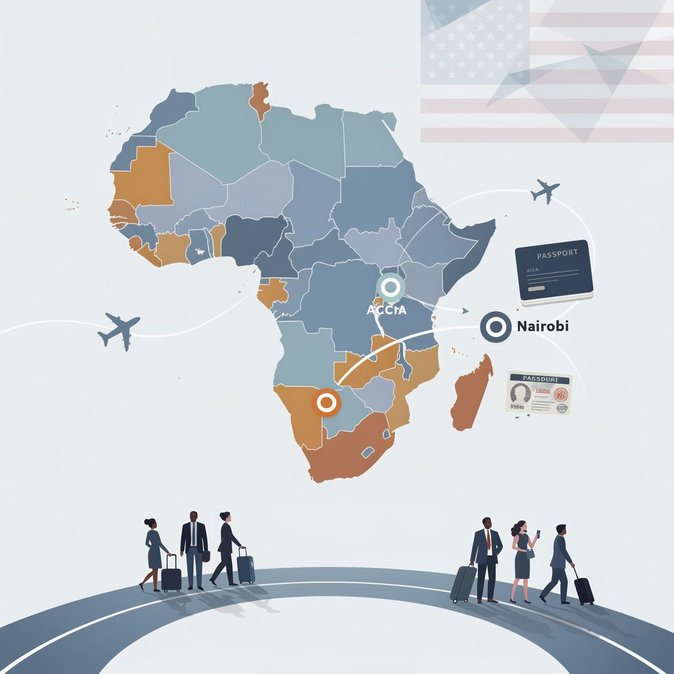
The Department of State has announced its most sweeping re-organisation of African consular services in two decades. From 1 August 2026, routine immigrant and non-immigrant visa processing will cease at 25 posts—including Abuja, Antananarivo, Bamako and Windhoek—and be transferred to ten larger “regional visa processing hubs” such as Accra, Nairobi and Johannesburg. No embassy will close, but affected posts will provide only emergency and limited American-citizen services. The re-alignment, unveiled in a July 24 legal-notice to carriers and trade groups, aims to pool adjudication expertise and introduce uniform screening technology across high-fraud regions. Senior consular officials say the shift will let them absorb surging student-visa demand while meeting new biometric-capture standards mandated by Congress. For U.S. and African multinationals, the change is significant. Employers must now budget for employees to travel internationally—sometimes across borders—to reach a functioning consulate, adding airfare, hotel and time-off costs to the visa process. Machine-Readable Visa (MRV) fees paid in the closing posts must be used to book an appointment by 31 July or will be forfeited, creating a near-term scramble for scarce slots. Immigration counsel recommend that corporations audit their Africa-bound assignment pipeline immediately: Candidates already holding appointment confirmations will receive State Department emails with re-scheduling instructions, but security-cleared workers in oil, mining and telecoms projects could face weeks-long delays if medicals or police certificates expire in the interim. Longer term, the hub model could reduce adjudication inconsistencies that have plagued Africa for years. Centralised fraud-prevention units will have bigger data sets, and U.S. officials hint that successful pilots may export the concept to Central America next year. Mobility leaders should update employee FAQs and relocate travel-support budgets accordingly.