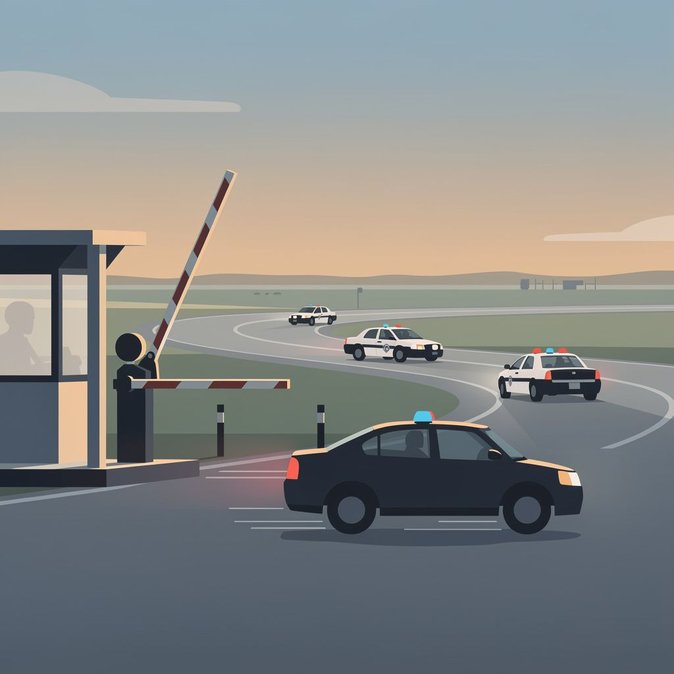
A coordinated operation between the Royal Canadian Mounted Police (RCMP) and the Canada Border Services Agency (CBSA) ended in the arrest of 44-year-old North Dakota resident Scott Weinberger after he fled secondary inspection at the Emerson, Manitoba land border on September 12. Details of the incident were released on September 18 following charges being laid. According to RCMP reports, CBSA officers directed the southbound vehicle to secondary screening when anomalies were detected. Instead, the driver accelerated north on Highway 75 toward Winnipeg. Multiple detachments—including Morris and St. Pierre-Jolys—established rolling blockades. After a 40-minute pursuit, officers used a precision-stopping manoeuvre, seizing a loaded handgun and assorted ammunition from the passenger seat. The suspect now faces charges ranging from dangerous operation of a conveyance to assault with a weapon. No officers or civilians were injured, though one police cruiser sustained damage. The Integrated Border Enforcement Team (IBET) is liaising with U.S. Homeland Security Investigations to determine motive and possible cross-border criminal links. For global-mobility managers, the case is a reminder that heightened firearms smuggling and migrant-smuggling risks along the Prairie corridor have prompted stricter enforcement protocols. Commercial drivers and business travellers should expect more frequent secondary examinations at Emerson and neighbouring crossings. Companies moving goods through Manitoba may experience sporadic lane closures while CBSA upgrades inspection infrastructure under the 2026 Border Modernization Plan. The incident also illustrates the growing importance of real-time intelligence sharing in safeguarding Canada–U.S. trade flows, which exceed $2-billion daily across 117 land ports. Continued investment in IBET and joint training exercises is viewed by industry associations as essential to maintaining both security and efficient cross-border mobility.
Source: mySteinbach