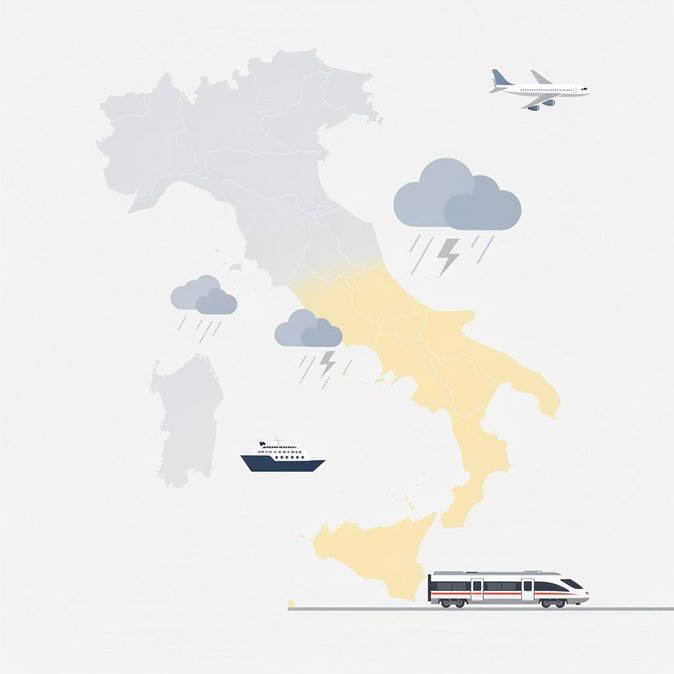
Italy’s Civil Protection Department issued a level-yellow (ordinary) hydro-meteorological alert late Saturday, warning of intense thunderstorms, short-duration flash floods and possible landslides across large parts of Calabria, Sicily and Sardinia on Sunday, 20 September. The bulletin followed updated models from the Multi-Risk Functional Centre that pointed to a slow-moving low-pressure system drawing moist, unstable air from the central Mediterranean. Airlines operating into Reggio Calabria, Catania and Cagliari airports activated adverse-weather protocols, including increased aircraft-spacing and potential diversion plans. Maritime operators Tirrenia and Grimaldi Lines announced they might adjust ferry schedules if wind gusts exceed 35 knots in the Strait of Messina or the Sardinian channels. Trenitalia issued a notice that regional services along the Jonica and Tirrenica lines could experience speed restrictions or substitute buses where flash-flood risk is highest. While a yellow alert is the lowest on Italy’s three-tier scale, it obliges local authorities to pre-position emergency crews and can lead to the closure of vulnerable provincial roads. Business travellers should monitor regional transport apps (Muoversi in Sicilia, Calabria Straordinaria) and allow extra connection time. Employers with field staff in rural areas are advised to review lone-worker tracking and ensure that company vehicles carry high-visibility vests and basic emergency kits. The alert underscores the growing nexus between extreme weather and mobility planning in Italy. In 2025 the country recorded 148 weather-related road closures and 36 airport diversions, a 40 percent increase on the pre-pandemic average. Insurance brokers note that many corporate travel policies exclude delays caused by ‘acts of nature’ unless an additional premium is paid. Companies are therefore moving toward bundled risk solutions that treat meteorological disruption on a par with strikes and security events. Forecasters expect the storm cell to exit toward the Ionian Sea by early Monday, but renewed instability is possible mid-week. Travellers should keep boarding passes and receipts to support any insurance claims for accommodation or rebooking costs incurred because of weather-related delays.