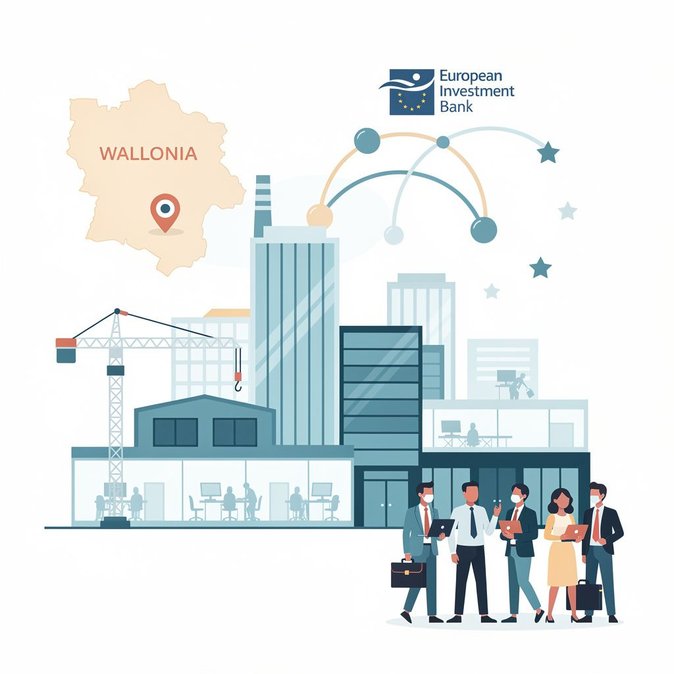
The Walloon government and the European Investment Bank (EIB) signed a memorandum of understanding on 23 September to spearhead the economic redeployment of La Louvière and Belgium’s wider ‘Centre’ region. Witnessed by King Philippe, the agreement establishes a pipeline for projects in sustainable industry, urban regeneration and vocational up-skilling, all earmarked for fast-track EIB financing. Why does this matter for global mobility? Wallonia has struggled to lure multinational investment since the decline of heavy industry, leading to talent outflows to Flanders and abroad. By pledging technical support and concessional loans, the EIB hopes to create high-value jobs that can draw expatriate Belgians back—and attract foreign specialists under Belgium’s Single Permit regime. Planned initiatives include refurbishing brownfield sites into advanced-manufacturing hubs, building energy-efficient housing suitable for incoming professionals, and expanding bilingual STEM training programmes. Regional authorities say they will work with immigration offices to streamline work-authorisation timelines so companies can “plug and play” international staff once projects break ground. For employers, the pact could open new destination options beyond Brussels and Antwerp for assignments in engineering, life sciences and circular-economy services. Mobility teams should track forthcoming calls for proposal—expected early 2027—to anticipate housing, schooling and transport infrastructure needs for relocating employees. The EIB-Wallonia framework echoes similar place-based investment deals in Spain’s Basque Country and Germany’s Ruhr Valley, underlining a broader EU drive to pair industrial policy with targeted talent-mobility incentives.
Source: European Investment Bank