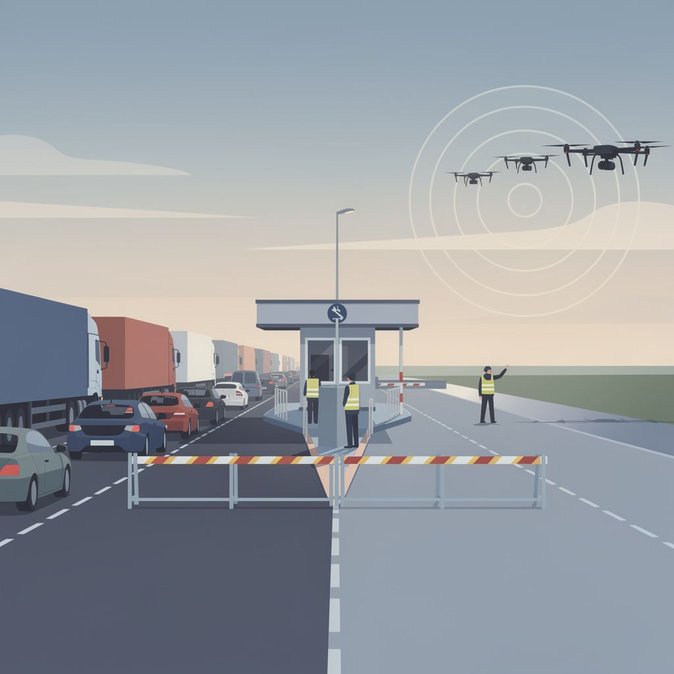
Two of the busiest road crossings on Poland’s eastern frontier – Dorohusk and Zosin in Lublin Voivodship – were evacuated for roughly twenty minutes on the morning of 23 September after Polish authorities detected Russian attack drones approaching from the Ukrainian side of the border. Border-guard officials told local media that control booths were shut and travellers moved to secure areas shortly after 07:00, when an air-raid siren was triggered in the region. Within minutes, Polish F-16 fighters were scrambled to patrol national airspace, and an Alert RCB (the nationwide cell-broadcast warning system) was pushed to mobile phones across eastern districts. The temporary stoppage followed a night-time wave of Russian strikes on Ukrainian energy and transport infrastructure. Although no drones violated Polish airspace, the incident illustrates how spill-over security risks from the war continue to affect cross-border mobility and supply chains. Dorohusk handles a significant share of east-bound truck traffic, including humanitarian aid and automotive components, while Zosin is a key route for Ukrainian seasonal workers commuting to farms and factories in central Poland. Polish logistics firms reported queues stretching more than three kilometres on the Ukrainian side before controls resumed. Forwarders interviewed by trade association TLP warned that even short suspensions can knock just-in-time delivery schedules off-balance because drivers must observe statutory rest periods. Companies with sensitive cargo (for example, chemicals or pharmaceuticals that require temperature control) were advised to build a wider buffer into transit plans during the autumn, when Russian drone activity typically intensifies. For business travellers and global mobility managers, the episode is a reminder to maintain real-time monitoring of security advisories and to ensure that employees crossing the eastern border carry sufficient food, water and fuel reserves for unexpected delays. Organisations with expatriate staff in the border region should also review shelter-in-place procedures and verify that all personnel receive RCB text alerts on Polish SIM cards. Looking ahead, Warsaw is expected to allocate additional funding to hardened shelters and enhanced surveillance at crossings that lie within the 20-km exclusion belt referenced in NATO contingency planning.