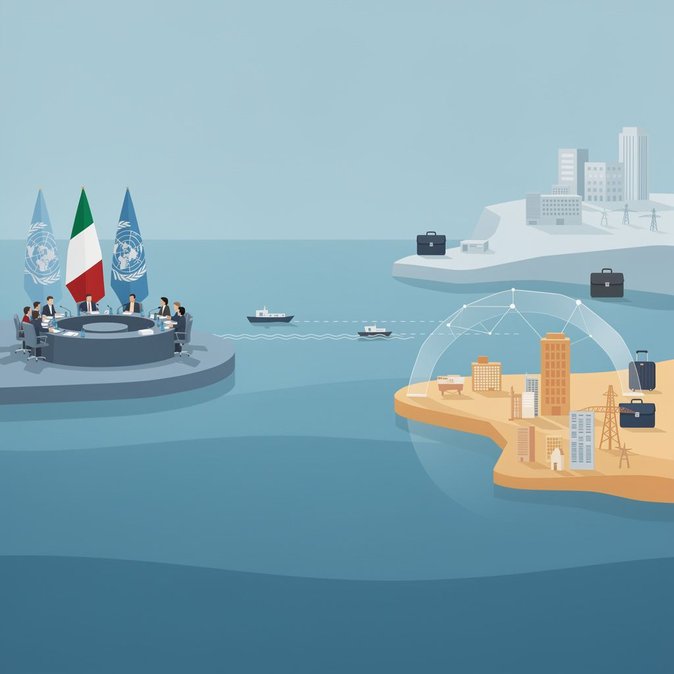
Speaking at the 81st UN General Assembly side-event ‘International Support for Peace, Unity and Prosperity in Libya’ on 25 September, Italian Under-Secretary for Foreign Affairs Maria Tripodi reiterated Rome’s determination to back Libya’s political roadmap. Italy’s position, she said, aligns with UN Special Representative Hanna Tetteh’s efforts to unify Libyan institutions and prepare long-delayed elections. Migration management is a central motive behind Italy’s diplomacy: instability in Libya continues to fuel irregular departures across the Central Mediterranean, with over 48,000 migrants landing on Italian shores so far in 2026. By deepening coordination with the US, Turkey and regional actors, Rome hopes to reduce maritime crossings and the burden on its own reception system. Tripodi highlighted the ‘Small Convening’ dialogue process, first hosted in Rome on 29 April, as evidence of Italy’s brokerage role. For global-mobility programmes, a more stable Libya could ease security constraints on corporate assignments tied to the vast reconstruction and energy-sector opportunities that major Italian firms—including ENI and Saipem—aim to pursue. Conversely, any uptick in violence risks new search-and-rescue operations that divert Italian naval assets and prompt additional domestic political pressure for border-control measures. Tripodi’s remarks come as the Meloni government debates whether to renew Operation ‘Mare Sicuro’ patrol mandates in early October. Multinationals with staff rotation through Italian ports and airports should monitor parliamentary developments that may affect visa issuance priorities or port-of-entry processing for seafarers and contractors.