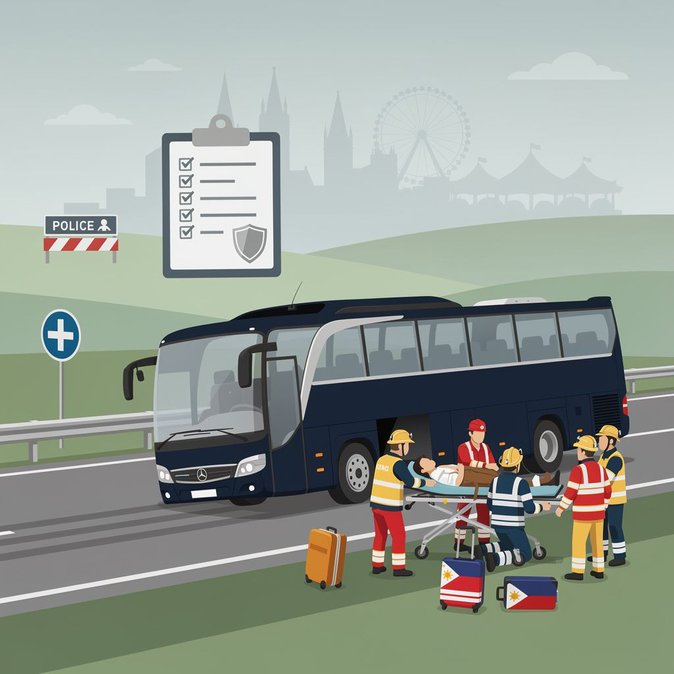
In the early hours of 27 September, a charter bus carrying 33 Filipino holiday-makers from Milan to Munich’s Oktoberfest overturned on Germany’s A96 motorway near Buchloe, Bavaria. Two passengers—a 58-year-old woman and a yet-unidentified man—died at the scene; six others were airlifted to hospital with serious injuries. Police say no other vehicle was involved. The Italian driver, who escaped injury, is under investigation for negligent homicide; an accident-reconstruction expert has been appointed to examine possible fatigue or mechanical failure. The motorway was closed for six hours, causing detours for south-bound traffic to Austria and Switzerland. Germany’s inbound-tourism sector is bracing for reputational fallout: Oktoberfest draws roughly 500 000 foreign visitors each weekend, many of whom arrive by coach from neighbouring EU states. Tour operators expressed concern that negative headlines could dampen late-season bookings after a strong post-pandemic rebound. For global mobility teams with expatriates on temporary assignment in Munich, the accident is a reminder to verify that local vendors meet EU Regulation 1071/2009 requirements on driver working hours and vehicle maintenance. Multinational firms often rely on ad-hoc coach hire for group off-sites during Oktoberfest; due-diligence checks on operators’ safety records should be reinstated if they lapsed during the Covid downturn. The Bavarian Interior Ministry announced spot inspections of foreign-registered buses entering Germany over the next two weeks. Companies organising cross-border staff excursions should anticipate potential delays at motorway rest areas and allow extra buffer time.
Source: Deutsche Welle